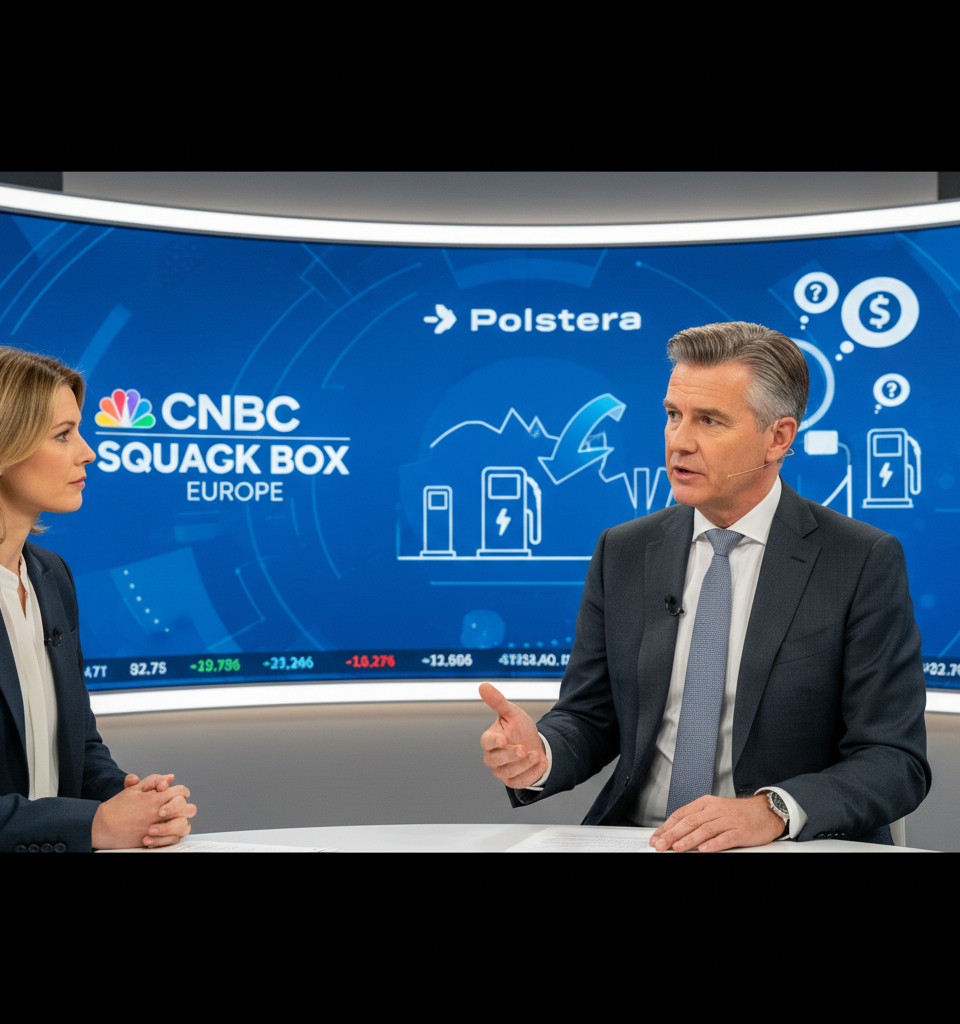
In a significant pivot from the traditional narrative surrounding electric vehicle adoption, Polestar CEO Michael Lohscheller recently declared that "pump anxiety" has superseded "range anxiety" as the paramount concern for prospective EV customers. Speaking on CNBC’s Squawk Box Europe, Lohscheller articulated that consumers are now more preoccupied with the escalating costs at traditional gasoline stations than with the perceived limitations of electric vehicle range. This sentiment, while resonating with current global economic trends, presents a compelling re-framing of the challenges facing the burgeoning electric vehicle market, even as Polestar's own financial metrics indicate a complex path forward.
Shifting Sands of Consumer Concern
For well over a decade, the electric vehicle industry has wrestled with "range anxiety" – the fear that an EV battery would deplete before reaching a charging station or destination. This concern significantly impacted early adoption rates and drove extensive investment in battery technology and charging infrastructure. Lohscheller's recent comments suggest a fundamental shift in consumer psychology, driven largely by the volatile global energy markets and the subsequent surge in fuel prices across major economies. This reframing highlights the economic calculus now at play for consumers, where the immediate cost savings of electricity over petrol become a dominant factor, potentially accelerating the transition to EVs even amidst lingering infrastructure questions.
Polestar's Financial Trajectory
While Lohscheller's characterization of consumer sentiment offers a forward-looking perspective, Polestar's balance sheet tells a story of significant investment and the inherent challenges of scaling an EV brand. For the first nine months of the current fiscal year, Polestar reported substantial net losses, even as vehicle deliveries saw an uptick. This financial performance, common among rapidly expanding tech-driven automotive startups, underscores the capital-intensive nature of EV manufacturing and global market penetration. Despite strong growth aspirations, achieving profitability remains a key hurdle, requiring sustained sales growth and efficient operational management.
Broader Industry Implications
This redefinition of consumer anxiety carries pervasive implications for the broader automotive industry. Traditional automakers and pure-play EV companies alike are closely monitoring these shifts. If pump anxiety truly dominates, it could fundamentally alter marketing strategies, emphasizing total cost of ownership and fuel savings over pure range capabilities. This might also incentivize governments to further accelerate charging infrastructure development to capitalize on the economic draw of EVs, ensuring that the charging experience offers a seamless and cost-effective alternative to frequent gas station visits. The strategic advantage could shift towards manufacturers who can demonstrate clear, immediate financial benefits to their customers.
Expert Analysis and Market Realities
Industry analysts acknowledge the growing impact of fuel costs on consumer purchasing decisions but also caution against oversimplifying the complex interplay of factors. "While pump prices are undoubtedly a strong motivator right now, infrastructure availability, vehicle purchase price, and residual value still weigh heavily on the minds of potential EV buyers," commented auto industry analyst Dr. Eleanor Vance. "Polestar, like many EV startups, needs to balance the narrative with the reality of establishing a robust brand and profitable operations in a highly competitive market." Vance also pointed out that supply chain disruptions and raw material costs continue to challenge EV manufacturers, irrespective of consumer anxieties.
The Road Ahead for Polestar
Looking forward, Polestar has outlined ambitious growth targets, aiming for significant increases in global deliveries and an expanded model lineup. The company's success will hinge not only on clever marketing that addresses evolving consumer concerns but also on its ability to effectively scale production, manage supply chain complexities, and navigate fierce competition from established giants and nimble new entrants. Continued investment in battery technology for improved efficiency and faster charging will also be critical, alongside the expansion of high-quality sales and service networks to build customer confidence and loyalty. The company’s ability to turn its innovative design and performance credentials into sustainable profitability will be a key storyline in the coming years.
Evolving EV Ecosystem Challenges
The EV ecosystem faces a dual challenge: addressing the immediate economic drivers of adoption while methodically building out the supporting infrastructure. Governments worldwide continue to offer incentives for EV purchases and charging infrastructure, but the pace and scale often vary. As pump anxiety becomes a more dominant factor, pressure will mount on these stakeholders to ensure the transition to electric is not just environmentally beneficial but also economically attractive and practically feasible for the mass market. Polestar, by proactively addressing this shift in consumer mindset, positions itself at the forefront of this evolving dialogue, aiming to capitalize on a potentially transformative moment for the automotive industry.