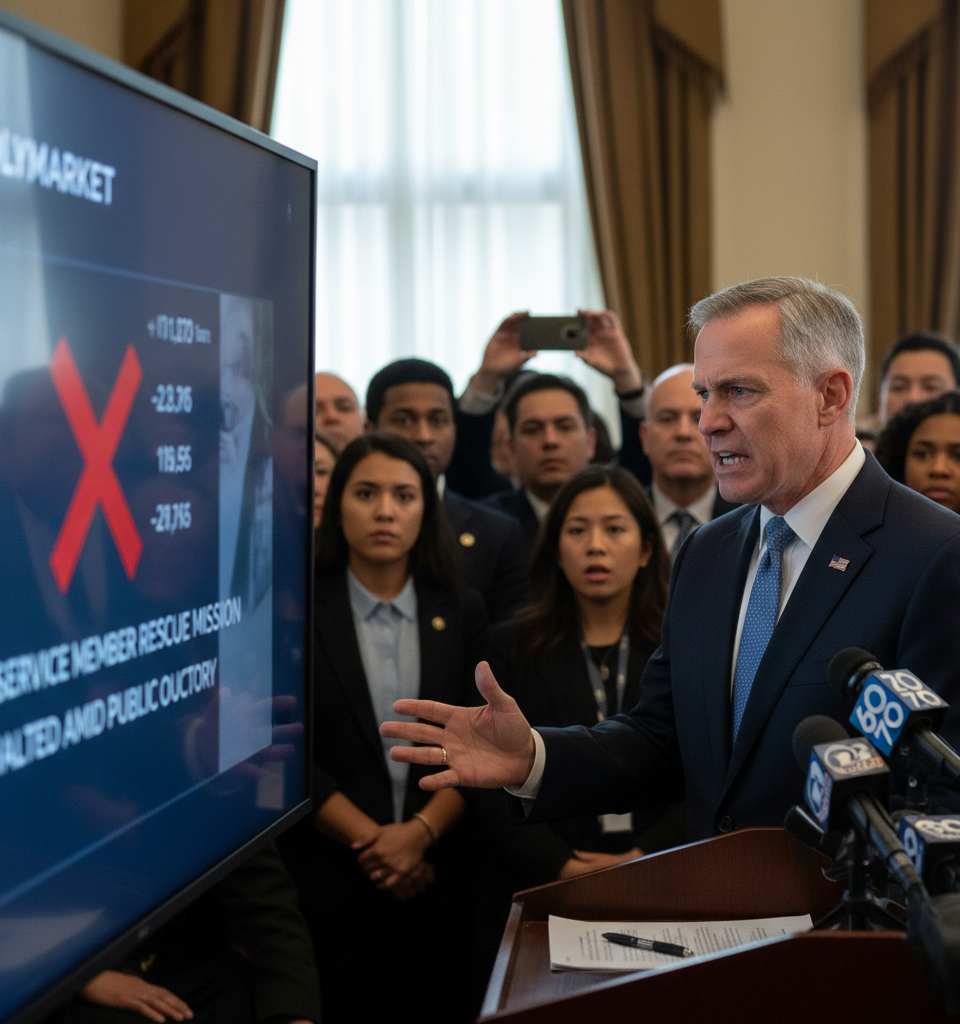
NEW YORK, NY – Prediction market platform Polymarket has abruptly pulled down a series of highly contentious betting markets focused on whether American service members would be successfully rescued from Iran. The decision, implemented over the weekend, follows a swift and vocal condemnation from prominent U.S. political figures and ignited a broader debate over the ethical boundaries of speculative online platforms. The markets, which allowed users to wager on the success or failure of a hypothetical rescue operation, drew particular ire from Representative Seth Moulton (D-Mass.), who publicly decried them as "DISGUSTING" and accused bettors of commodifying the lives of American troops.
Ethical Minefield: The Blurred Lines of Prediction Markets
This incident thrusts Polymarket, a platform that allows users to bet real money on future events ranging from political outcomes to scientific breakthroughs, into an uncomfortable spotlight. While proponents argue that prediction markets offer valuable aggregated insights into public sentiment and potential outcomes, critics contend that they can quickly devolve into ethically dubious territory, particularly when dealing with matters of national security, human life, and sensitive geopolitical events. The Iran rescue mission bets exemplify this dilemma, highlighting the fine line between forecasting and perceived exploitation. The platform's terms of service typically prohibit markets related to illegal activities or those that incite violence, but the definition of "harmful" or "unethical" remains a subjective and evolving challenge.
Details of the Controversy and Congressional Condemnation
Before their removal, the markets in question offered varying odds on the likelihood of a successful rescue mission, with specific questions sometimes pertaining to the number of service members involved or the timeline of an extraction. The specific details regarding the alleged presence of U.S. service members in Iran were not publicly confirmed by official channels, adding to the speculative and rumor-driven nature of these bets. Congressman Moulton, a former Marine officer who served multiple tours in Iraq, voiced his outrage via social media, stating, "Bettors are literally wagering on whether American troops will be saved. This is disgusting." His strong denouncement, amplified across various news outlets, likely played a significant role in triggering Polymarket's swift action, as the company faced mounting reputational risk. The platform had previously faced scrutiny for markets related to other sensitive topics, though none had garnered such immediate and high-profile political condemnation.
Industry Scrutiny and Regulatory Implications
The episode casts a shadow over the burgeoning prediction market industry, which operates in a largely unregulated or loosely regulated environment compared to traditional financial markets. This lack of clear oversight allows for a wider scope of betting topics, but also heightens the risk of ethical breaches and potential manipulation. The removal of the markets by Polymarket can be seen as a reactive measure to mitigate public relations damage and potentially preempt regulatory intervention. Critics often argue that such platforms, by their very nature, encourage speculation on tragic or sensitive events, potentially profiting from human misery. This incident could serve as a catalyst for increased calls for tighter regulation of prediction markets, particularly concerning topics deemed to cross ethical boundaries or impact national security.
Expert Opinions on Responsible Market Design
Academics and industry experts are divided on the long-term implications. Dr. Emily Chen, a professor of digital ethics at a leading university, commented, "While prediction markets can aggregate information effectively, platforms must prioritize ethical guardrails, especially when venturing into areas touching human lives or international security. The 'market knows best' ethos doesn't absolve platforms of their moral responsibilities." Conversely, some libertarian-leaning economists argue that any restriction on information markets, even concerning sensitive topics, stifles free exchange and accurate forecasting. However, even these proponents often concede that reputation and user trust are paramount for the long-term viability of such platforms, suggesting that self-regulation, as seen with Polymarket's decision, may be essential.
The Path Forward: Balancing Innovation and Ethics
Looking ahead, Polymarket and similar platforms face the arduous task of balancing innovative market offerings with robust ethical frameworks. This incident will undoubtedly force a reevaluation of their content policies, particularly regarding geopolitical events and matters of human welfare. There may be increased pressure to implement more proactive screening mechanisms, clearer content guidelines, and perhaps even an independent ethics board to vet potential markets. The episode also raises questions about the role of users in flagging problematic content and the speed with which platforms can respond to such concerns. The broader debate around the ethics of prediction markets, particularly those dealing with sensitive real-world events, is far from over, and this incident marks a significant inflection point in that ongoing discussion.
Broader Regulatory Landscape and Future Precedents
This controversy could embolden regulators to scrutinize prediction markets more closely. While Polymarket operates in a legal grey area in many jurisdictions, intense public and political pressure often precedes regulatory action. Depending on future events and the industry's response to this ethical challenge, we may see the emergence of specific legislation or stricter enforcement frameworks governing what topics are permissible for betting. The precedent set by Polymarket's swift removal of the markets, though reactive, demonstrates a sensitivity to public opinion that may become a defining feature of the industry's attempt to self-regulate and ensure its long-term legitimacy. The financial health of these platforms, which collectively handle millions of dollars in wagers annually, hinges on maintaining perceived integrity and trust among their user base and the wider public.