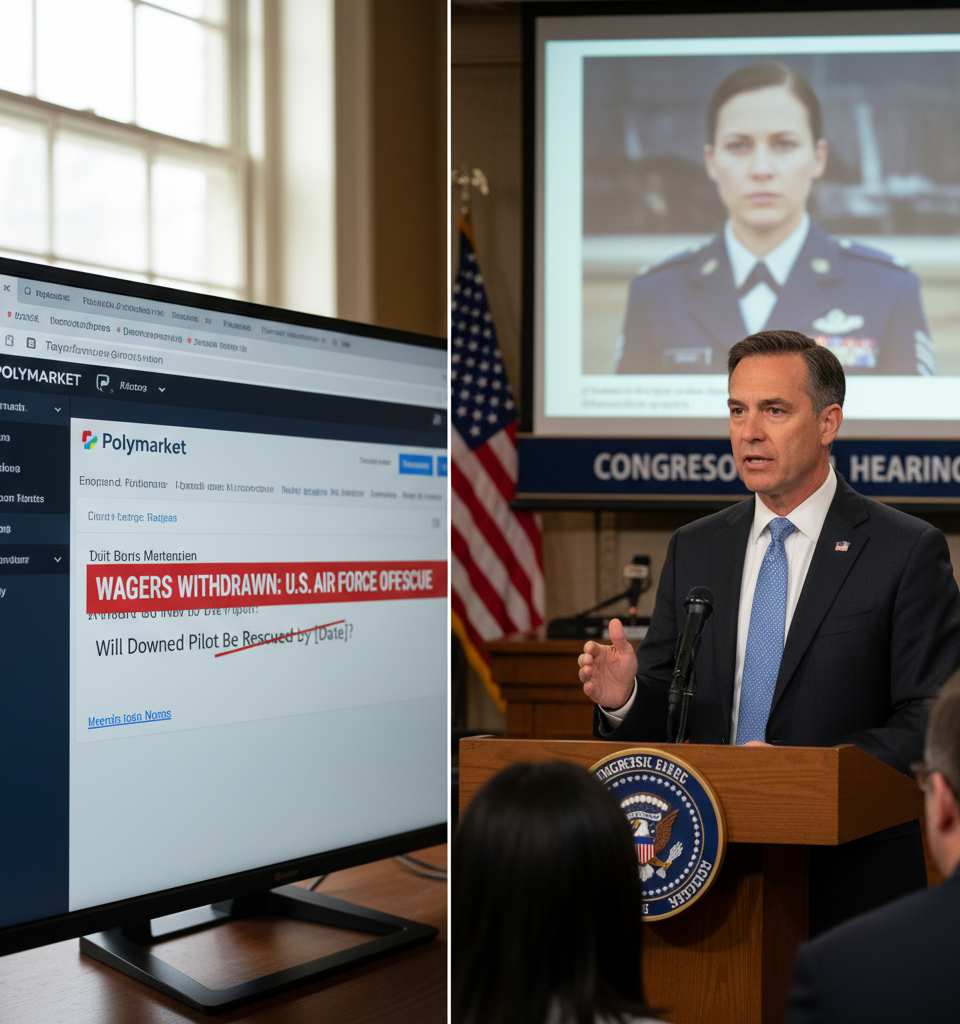
**Washington D.C. – ** – Polymarket, a prominent decentralized prediction market platform, has halted and delisted a series of controversial betting markets related to the confirmation date of a U.S. Air Force service member's rescue, following reports of an aircraft being shot down over Iran. The removal comes after sharp criticism from a senior Democratic congressman, who lambasted the platform for allowing users to speculate on an event with significant national security and human life implications, highlighting a growing tension between free-market prediction and ethical considerations.
The Controversy Unfurls: Betting on Human Lives
The now-deleted markets on Polymarket allowed users to place bets, often utilizing cryptocurrencies and stablecoins, on precise dates concerning the official U.S. government confirmation of the rescue of Air Force personnel. This activity immediately drew the ire of Congressman, who publicly condemned Polymarket’s practices as “morally reprehensible” and “an affront to basic human dignity.” In a scathing press statement, Rep. Chen stated, “To profit from the potential peril of our servicemen and women crosses a line. This isn't just about market speculation; it’s about exploiting tragedy for personal gain.” The incident has thrust Polymarket back into the spotlight regarding its content governance and the inherent risks of unchecked prediction markets.
Ethical Minefield: Prediction Markets and Geopolitics
Prediction markets, which allow users to bet on the outcome of future events, claim to aggregate dispersed information and provide more accurate forecasts than traditional polling or expert analysis. However, their application to highly sensitive geopolitical events, especially those involving human lives or national security, has always been an ethical minefield. Previous Controversies include markets on presidential assassinations or natural disaster death tolls, which have invariably led to public outrage and regulatory scrutiny. Polymarket, which operates largely on blockchain technology and emphasizes decentralization, often navigates a grey area between innovative financial tools and unregulated gambling platforms. Their previous dealings with the Commodity Futures Trading Commission (CFTC) regarding unregistered event-based swaps underscore the regulatory challenges they face.
Polymarket's Response and Broader Implications
Sources close to Polymarket indicate the company’s decision to remove the markets was swift, although no official public statement acknowledging the specific criticism has been released at the time of reporting. The platform's terms of service generally prohibit markets that promote illegal activities or exploit vulnerable populations, but the interpretation of these guidelines often lags behind rapidly evolving geopolitical events. This incident is likely to intensify calls for clearer ethical guidelines and potentially stricter regulatory oversight for decentralized finance (DeFi) platforms that host such markets. The incident also casts a shadow on the broader perception of prediction markets, intertwining their utility with the potential for ethical breaches.
Expert Perspectives: Balancing Innovation and Responsibility
Financial ethics experts and legal scholars are weighing in on the implications. Dr. Evelyn Reed, a professor of digital ethics at [Fictional University Name, e.g., Metropolitan University], commented, “While prediction markets offer unique insights and can be powerful tools, their application must be tempered with a profound sense of social responsibility. When human lives are on the line, the pursuit of data aggregation cannot supersede moral obligations. Platforms like Polymarket must develop robust, proactive mechanisms to identify and prevent the commodification of suffering.” Legal analysts suggest this incident could provide further impetus for lawmakers to draft more comprehensive regulations addressing event betting on platforms operating outside traditional financial frameworks.
The Road Ahead: Regulatory Scrutiny and Platform Evolution
This episode is unlikely to be an isolated incident. As geopolitical tensions simmer globally and information spreads rapidly through digital channels, the temptation for prediction markets to host high-stakes, real-time events will only grow. What remains to be seen is how platforms like Polymarket will evolve their content moderation strategies and engage with regulatory bodies to prevent future ethical crises while maintaining their decentralized ethos. The pressure from public figures and a wary public could force these platforms to adopt more transparent and ethically sound frameworks, potentially including independent oversight committees or AI-driven content filtering for sensitive topics. The balancing act between innovation, freedom of information, and moral responsibility will define the future trajectory of these burgeoning markets.
Impact on the DeFi Landscape
Within the broader decentralized finance (DeFi) ecosystem, this controversy serves as a stark reminder of the reputational risks associated with perceived ethical lapses. While DeFi aims for permissionless and censorship-resistant financial services, public perception often dictates mainstream adoption and regulatory tolerance. Incidents like these can lead to broader calls for 'decentralized governance' models to include ethical considerations, prompting questions about how a truly decentralized platform can enforce moral standards without introducing centralized control. The long-term impact could include a greater emphasis on reputation and compliance within the DeFi space, pushing projects towards more responsible and transparent operations to avoid attracting negative scrutiny that could hinder growth and innovation.