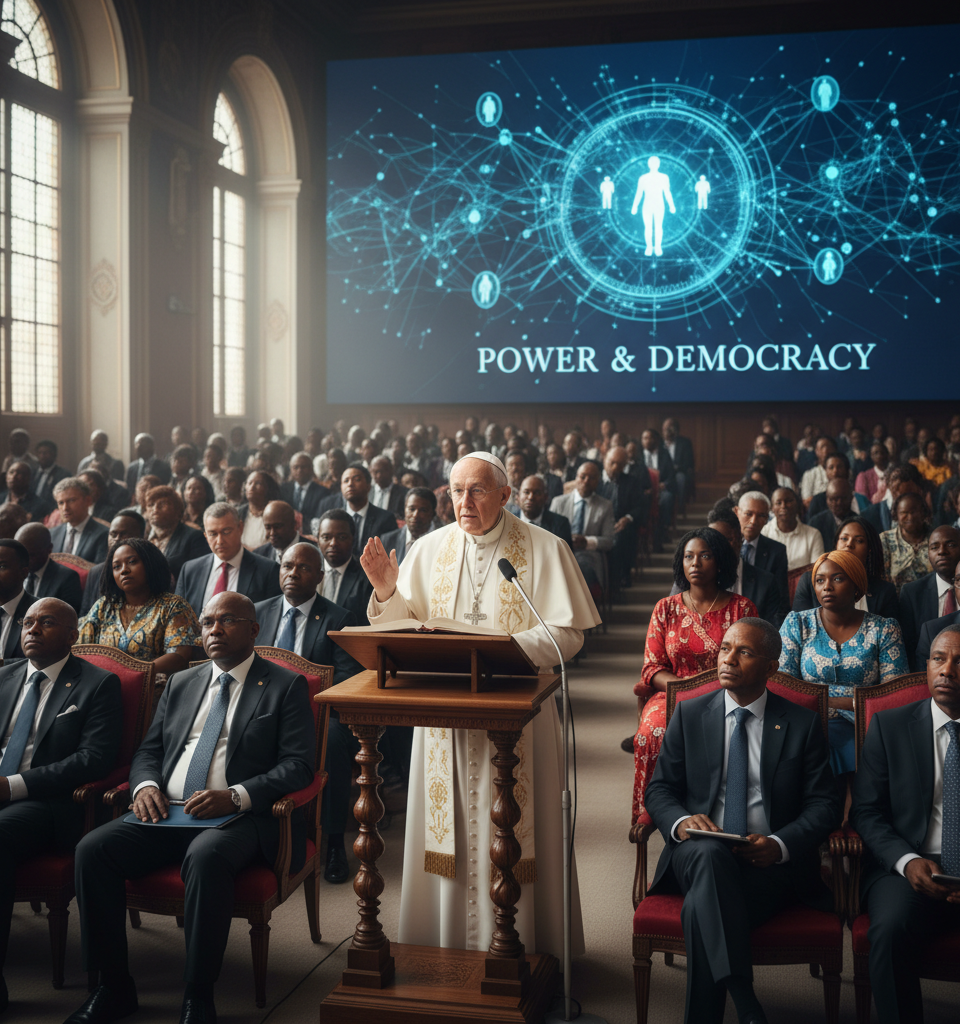
Pope Leo XIV's first encyclical is poised to reframe the contemporary discourse surrounding artificial intelligence, not as a purely technological phenomenon, but rather as a revealing symptom of deeper societal maladies. While the document nominally addresses AI, its core thesis reportedly aligns with a broader critique, leveraging the rise of advanced technology to spotlight entrenched issues such as the consolidation of power, the ongoing weakening of democratic institutions, and the significant, often unchecked, influence wielded by a powerful tech elite more concerned with self-advantage than collective well-being.
The timing of this encyclical, amidst rapid advancements in AI and increasing public debate about its ethical implications, is particularly salient. The Vatican has historically engaged with scientific and social developments, often offering a moral and ethical framework for understanding their impact on humanity. This latest intervention by Pope Leo XIV appears to follow in that tradition, utilizing a modern, seemingly futuristic subject to dissect timeless challenges regarding governance, equity, and human autonomy. The document is expected to resonate far beyond religious circles, engaging policymakers, technologists, and civil society organizations grappling with the rapid pace of change and its societal repercussions.
Unpacking the Critique: Power and Democracy in the Age of AI
The encyclical's central argument, as parsed by early analysis, suggests that AI is less the root cause of contemporary problems and more a powerful accelerant or magnifier of pre-existing systemic flaws. The concentration of computational power, data, and the algorithms that govern AI systems in the hands of a few major corporations and states will likely be highlighted as a direct parallel to historical patterns of economic and political dominance. This perspective implies that the concerns around AI bias, surveillance, and control are not merely technological glitches but manifest outcomes of societal structures where power is already unevenly distributed.
Furthermore, the encyclical is anticipated to draw a direct line between the rise of AI and the erosion of democratic processes. Concerns around disinformation amplified by algorithms, the potential for automated decision-making to circumvent human accountability, and the leveraging of personal data for political manipulation are all expected to feature prominently. The document is likely to argue that without robust democratic oversight and ethical frameworks, AI could further entrench authoritarian tendencies and diminish the capacity for genuine self-governance in societies worldwide.
The Tech Elite's Influence
A significant focus of the encyclical is expected to be on the tech elite – the innovators, investors, and corporate leaders who largely control the development and deployment of advanced AI. The critique is not merely against the technology itself, but against the motivations and structures that allow this elite to shape the world to its own advantage, occasionally at the detriment of broader societal good. This includes the potential for AI to exacerbate economic inequality by automating jobs, centralizing wealth, and creating new forms of digital divides. The encyclical is likely to call for a more equitable and inclusive approach to technological development, one rooted in shared values rather than solely profit motives or geopolitical competition.
Broader Societal Impact and Future Implications
The encyclical's release is poised to ignite a wider conversation, prompting institutions beyond the Church to re-evaluate their approaches to AI. Governments may face renewed pressure to implement more stringent regulations on data privacy, algorithmic transparency, and antitrust measures against dominant tech firms. Civil society organizations are likely to find a powerful new voice supporting their calls for ethical AI development and accountability. For the tech industry itself, the encyclical could serve as a provocative challenge, urging a deeper introspection into the societal impact of their innovations and a greater commitment to responsible stewardship.
Looking ahead, this document is expected to serve as a foundational text for ethical considerations in the AI era. It could inspire new interdisciplinary dialogues, bringing together theologians, ethicists, computer scientists, and policymakers to forge a more human-centric future for artificial intelligence. The encyclical’s enduring impact will likely be measured by its ability to shift the narrative around AI from a purely technical discussion to a fundamental ethical and social debate about power, democracy, and inclusive human flourishing.