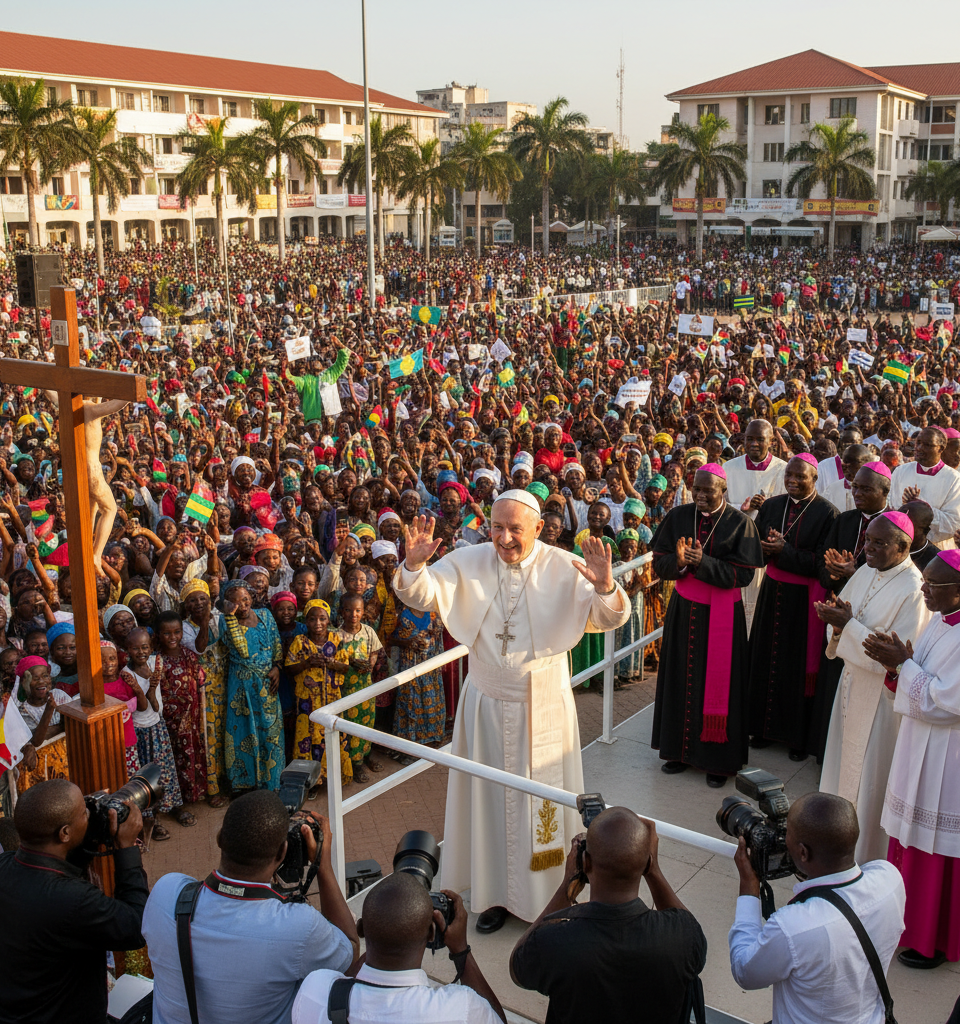
Youndé, Cameroon – Pope Leo XIV arrived in Cameroon today, commencing a highly anticipated apostolic journey designed to acknowledge and address the burgeoning influence of Catholicism across the African continent while simultaneously confronting its underrepresentation within the Church's upper echelons. The visit, a strategic diplomatic and spiritual mission, highlights the Vatican's keen awareness of Africa as a critical growth engine for global Catholicism, even as questions persist regarding equitable power distribution. His Holiness is expected to deliver a series of homilies and addresses emphasizing unity, faith, and the vital role of African Catholics in the Church's future.
This papal visit unfolds against a backdrop of phenomenal growth in African Catholicism. Over the past five decades, the number of Catholics in Africa has skyrocketed from approximately 40 million in 1970 to over 250 million today, representing a nearly 525% increase. Projections indicate that by 2050, roughly one-third of the world's Catholics will reside in Africa, eclipsing traditional strongholds in Europe and Latin America. Despite this demographic shift, African cardinals constitute a mere 15% of the College of Cardinals, and even fewer hold significant administrative positions within the Roman Curia, underscoring a persistent leadership gap that has become an increasingly vocal point of contention among African clergy and laity.
Cameroon, with its robust Catholic population exceeding 7 million (approximately 25% of the total populace), serves as a poignant microcosm of this imbalance. While the Church here is vibrant, boasting numerous dioceses, seminaries, and Catholic-run institutions, its top ecclesiastical leadership, particularly at the diocesan level, has historically faced challenges in achieving full autonomy from European influence in terms of strategic direction and resource allocation. This visit, therefore, is not merely symbolic; it is an opportunity for Pope Leo to directly engage with African bishops, theologians, and lay leaders to discuss pathways for greater empowerment and inclusion. Sources within the Vatican indicate discussions will focus on theological formation, local governance, and perhaps the expansion of African representation in key Vatican departments.
The broader implications of this papal visit extend beyond ecclesiastical politics. The Catholic Church is a significant provider of education, healthcare, and humanitarian aid across Africa, often serving communities where state services are scarce. In Cameroon alone, thousands of schools and hospitals are managed by Catholic orders. A more empowered African Church leadership could lead to more localized development strategies, potentially increasing the efficiency and impact of these vital services, and strengthening ties between the Church and local communities. This also has economic implications, as the Church often acts as a major employer and investor in local economies.
Analysts view Pope Leo XIV's visit as a shrewd move to solidify the Church's future foundations. Dr. Emmanuel Okoro, a leading theologian specializing in African Christianity at the University of Ghana, commented, "This isn't just about optics; it's about the very sustainability of the universal Church. Ignoring or underutilizing the dynamism of African Catholicism would be a profound strategic error. The Pope's presence signals a recognition that the future of the Church largely lies in the Global South, and Africa is at its heart." He added that many hope this visit will translate into concrete policy changes, not just symbolic gestures.
Looking ahead, observers will be keen to see if this visit translates into tangible policy shifts. Potential outcomes include increased appointments of African cardinals and archbishops to high-ranking Vatican positions, greater autonomy for national bishops' conferences, and potentially, accelerated efforts to inculturate Catholic liturgy and traditions within African contexts while maintaining doctrinal fidelity. The coming months will reveal the true impact of Pope Leo's pronouncements and interactions in Cameroon, as the global Catholic Church navigates its evolving demographic and geopolitical landscape. The challenge now lies in transforming papal pronouncements into lasting structural reforms that genuinely reflect the diverse and vital contributions of African Catholics worldwide.