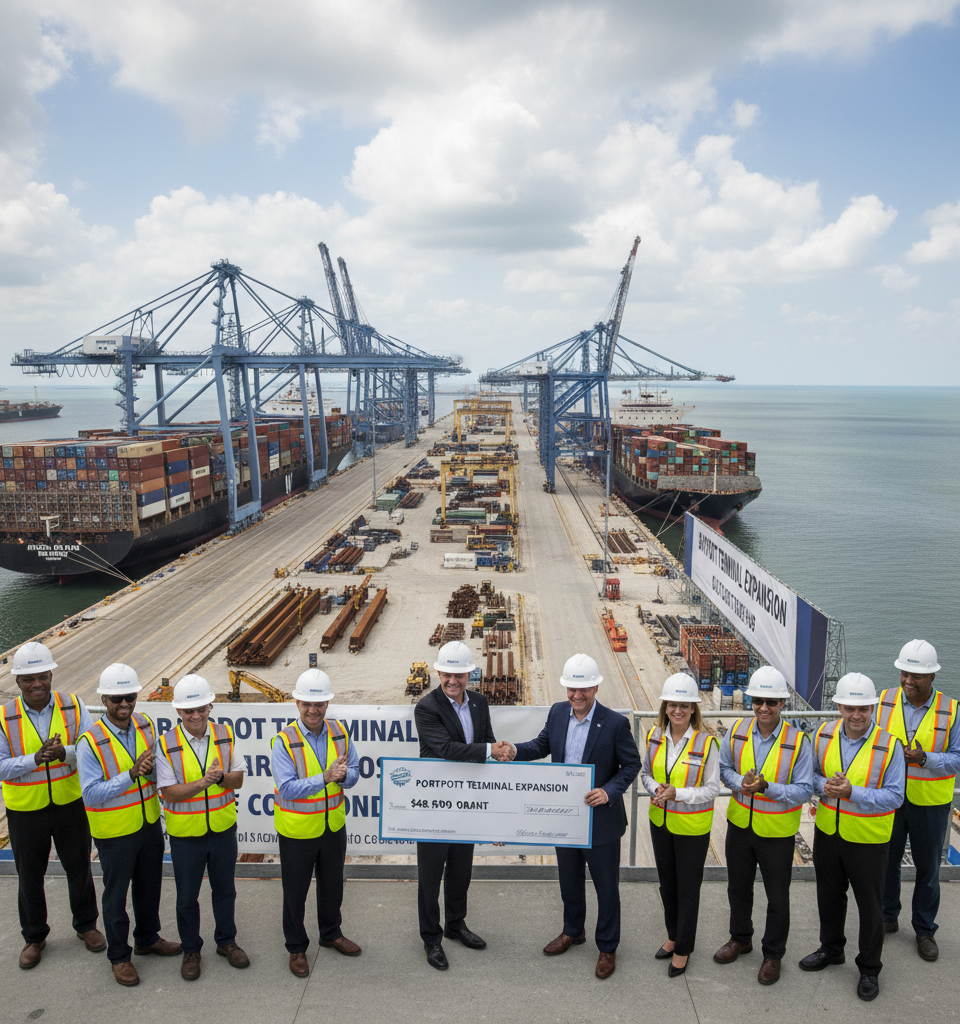
Port Houston has secured a substantial $48 million federal grant through the U.S. Department of Transportation's INFRA (Infrastructure for Rebuilding America) program. This critical funding is designated for the extensive expansion of the Bayport Container Terminal, a move poised to significantly boost the port's cargo handling capacity and improve the efficiency of truck flow. The initiative underscores a concentrated effort to modernize and expand key logistics infrastructure along the U.S. Gulf Coast.
Strategic Importance and Historical Context
This grant arrives at a pivotal moment, as global supply chains continue to navigate fluidity and increased demand. Port Houston, already a leading port in the United States, plays an indispensable role in the national and regional economy. The Bayport Container Terminal, one of its two primary container facilities, has been experiencing burgeoning traffic, leading to the necessity for infrastructure upgrades. Historically, federal investments in maritime infrastructure have yielded substantial economic returns, supporting job creation and fostering regional industrial growth. This expansion is designed not only to accommodate current growth but also to future-proof the port against anticipated increases in trade volumes, particularly for goods destined for the burgeoning consumer and industrial markets of the American South and Midwest.
Key Project Details
The $48 million federal allocation will primarily fund critical infrastructure improvements at Bayport. Key components of the project include the expansion of existing container yards, the development of new truck gate infrastructure, and enhancements to intermodal rail connections. These upgrades are crucial for reducing bottlenecks, accelerating cargo processing, and improving overall operational efficiency.
Specifically, the grant will support the construction of new berths, increasing the terminal's ability to handle larger vessels, a growing trend in global shipping. The enhancements are expected to boost the terminal's annual capacity by an estimated 1 million TEUs (Twenty-foot Equivalent Units) in the coming years. This project is part of a larger multi-year, multi-phase development plan for Bayport, with the total investment in the terminal's expansion projected to exceed several hundred million dollars, including significant Port Houston contributions.
Industry and Market Impact
The expansion of the Bayport Container Terminal will have far-reaching implications for the broader logistics and trade industry. By increasing capacity and improving efficiency, Port Houston can better serve the growing demand from retail, manufacturing, and energy sectors. This enhancement will solidify its competitive advantage over other Gulf Coast ports and potentially draw diversion from East and West Coast ports experiencing congestion. The improved truck flow is particularly vital for the thousands of trucking companies that rely on the port, promising quicker turnaround times and reduced operational costs. Furthermore, the greater capacity will enable Houston to handle a larger share of the anticipated nearshoring and reshoring efforts by various industries looking to bring manufacturing closer to home.
Expert Perspectives
Industry analysts view this federal grant as a strategic investment with significant long-term payoffs. "This $48 million grant isn't just about concrete and cranes; it's about cementing Houston's role as a critical artery in the nation's supply chain," commented a leading maritime economist specializing in port logistics. "The ability to handle more cargo more efficiently will provide a direct boost to regional manufacturing and distribution, creating a ripple effect across numerous industries. It’s a testament to the port's proactive planning and its established track record." Environmental groups have also weighed in, urging the port to incorporate sustainable practices and innovative technology to mitigate the environmental impact of increased operations, a common concern with large infrastructure projects.
What's Next: Future Implications
With the grant formally secured, Port Houston officials are expected to rapidly move forward with the detailed planning and procurement phases of the Bayport expansion. Construction is anticipated to commence within the next 12 to 18 months, with various components of the project being phased in over several years. The expanded terminal is expected to generate thousands of direct and indirect jobs, further stimulating the regional economy. Beyond the immediate Bayport project, this federal funding could also set a precedent for future grants, encouraging further investment in critical infrastructure projects along the U.S. Gulf Coast, positioning the region as a more robust and resilient node in the global trade network. The emphasis will remain on leveraging technology for greater automation and sustainability, ensuring the port’s competitiveness for decades to come.