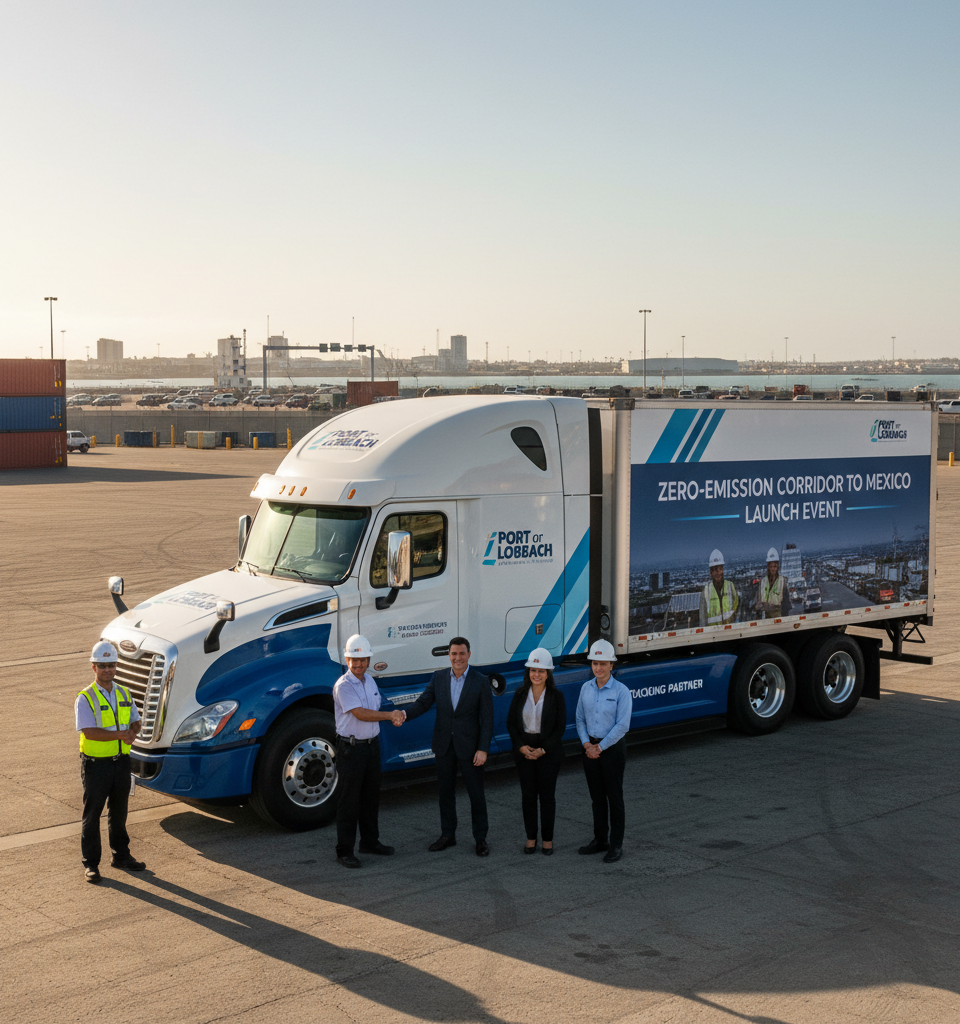
The Port of Long Beach, one of the busiest container gateways in the United States, has officially acknowledged a local trucking firm for its contribution to inaugurating a "Green Truck Corridor" extending from the port to Mexico. This collaborative effort signifies a notable advancement in the port's ongoing commitment to fostering sustainable trade practices and reducing carbon emissions within its operational purview.
This initiative comes at a time when global supply chains are under increasing pressure to adopt more environmentally friendly solutions. The establishment of direct zero-emission routes, particularly for international freight, underscores a growing industry trend towards decarbonization. The Port of Long Beach has historically been at the forefront of environmental stewardship within the maritime industry, consistently implementing programs aimed at reducing air pollution and improving air quality in surrounding communities. This new corridor builds upon years of strategic planning and investment in cleaner technologies and infrastructure.
The specific details surrounding the trucking provider's role highlight a successful public-private partnership model. While the precise number of zero-emission trucks currently deployed or the initial frequency of operations along the corridor were not disclosed in the recognition, the emphasis remains on the strategic importance of this first-of-its-kind cross-border green logistics pathway. Such dedicated corridors are crucial for demonstrating the viability and efficiency of electric and hydrogen-powered heavy-duty vehicles over extended distances, addressing common industry concerns regarding range anxiety and charging infrastructure.
From an industry perspective, this development sends a clear signal about the future direction of freight transportation between the U.S. and Mexico. As regulatory pressures intensify and corporate sustainability goals become more ambitious, such zero-emission corridors are expected to become increasingly common. This particular corridor could serve as a template for other ports and logistics hubs looking to green their operations, particularly those involved in significant cross-border trade. It also positions the Port of Long Beach as a leader in innovative environmental solutions within the port sector.
While direct expert commentary on this specific launch was not provided, analysts in the logistics and environmental sectors frequently emphasize the challenges and opportunities presented by the electrification of heavy-duty transport. Achieving widespread adoption of zero-emission trucking, especially for long-haul and cross-border routes, requires substantial investment in charging infrastructure, fleet conversion, and the development of robust green energy supply chains. This corridor's success will likely be closely watched as a case study for future endeavors.
Looking ahead, the establishment of this corridor is likely just the beginning of a broader initiative. Future developments could include expansion of the fleet size utilizing the corridor, increased frequency of zero-emission shipments, and potentially the integration of other clean technologies like hydrogen fuel cell trucks. The port and its partners will likely continue to monitor the performance and environmental benefits of this route, potentially leading to the development of similar green corridors connecting to other key trade destinations within North America. The long-term vision is to create a more sustainable and resilient supply chain network, significantly reducing the carbon footprint of cross-border trade.
The ongoing commitment from the Port of Long Beach and its trucking partners highlights a proactive approach to addressing climate change challenges within the logistics sector. This initial phase of the “Green Truck Corridor” is a tangible step towards achieving ambitious environmental targets, demonstrating that sustainable practices can be integrated into high-volume international trade operations. The success of this corridor will undoubtedly inform future strategies for decarbonizing freight movement across the continent and beyond.