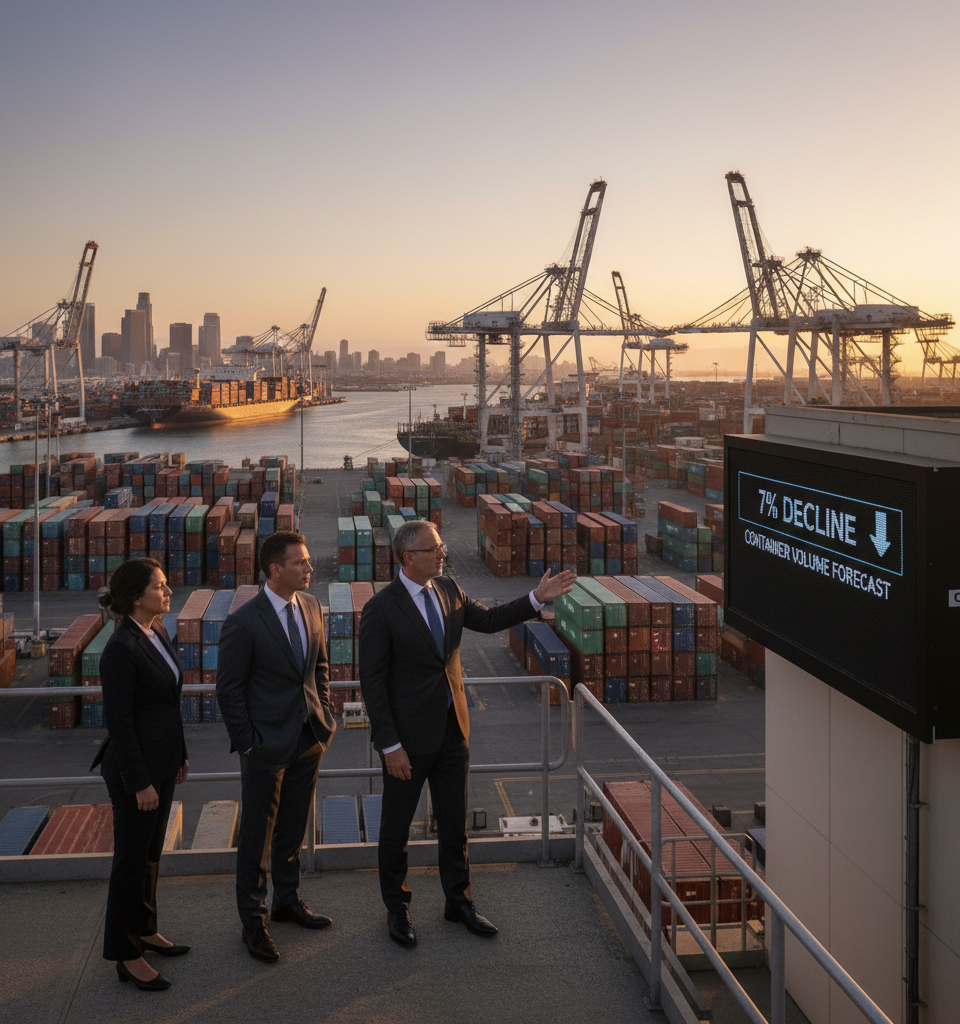
The Port of Los Angeles is bracing for a significant downturn in cargo traffic, with officials forecasting a 7% decline in container volumes for fiscal year 2026-2027. This projection, which anticipates volumes dropping to 9.3 million twenty-foot equivalent units (TEUs), comes on the heels of the Los Angeles Board of Harbor Commissioners approving a $3.4 billion annual operating budget for the port.
Context and Background
This projected decrease is particularly noteworthy given the Port of Los Angeles's status as a cornerstone of the U.S. supply chain. Operating in conjunction with the neighboring Port of Long Beach, this complex forms the nation's busiest container gateway, handling a substantial portion of all goods entering and exiting the country. The approval of a larger budget—an increase compared to previous years, though the specific prior year budget was not disclosed in the source—amidst declining volume forecasts highlights the ongoing complexities and strategic adjustments required to manage such a critical piece of infrastructure.
Key Details
The approved budget of $3.4 billion for fiscal 2026-2027 underscores the significant financial commitments required to maintain and modernize port operations, even as cargo throughput is expected to soften. The anticipated 7% reduction in box volumes, translating to 9.3 million TEUs, suggests a recalibration of operational expectations. This figure is a key metric for gauging the health of global trade and manufacturing, as container volumes directly reflect the flow of goods through international shipping lanes.
Industry and Market Impact
A decline in container volumes at such a pivotal port invariably sends ripples throughout the broader maritime and logistics industries. For carriers, a reduction in TEUs can impact vessel utilization rates and freight rates, potentially leading to capacity adjustments or altered shipping schedules. For inland logistics providers, including trucking and rail companies, less cargo moving through the port could signify decreased demand for their services. This trend could also signal shifts in consumer demand or manufacturing outputs, prompting businesses to reassess their inventory management and supply chain strategies.
Future Implications
The forecast decline in container volumes presents a strategic challenge for the Port of Los Angeles. While the approved budget indicates continued investment in the port's infrastructure and operational capabilities, managing a reduction in throughput will require careful planning. Port authorities will likely focus on optimizing existing operations, enhancing efficiency, and exploring new revenue streams or cargo types to mitigate the impact of reduced container traffic. The port's ability to adapt to these changing dynamics will be crucial in maintaining its competitive edge and its indispensable role in the national and international trade landscape.