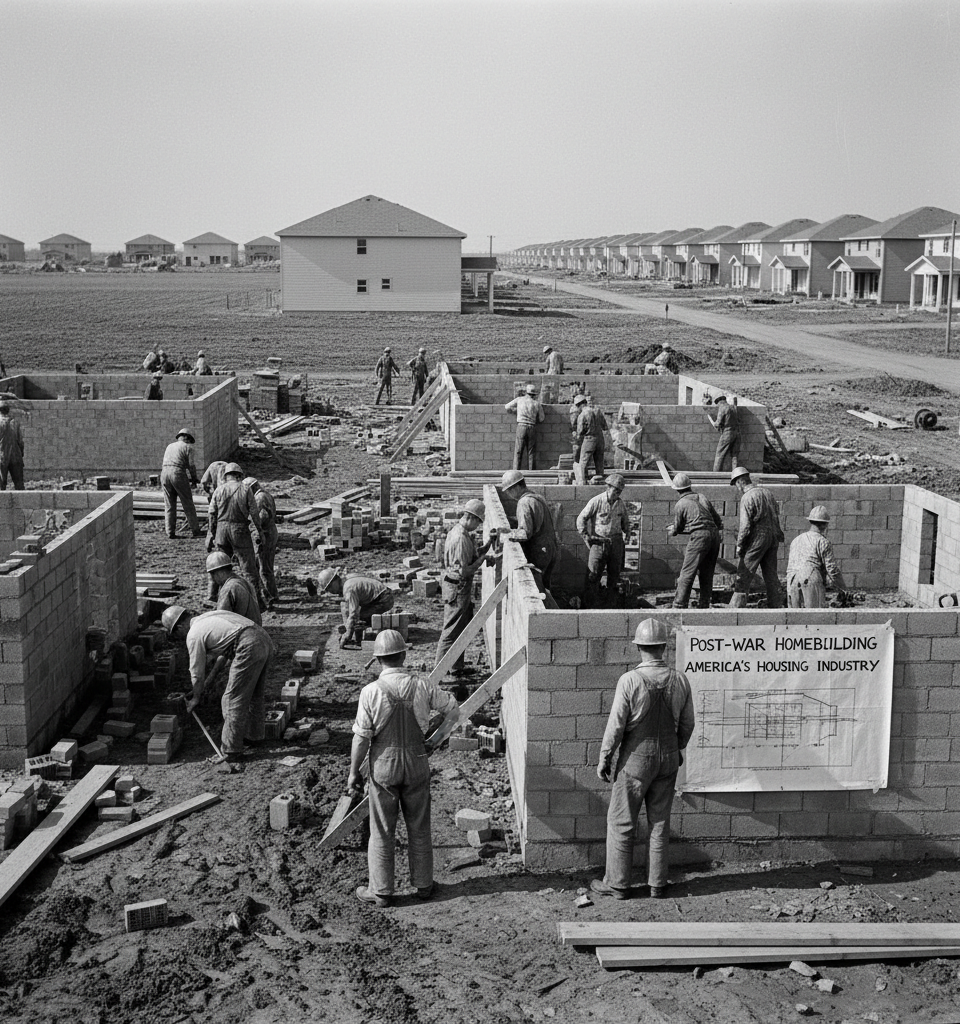
The indelible blueprint for the modern American homebuilding industry was meticulously crafted in the crucible of post-World War II America, driven by returning servicemen who transformed a nation's housing crisis into an economic boom. These veterans, leveraging their military discipline, organizational skills, and a pressing national need, innovated construction techniques and business models that remain foundational today. Their pragmatic approach to large-scale development laid the groundwork for the standardization, efficiency, and suburbanization trends that characterize the contemporary housing market.
The Genesis of Modern Homebuilding
The immediate aftermath of World War II presented an unprecedented housing shortage. Millions of servicemen returning home sought to establish families and achieve the American dream, creating an immense demand for affordable, rapidly constructed homes. This exigency sparked a revolution within the building sector. Before the war, home construction was often a bespoke, localized craft. The post-war era, however, mandated a shift towards mass production, leading to the development of assembly-line techniques applied to housing. This period witnessed the rise of pioneering developers like William J. Levitt, whose Levittowns became synonymous with affordable, standardized suburban living.
Key Innovations and Industry Transformation
The veterans entering the homebuilding industry were instrumental in adopting and refining several critical innovations. They brought with them a discipline for project management and logistics honed in military campaigns. Factories began prefabricating components like walls and trusses, which drastically reduced on-site construction time and labor costs. The concept of the 'master-planned community' emerged, offering not just houses, but entire neighborhoods complete with schools, parks, and commercial centers. This holistic approach to development fundamentally altered consumer expectations and the scale of homebuilding operations. According to historical data from the U.S. Census Bureau, housing starts surged from less than 300,000 units in 1944 to over 1.6 million units by 1950, a testament to the industry's rapid scaling.
Enduring Market Impact and Suburban Sprawl
The legacy of these post-war builders is evident in today's suburban landscape and the operational models of major homebuilders. The emphasis on economies of scale, standardized floor plans, and efficient supply chains can be directly traced back to this era. This period also cemented the American preference for single-family homes and car-dependent suburban communities, a trend that continues to shape urban planning and infrastructure development. The reliance on accessible financing, like the GI Bill's low-interest mortgages, further fueled this expansion, creating a symbiotic relationship between government policy and private sector growth that persists.
Expert Perspectives on Historical Influence
Industry analysts frequently cite the post-war period as the 'golden age' of American homebuilding innovation. Dr. Emily Carter, a prominent housing historian at the University of Pennsylvania, notes, "The discipline, efficiency, and sheer audacity of these post-war builders laid the conceptual and practical groundwork for everything we see in large-scale residential development today. They didn't just build houses; they built an industry." She adds, "The lessons learned in scaling production and managing complex logistics are still taught in modern construction management programs, underscoring their timeless relevance."
Future Implications and Modern Adaptations While the core principles remain, the industry faces new challenges and adaptations.
Sustainability, technological integration (like smart home features), and addressing urban infill are contemporary priorities. However, the foundational understanding of process optimization and market responsiveness, pioneered by those post-war builders, continues to guide modern developers. As the housing market evolves with demographic shifts and environmental concerns, the imperative to build efficiently and affordably, first championed by a generation of returning heroes, remains an urgent and central tenet for the American housing industry.