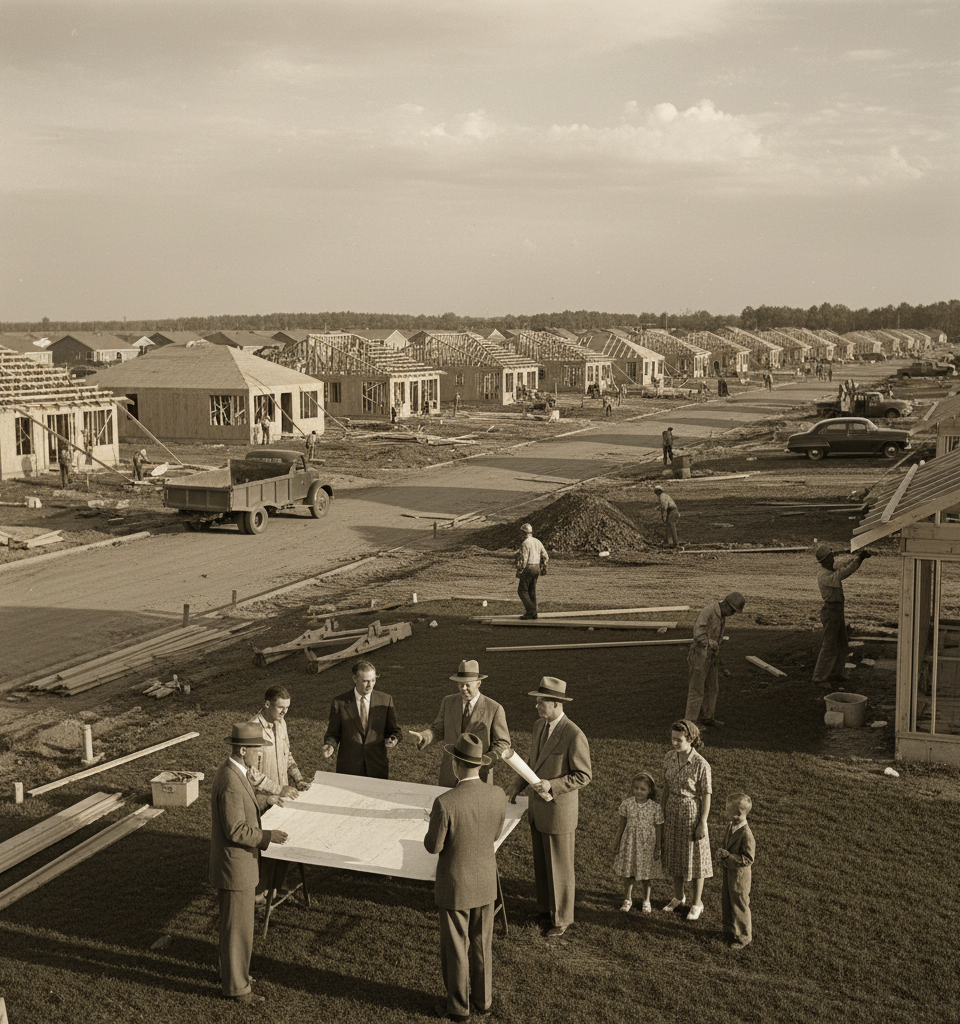
The United States is once again confronting a significant housing crisis, prompting a critical examination of historical precedents, particularly the aggressive construction drives that followed World War II. During that post-war epoch, America embarked on an unprecedented building boom that successfully alleviated a pervasive housing shortage, offering a potential blueprint – albeit one fraught with complexities and warnings – for addressing today's challenges.
Historical Context: The Post-War Boom
The period immediately following World War II saw millions of returning servicemen and their families seeking homes, creating immense pressure on the existing housing stock. The federal government, in conjunction with private industry, responded with ambitious initiatives. Policies such as the G.I. Bill made homeownership accessible to veterans through favorable loan programs, while innovative construction techniques and a streamlined regulatory environment facilitated rapid development. Large-scale suburbanization, spearheaded by developers like William J. Levitt, who pioneered mass-produced housing, became a defining characteristic of this era. This concerted effort led to an explosion of new housing units, fundamentally reshaping the American landscape and providing homes for a generation.
Parallels and Divergences with Today’s Crisis
Today's housing shortage shares some core characteristics with the post-war situation, primarily a demand that outstrips supply, leading to rapidly escalating prices and affordability issues. However, significant divergences exist. Unlike the relatively unified national effort seen after WWII, current approaches are often fragmented across local, state, and federal levels. Contemporary challenges also include more stringent zoning regulations, higher land costs, labor shortages, and increased environmental considerations, all of which can hinder rapid, large-scale construction. The availability of undeveloped land, particularly in desirable urban and suburban corridors, is also far more constrained now than in the mid-20th century.
Lessons from the Past
The post-war boom demonstrated the profound impact of robust government policies and coordinated private sector action. The willingness to innovate in construction methods, standardize designs, and invest heavily in infrastructure development proved crucial. Furthermore, the commitment to making homeownership attainable for a broad segment of the population through financial incentives was a key driver. Analysts suggest that a similar level of commitment and strategic coherence may be necessary to overcome the current deficit.
Warnings and Unintended Consequences
However, the post-war building spree was not without its drawbacks. Critics point to the proliferation of homogenous suburban communities, which often led to increased car dependency and, in some cases, the exacerbation of social and economic segregation. The rapid development often came at the expense of environmental considerations and neglected the unique character of existing communities. Understanding these historical warnings is crucial to developing sustainable and equitable housing solutions for the present.
Industry and Policy Implications
For the construction industry, the historical precedent suggests a need for innovation in building techniques, potentially revisiting modular or prefabrication methods to enhance efficiency and reduce costs. Policy-wise, there is a renewed discussion around easing restrictive zoning laws, incentivizing the development of diverse housing types, and potentially re-evaluating federal loan programs to stimulate home creation. The challenge lies in balancing the urgency of increased supply with the need for thoughtful, sustainable urban and suburban planning. The effectiveness of any modern "build our way out" strategy will hinge on its ability to learn from both the successes and failures of this transformative period in American history.
Looking Ahead
As discussions intensify regarding potential solutions to the current housing shortage, the legacy of the post-WWII reconstruction period continues to serve as a powerful cautionary tale and an inspiring example. Policymakers and industry leaders are weighing how to harness the lessons of that era – from leveraging federal support to fostering construction innovation – while simultaneously avoiding its less desirable outcomes, such as unchecked sprawl or inequitable development. The path forward is likely to require a complex interplay of public policy, private investment, and community engagement to address the multifaceted challenges of housing affordability and availability.