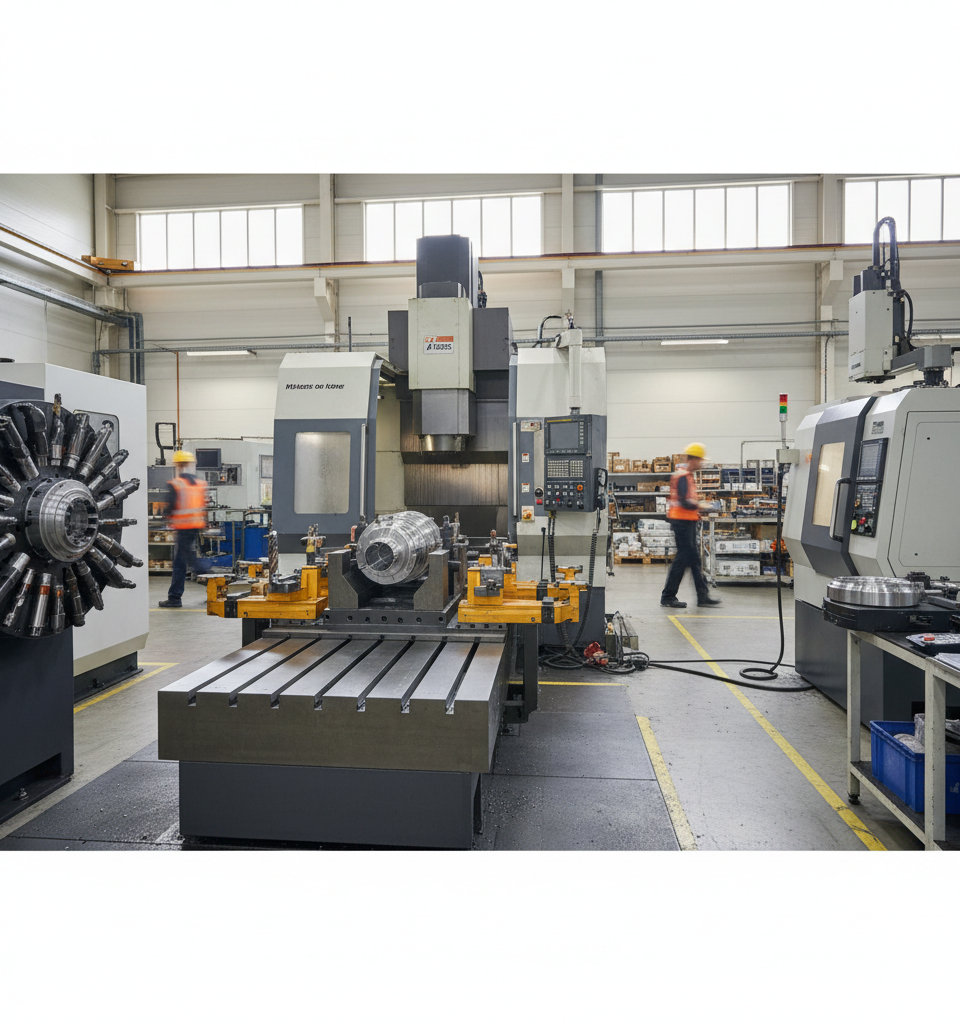
Cross-border manufacturing operations depend on cutting-edge technology to maintain competitive pricing and consistent quality across diverse markets. These new industrial solutions, by minimizing production variability and accelerating output, could directly impact the cost-efficiency and agility of global supply chains.
Industry's Focus on Efficiency
The manufacturing industry is poised to see significant advancements in efficiency and precision with the upcoming debuts from seven prominent companies: Kennametal, Walter, Kurt, SMW Autoblok, Zeiss, Renishaw, and Blum-Novotest. These innovations, spanning tooling, workholding, and metrology, are primarily designed to address two critical challenges in modern production: reducing setup times and achieving tighter manufacturing tolerances. This collective push reflects an industry-wide commitment to optimizing production processes, ensuring greater accuracy, and boosting overall productivity.
Driving Shorter Setups and Tighter Tolerances
Each company is introducing solutions that aim to contribute to a more streamlined and precise manufacturing environment. Kennametal and Walter are expected to reveal new tooling options, which are fundamental to cutting and shaping materials. Improved tool designs often lead to faster material removal rates and longer tool life, directly impacting production cycles. Kurt and SMW Autoblok will focus on workholding, which involves securely clamping workpieces during machining. Advancements here can significantly reduce the time taken to load and unload parts, and ensure greater stability for more accurate machining.
Advancements in Metrology
Equally critical to achieving precision are the metrology introductions from Zeiss, Renishaw, and Blum-Novotest. Metrology, the science of measurement, is essential for quality control and verifying the accuracy of manufactured parts. New systems from these companies are expected to offer more rapid and precise measurement capabilities. This could mean faster inspection cycles, allowing manufacturers to quickly identify and correct deviations, thereby maintaining tighter tolerances across production runs. The synergy between improved tooling, robust workholding, and advanced metrology is crucial for manufacturers aiming for high-quality output with minimal waste.
Broader Market Implications
The introduction of these new technologies signals a continued investment in the foundational elements of advanced manufacturing. For industries such as aerospace, automotive, medical devices, and electronics, where precision and efficiency are paramount, these developments are particularly relevant. Manufacturers operating in highly competitive global markets often leverage such innovations to gain an edge, allowing them to produce complex parts more reliably and cost-effectively. The emphasis on shorter setups also means greater flexibility for production lines, enabling quicker transitions between different product batches and designs, a key factor in demand-driven markets.
Expert Outlook
Industry analysts often highlight that sustained investment in core manufacturing technologies like tooling and metrology is vital for long-term competitiveness. While specific financial impacts for each company are not detailed, the collective effort to enhance operational efficiency through these product debuts is generally viewed as a positive indicator for the broader industrial sector. Such innovations typically lead to incremental but significant gains in productivity and quality control across various manufacturing segments.
The Path Ahead
As these new products become available, the industry will closely monitor their adoption and real-world performance. The success of these offerings will depend on their ability to deliver on the promise of tangible improvements in setup times and tolerance management. Manufacturers will evaluate how easily these new tools and systems integrate into existing production ecosystems and the return on investment they offer. The developments underscore an ongoing trend toward smarter, more automated, and more precise manufacturing processes, which are essential for meeting the evolving demands of global trade and production.