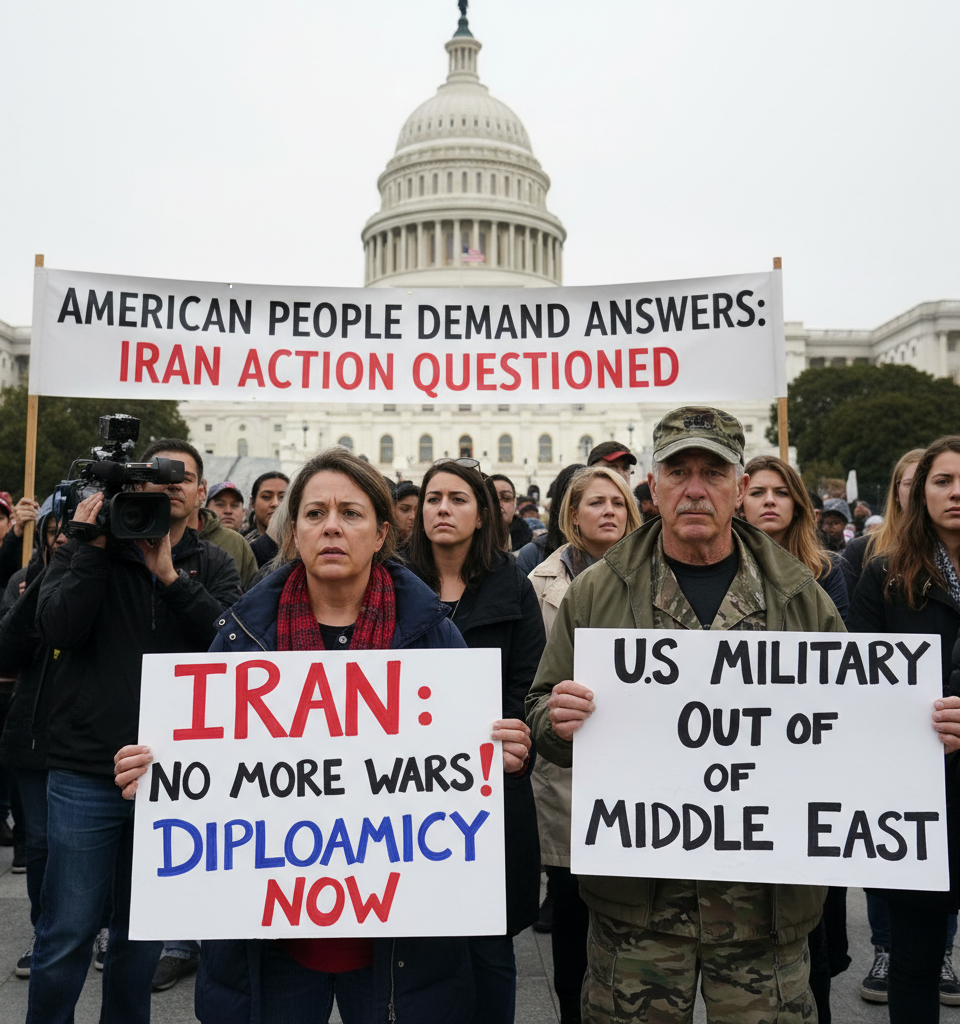
A recent survey conducted by Reuters/Ipsos reveals a notable shift in American public opinion regarding military engagements with Iran, with a clear majority — 51 percent — indicating that recent U.S. military actions have not been worthwhile. Released on Tuesday, the poll underscores a prevailing skepticism among the populace about the efficacy and justification of the nation's involvement, with only 24 percent of respondents believing the actions to be worth their associated costs and benefits. This sentiment emerges amidst heightened geopolitical tensions and follows several contentious encounters between the two nations, raising questions about the future trajectory of U.S. foreign policy in the Middle East.
This widespread disillusionment with military intervention in Iran is not an isolated incident but rather reflects a broader pattern of public weariness with protracted conflicts and foreign entanglements. Historical precedents, such as the wars in Iraq and Afghanistan, have left a lasting imprint on the American psyche, fostering cautious attitudes towards military deployments abroad. The perceived lack of clear objectives, coupled with significant financial and human costs, often leads to public skepticism regarding the long-term benefits of such actions. The current data suggests that the Trump administration's hawkish stance on Iran has failed to garner significant public support for its military dimension, potentially complicating its strategic objectives.
The Reuters/Ipsos poll, conducted online across a diverse demographic sample, highlights several key details underpinning this public sentiment. Beyond the headline figures, the survey revealed distinct partisan divides, though even within traditionally supportive demographics, enthusiasm for military action was muted. This nuanced view indicates that public opinion is not monolithic but rather a complex interplay of geopolitical concerns, domestic priorities, and media narratives. The methodology, typical of reputable national polls, suggests a margin of error of +/- 3 percentage points, offering a reliable snapshot of current public sentiment.
The implications of such strong public opposition extend beyond mere political rhetoric, potentially impacting financial markets and international diplomacy. Instability in the Middle East, exacerbated by military action, often leads to spikes in oil prices, impacting global economies. Furthermore, a divided American public can weaken the U.S.'s diplomatic leverage, as allies may perceive a lack of unified resolve behind foreign policy initiatives. Industries reliant on stable international relations, such as global trade and energy, closely monitor these shifts in public opinion as indicators of future policy directions and potential risks.
Foreign policy experts and political analysts are keenly dissecting these poll results, emphasizing the potential constraints they place on executive action. Dr. Eleanor Vance, a senior fellow at the Council on Foreign Relations, noted, "These numbers clearly demonstrate a public wary of new military entanglements. Any administration looking to escalate actions in Iran will face significant domestic headwinds, making a purely military solution increasingly unpalatable." Other analysts point to the upcoming election cycle, suggesting that candidates will likely tailor their foreign policy platforms to align with, or at least acknowledge, this prevailing public sentiment.
Looking ahead, the administration's response to this public skepticism will be critical. It may necessitate a re-evaluation of current strategies, potentially prioritizing diplomatic solutions and de-escalation over military force. Upcoming congressional hearings and public statements from administration officials will be crucial in gauging the government's understanding and response to these public sentiments. The ongoing negotiation dynamics with Iran, along with the broader regional security landscape, will undoubtedly be shaped by this demonstrable shift in American public opinion, signaling that future military actions will be subject to intense public and political scrutiny.