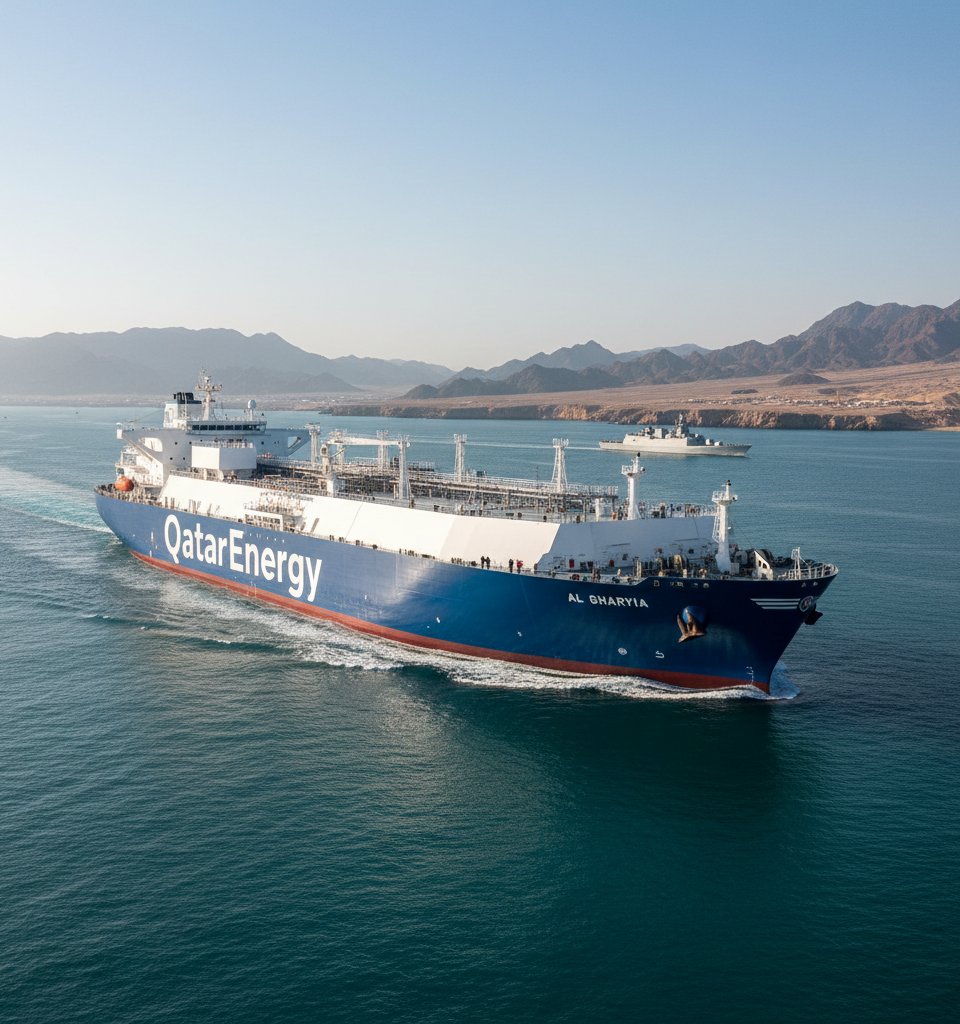
Qatar, a pivotal player in the global energy landscape, has successfully navigated its first liquefied natural gas (LNG) shipment through the Strait of Hormuz following the recent outbreak of conflict in the Middle East. The Al Ghariya tanker, laden with Qatari LNG, completed its passage this week, arriving at its designated market. This maritime action marks a significant return to routine operations for QatarEnergy, underscoring the indispensable nature of the Strait of Hormuz for the uninterrupted flow of global energy supplies amidst heightened geopolitical sensitivities.
Context and Geopolitical Significance
The Strait of Hormuz, a narrowchokepoint between the Persian Gulf and the Gulf of Oman, is arguably the world's most strategically important oil and gas transit waterway. Approximately one-fifth of global oil consumption and a substantial percentage of LNG passes through this strait daily. The recent regional conflict had cast a shadow of uncertainty over shipping routes in the area, leading to speculation about potential disruptions and their impact on global energy prices. Qatar, as the world's second-largest LNG exporter, relies heavily on this passage to reach key markets in Asia and Europe. The decision to resume full operations through the strait reflects a carefully considered assessment of the current security environment and the imperative to maintain commercial commitments.
Shipment Details and Market Implications
The Al Ghariya, a Q-Max vessel, one of the largest LNG carriers in the world, successfully navigated the strait without incident. Its destination, reportedly in East Asia, typically represents a premium market for Qatari gas. The smooth passage of this shipment is crucial for reinforcing confidence in the security of the strait as a viable shipping lane. Prior to this, several Qatari LNG carriers had rerouted, opting for longer and more expensive journeys around the Arabian Peninsula, reflecting the initial caution adopted by shipping companies. The resumption of direct passage through Hormuz will likely stabilize shipping costs and delivery times, benefiting both QatarEnergy and its international clientele.
Broader Industry and Market Impact
The return of Qatari LNG shipments through the Strait of Hormuz sends a reassuring message to the global energy market. It suggests that despite elevated tensions, critical energy infrastructure and transit routes remain operational, albeit under closer scrutiny. The LNG market, already experiencing volatility due to geopolitical events and demand fluctuations, will welcome this development. European buyers, in particular, who have become increasingly reliant on LNG following disruptions to Russian pipeline gas, will find solace in the continued reliability of Qatari supplies. Any prolonged disruption to Qatari LNG exports could have significantly impacted gas prices, potentially leading to energy insecurity in import-reliant nations.
Expert Analysis and Future Outlook
Energy analysts have closely monitored the situation, with many emphasizing the critical balance between security concerns and economic necessity. Dr. Jane Mitchell, an expert in maritime security and energy geopolitics, commented, “Qatar's decision to resume direct shipments through Hormuz is a calculated risk that underscores the economic imperative of maintaining these vital trade routes. It also suggests that international efforts to safeguard commercial shipping in the region are having a tangible impact.” She added, “While the immediate threat has not vanished, the successful passage of the Al Ghariya sets a precedent for continued, albeit cautious, activity.” This move also highlights Qatar's commitment to its long-term supply contracts, reinforcing its reputation as a reliable energy provider.
What Lies Ahead
While this successful passage is a positive indicator, the security landscape in the Middle East remains fluid. Oil and gas companies will continue to monitor regional developments closely, potentially adjusting shipping routes and insurance premiums based on evolving threat assessments. QatarEnergy, with its ambitious expansion plans for the North Field, will prioritize securing its shipping lanes to accommodate increased export volumes in the coming years.
The international community, too, will likely intensify diplomatic efforts to de-escalate tensions and ensure the freedom of navigation through critical waterways like the Strait of Hormuz, recognizing its profound impact on global energy security and economic stability. Further successful transits will be needed to fully restore market confidence and drive down the elevated insurance costs that have recently been imposed on vessels operating in the region.