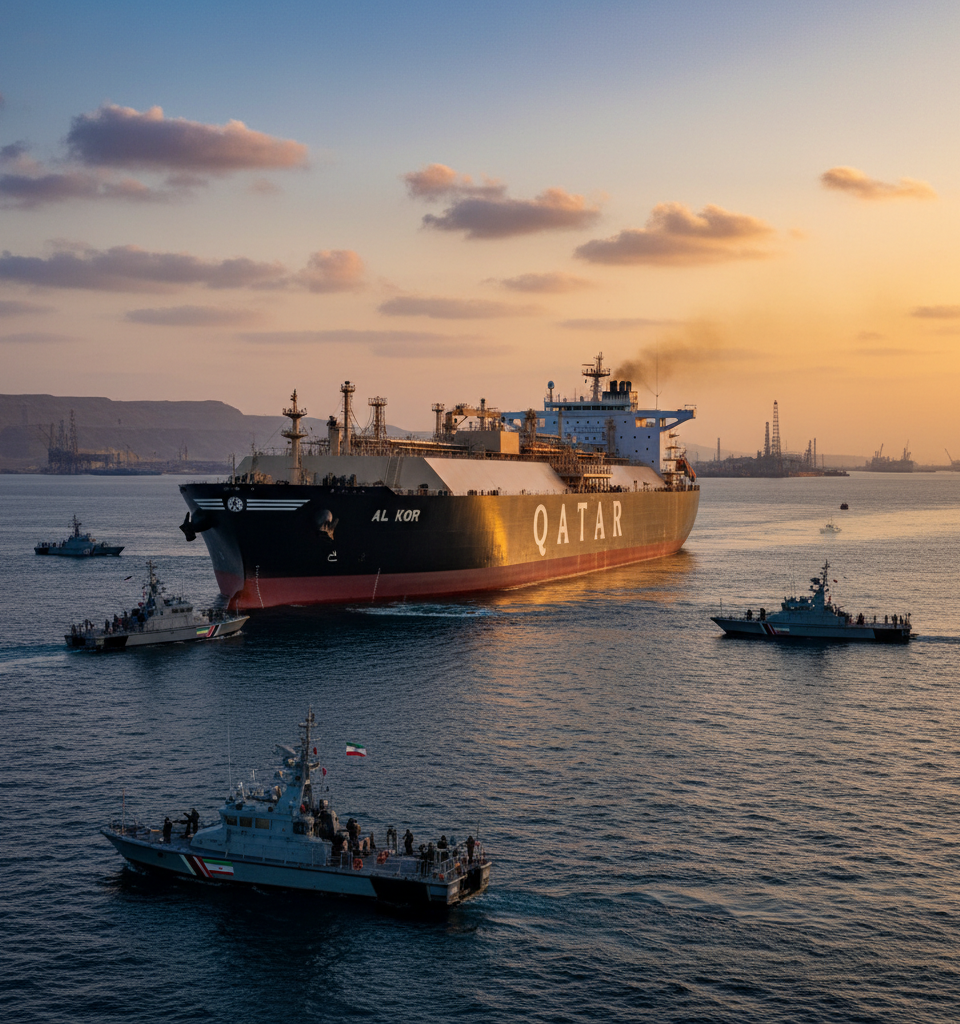
Doha, Qatar – The State of Qatar, one of the world's wealthiest nations per capita, is grappling with an extraordinary economic paralysis as escalating hostilities with Iran have effectively halted its crucial natural gas exports. Iranian military actions, including targeted strikes and blockades of key shipping lanes in the Arabian Gulf, have crippled maritime transit, rendering the safe passage of liquefied natural gas (LNG) tankers virtually impossible. This crisis directly imperils Qatar's strategic economic pivots, which seek to transition the nation's immense hydrocarbon wealth into a diversified, sustainable future, away from sole reliance on energy revenues.
Context of the Crisis
Qatar's economic prowess is largely underpinned by its vast natural gas reserves, ranking among the largest globally. The nation has invested hundreds of billions over the past decades to become a leading exporter of LNG, supplying critical energy to markets across Asia and Europe. This reliance, while a source of immense wealth, also presents a significant vulnerability. The ongoing conflict with Iran has starkly exposed this Achilles' heel, transforming a regional dispute into a direct threat to national economic stability. Historically, tensions between Qatar and Iran have simmered, often due to differing geopolitical alignments and regional influence, but the current escalation marks an unprecedented level of direct economic warfare.
Dire Economic Consequences
The immediate impact on Qatar's economy has been severe. LNG exports, which constitute over 60% of Qatar's total export earnings and nearly 40% of its GDP, have plummeted by an estimated 90% in the last month alone, according to preliminary industry figures. Major projects, including the North Field Expansion designed to boost LNG production capacity from 77 million tonnes per annum (MTPA) to 126 MTPA by 2027, face significant delays and budget overruns. "This isn't just a revenue disruption; it's a fundamental challenge to our long-term vision," stated a senior official from Qatar's Ministry of Finance, speaking on background due to the sensitivity of the situation. "Our sovereign wealth fund, though robust, cannot indefinitely cover a complete cessation of our primary income stream without serious recalibrations."
Global Energy Market Repercussions
Beyond Qatar's borders, the disruption is sending shockwaves through the global energy marketplace. Europe, which has increasingly relied on Qatari LNG to offset reduced Russian gas supplies, is now facing heightened energy security concerns and soaring spot prices. Asian markets, particularly Japan, South Korea, and India, which are major long-term contract holders for Qatari gas, are scrambling to secure alternative supplies, driving up demand and prices globally. Benchmark European gas futures have jumped by 15% in the past week, with analysts predicting further volatility if the situation persists. The incident underscores the fragility of global energy supply chains and the geopolitical risks inherent in reliance on centralized production hubs.
Expert Analysis and Outlook
Energy analysts are deeply concerned about the protracted nature of this crisis. Dr. Eleanor Vance, a geopolitical risk expert at the London School of Economics, commented, "The Strait of Hormuz, a critical chokepoint for Qatari energy exports, effectively becomes a weapon in this conflict. Until a secure and enforceable maritime corridor can be guaranteed, or the underlying tensions de-escalate, Qatar's economic lifeline remains severed." She added, "The long-term implications for investor confidence in the region are profound, potentially impacting foreign direct investment across the Gulf." Forecasts suggest that if the blockade continues for another three to six months, Qatar's real GDP could contract by as much as 10% this year, a stark reversal from its previously projected 4.5% growth.
Future Implications and Diplomatic Efforts
The immediate future hinges on diplomatic interventions and the security of maritime routes. International efforts, spearheaded by the United Nations and several European powers, are underway to de-escalate the conflict and establish safe shipping corridors. However, progress has been slow, with both Qatar and Iran hardening their stances. Qatar is reportedly exploring contingency plans, including potential investments in alternative energy sources and accelerated diversification into non-hydrocarbon sectors like technology and tourism, though these efforts offer no immediate remedy. The crisis poses an existential test for Qatar's economic resilience and its ability to navigate complex geopolitical landscapes while safeguarding its status as a pivotal global energy supplier. The coming weeks will be critical in determining the trajectory of this unprecedented economic blockade.
Potential Long-Term Shifts
This crisis is also prompting a re-evaluation of energy infrastructure security and diversification strategies worldwide. Nations heavily reliant on specific energy corridors are likely to accelerate investments in domestic production, renewable energy, and expanded storage capacity. For Qatar, the experience underscores the urgent need to fast-track its National Vision 2030, reducing its dependency on any single commodity. This may involve aggressive pushes into logistics, finance, and advanced manufacturing, though the timeline for such a profound economic shift will be significantly challenged without the stable revenue from its energy exports. The current situation serves as a stark reminder that even the wealthiest nations are susceptible to geopolitical shocks, particularly when their core economic engine is exposed to external threats.