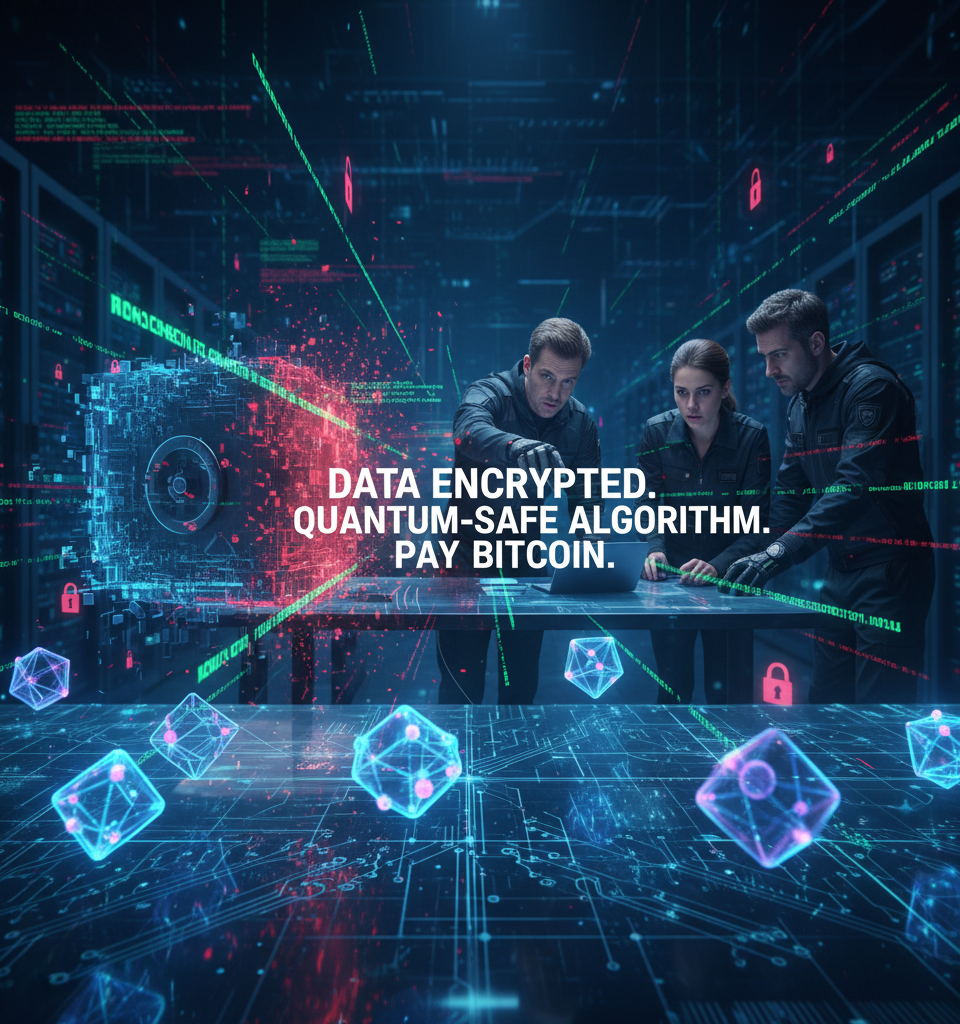
In a significant and alarming first for global cybersecurity, a newly identified ransomware variant has been confirmed to employ post-quantum cryptography (PQC) algorithms. This development marks a pivotal moment, as it signifies a proactive — albeit currently inefficient — move by threat actors to future-proof their malicious operations against the eventual advent of quantum computing. The identification of this quantum-resistant ransomware challenges conventional security paradigms and compels an urgent re-evaluation of current cryptographic standards and ransomware defenses.
The Dawn of a New Threat Landscape
This discovery is particularly unsettling because, from a practical standpoint, the immediate performance overhead of PQC algorithms typically outweighs any current benefits for standard encryption tasks. The inclusion of PQC suggests strategic foresight by the ransomware developers, anticipating a future where today's widely used public-key encryption schemes, such as RSA and ECC, could be vulnerable to attacks from powerful quantum computers. While fully functional, large-scale quantum computers capable of breaking current encryption remain years away, this ransomware demonstrates a clear intent to construct long-term, uncrackable extortion mechanisms. The implications extend far beyond mere data encryption, touching upon national security, critical infrastructure, and the financial sector, where long-term data confidentiality is paramount.
Unveiling the Technical Details
Although specific details of the ransomware family and its PQC implementation are under wraps due to ongoing investigations, security researchers have confirmed the utilization of at least one PQC candidate algorithm, likely from the National Institute of Standards and Technology's (NIST) standardization process, such as lattice-based cryptography. This integration indicates a sophisticated understanding of cryptographic principles and a willingness to invest resources in advanced defensive tooling for their malicious payloads. The practical consequence for victims today is negligible, as quantum computers aren't prevalent enough to exploit current encryption weaknesses. However, the presence of PQC ensures that even if a backup of encrypted data were stolen and stored for decades, it would theoretically remain indecipherable, even by future quantum machines, effectively creating a "future-proof" extortion scenario.
Industry and Market Repercussions
The emergence of quantum-safe ransomware will undoubtedly send ripples across the cybersecurity industry and the broader market. Enterprises, particularly those handling sensitive long-term data like financial institutions, healthcare providers, and government agencies, will need to accelerate their strategies for 'crypto agility'. This involves preparing their systems to swiftly adopt new cryptographic standards as they become available. The demand for cybersecurity solutions specifically designed to detect and mitigate PQC-infused threats will likely surge, creating new market opportunities and challenges for vendors. Furthermore, the insurance market for cyber risk may see adjustments, as the potential longevity of data exfiltration threats increases, making recovery and remediation efforts more complex and costly.
Expert Outlook on PQC Adoption
Cybersecurity experts are weighing in on the implications, with many emphasizing the strategic rather than immediate operational threat. Dr. Anya Sharma, a leading cryptographer at QuantumSecure Labs, stated, "This isn't about immediate decryption risk. It's about a mindset shift among ransomware developers. They are playing the long game, preparing for a post-quantum world, and that forces everyone else to think similarly." Another analyst, Mark Jenkins from CyberThreat Intelligence Group, noted, "While initially inefficient, the presence of PQC serves as a proof-of-concept. It signals that bad actors are highly attentive to cryptographic advancements and are willing to experiment, even if the practical benefits are years away. This validates the urgency of government and industry initiatives like NIST's PQC standardization." This proactive stance by threat actors highlights a critical race between offensive and defensive cryptographic innovations.
The Road Ahead: Future Implications
The confirmed use of PQC in ransomware portends a future where cyberattacks are designed with quantum resilience in mind. Organizations must now accelerate their quantum readiness programs. This includes identifying critical data assets that require long-term protection, understanding potential vulnerabilities to quantum algorithms, and developing migration plans for PQC. Governments and international bodies will likely increase their focus on PQC research, development, and standardization to safeguard national infrastructure and classified information. The coming years will be crucial for the transition to quantum-resistant cryptography, a transition that has just been underscored as urgent and non-negotiable by the very adversaries it seeks to defend against. The era of quantum-safe threats has arrived, albeit early, and the cybersecurity community must respond with equal foresight and agility.