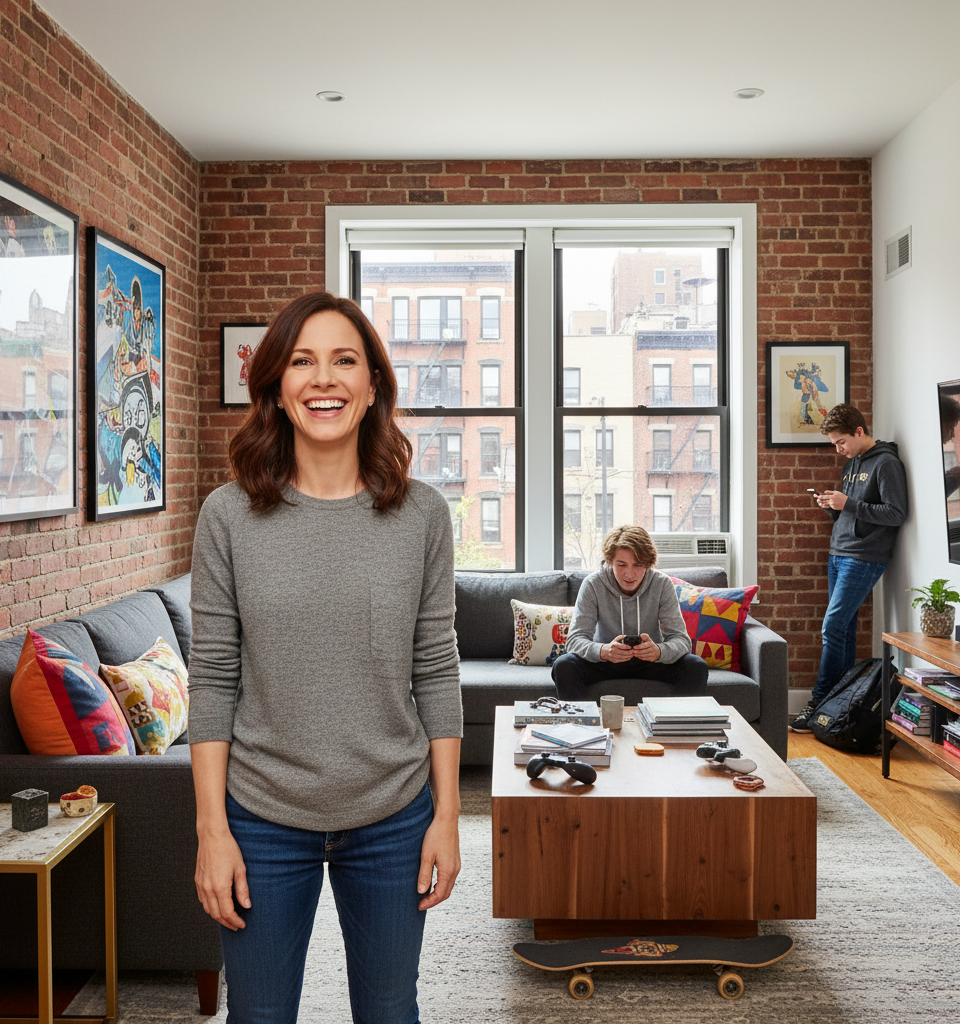
NEW YORK, NY – Rachel Dratch, the celebrated Emmy-nominated actress and "Saturday Night Live" alumna, has recently completed a comprehensive redesign of her two-bedroom Manhattan apartment, specifically transforming her 13-year-old son's bedroom from a childhood space into a more age-appropriate teenage sanctuary. The renovation, which concluded last week, marks a significant milestone for Dratch, 60, who has resided in the unit for nearly a decade and, contrary to common celebrity migration patterns, has no current plans to depart the bustling urban environment. Dratch's decision to invest in a substantive apartment overhaul, rather than seeking a larger or more suburban dwelling, highlights a recurring theme among established New York City residents adapting their living spaces to evolving family needs.
For many, the profound cultural, professional, and social benefits of city life outweigh the allure of larger suburban homes. The actress has consistently expressed her deep affinity for New York, viewing it not just as a workplace but as an integral part of her and her son's identity. This commitment to urban living runs counter to the narrative often portrayed, where celebrities flee cities for more isolated locales once children reach adolescence.
The renovation focused on modernizing the formerly child-centric room, incorporating elements like a new desk, enhanced storage solutions, and a more sophisticated aesthetic to reflect her son's developing independence and interests. While specific financial details of the remodel were not disclosed, sources familiar with similar upscale Manhattan renovations suggest such projects can range from $50,000 to well over $200,000, depending on the scope of work and materials chosen. Dratch reportedly collaborated with a well-regarded local interior designer to execute her vision, prioritizing functionality and style within the confined urban footprint.
Her decision to remain in her current unit also circumvents the notoriously high transaction costs associated with buying and selling real estate in New York City, including broker fees, transfer taxes, and closing costs, which can collectively amount to 8-10% of a property's value. This trend of celebrities optimizing existing city dwellings rather than relocating indicates a growing maturity in the luxury urban housing market. For years, the narrative often revolved around high-profile figures either sprawling into expansive penthouses or relocating to estates outside the city.
However, a segment of the celebrity population, like Dratch, is demonstrating a preference for the sustained vibrancy and convenience of urban centers, even as their family requirements shift. This commitment to localized investment also positively impacts the city's design and renovation industries. Real estate analysts suggest Dratch's long-term commitment to her apartment, coupled with a significant renovation, reflects a broader confidence in the stability and enduring appeal of the Manhattan real estate market. "
We're seeing more discerning buyers and long-term owners investing in quality upgrades that enhance their current living experience rather than perpetually chasing the next new address," commented Sarah Chen, a senior analyst at Urban Property Insights. "This indicates a strategic approach to real estate asset management, prioritizing lifestyle and long-term value over short-term market fluctuations or perceived needs for larger, suburban footprints." Chen also noted that the demand for two-bedroom units, particularly in prime Manhattan neighborhoods, remains robust, with prices maintaining strong levels despite broader economic uncertainties.
Looking ahead, Dratch's redesigned space not only caters to her son's immediate needs but also offers long-term flexibility, illustrating how urban residences can adapt to various life stages. Her continued presence in New York City's artistic and social fabric underscores the enduring magnetism of the metropolis for creative professionals. This renovation could also inspire other long-term urban dwellers to optimize their existing properties, reinforcing the resilience and adaptability inherent in city living as families grow and evolve within their cherished communities.
The project also signals a broader trend within interior design, focusing on versatility and personalization for compact, high-value urban spaces.