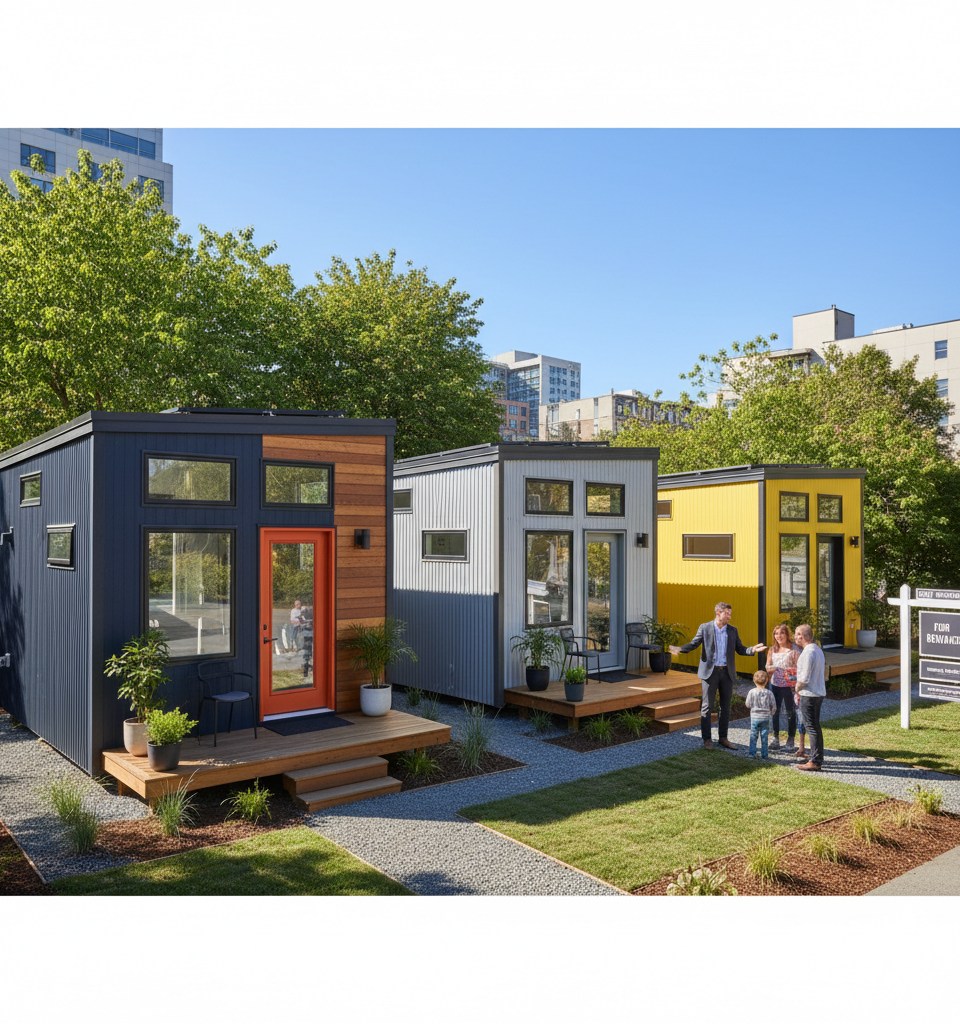
Seattle’s dynamic real estate landscape is buzzing with the listing of a distinctive tiny-home compound, featuring three fully renovated residences, for an asking price of $900,000. Located in a rapidly developing urban pocket, this property, which once served as housing for an adjacent industrial estate, has been dramatically transformed through an extensive renovation effort spanning from 2021 to 2023. The offering represents an unusual opportunity for investors, small families, or those seeking a multi-generational living solution within the city’s high-density environment.
Historical Context and Transformation
The origins of this compound trace back decades, when the individual structures were erected to provide convenient housing for employees of a nearby industrial facility. This functional purpose meant their initial construction was utilitarian rather than aesthetic or luxurious. However, a recent two-year renovation, completed in late 2023, meticulously refurbished each of the three approximately 400-square-foot units. The project involved significant structural and cosmetic upgrades, including new roofing, updated electrical and plumbing systems, modern appliances, and contemporary finishes, effectively transforming dated staff quarters into charming, efficient, and highly livable residences. The renovation aimed to maximize the utility and appeal of each compact space, incorporating smart storage solutions and open-concept layouts.
Key Property Details and Investment Potential Each of the three tiny homes on the roughly 0.1-acre lot features a single bedroom, a bathroom, and an integrated living and kitchen area.
The combined living space across all three units totals approximately 1,200 square feet, making the price per square foot around $750, a figure that reflects Seattle's premium real estate market. The listing highlights the compound's potential for diverse uses: as an income-generating rental property with three distinct units, a multi-generational family living arrangement, or even a live-work setup for a small business. With Seattle's average rent for a one-bedroom apartment often exceeding $2,000 per month, this compound could generate substantial rental income, offering a compelling return on investment in a market starved for affordable density.
Impact on the Urban Housing Market
This listing underscores a growing trend in urban development: the increasing acceptance and demand for smaller, more efficient living spaces. As housing affordability remains a critical issue in cities like Seattle, innovative solutions like tiny home compounds are garnering more attention. This particular property serves as a tangible example of how underutilized or older structures can be repurposed to address contemporary housing needs. It also highlights the shift towards denser urban living and the potential for creative property development to enhance community diversity and accessibility. The sale could set a precedent for similar adaptive reuse projects, encouraging developers to explore non-traditional housing models.
Expert Perspective on Tiny Homes in Seattle
Real estate analysts view this offering as a bellwether for the evolving Seattle market. "This property perfectly captures the confluence of several significant trends: a desperate need for affordable density, the enduring appeal of unique living spaces, and the economic viability of micro-units," explains Dr. Eleanor Vance, a senior housing market economist at the University of Washington. "While the $900,000 price tag may seem high for tiny homes, it reflects the underlying land value in a prime Seattle location and the income-generating potential of three separate units. Investors are increasingly looking beyond traditional single-family homes or large apartment complexes to properties that offer flexible tenancy and diversified income streams." She notes that the aesthetic appeal and modern amenities after renovation significantly elevate the homes beyond basic tiny house standards.
Future Implications and Market Outlook
The sale of this tiny-home compound will likely be closely watched by developers, urban planners, and prospective homeowners. Should it sell quickly and at or near its asking price, it could signal a stronger appetite in the Seattle market for similar multi-unit tiny home properties or repurposed residential compounds. This could lead to an increase in projects aiming to convert older, underutilized buildings or lots into compact, multi-dwelling units, contributing to the city's housing stock and diversifying housing options beyond large-scale apartment complexes. Furthermore, successful integration of such properties could influence future zoning discussions, potentially paving the way for more flexible regulations regarding smaller lot sizes and accessory dwelling units (ADUs) in urban environments, ultimately shaping the future of Seattle's residential landscape.