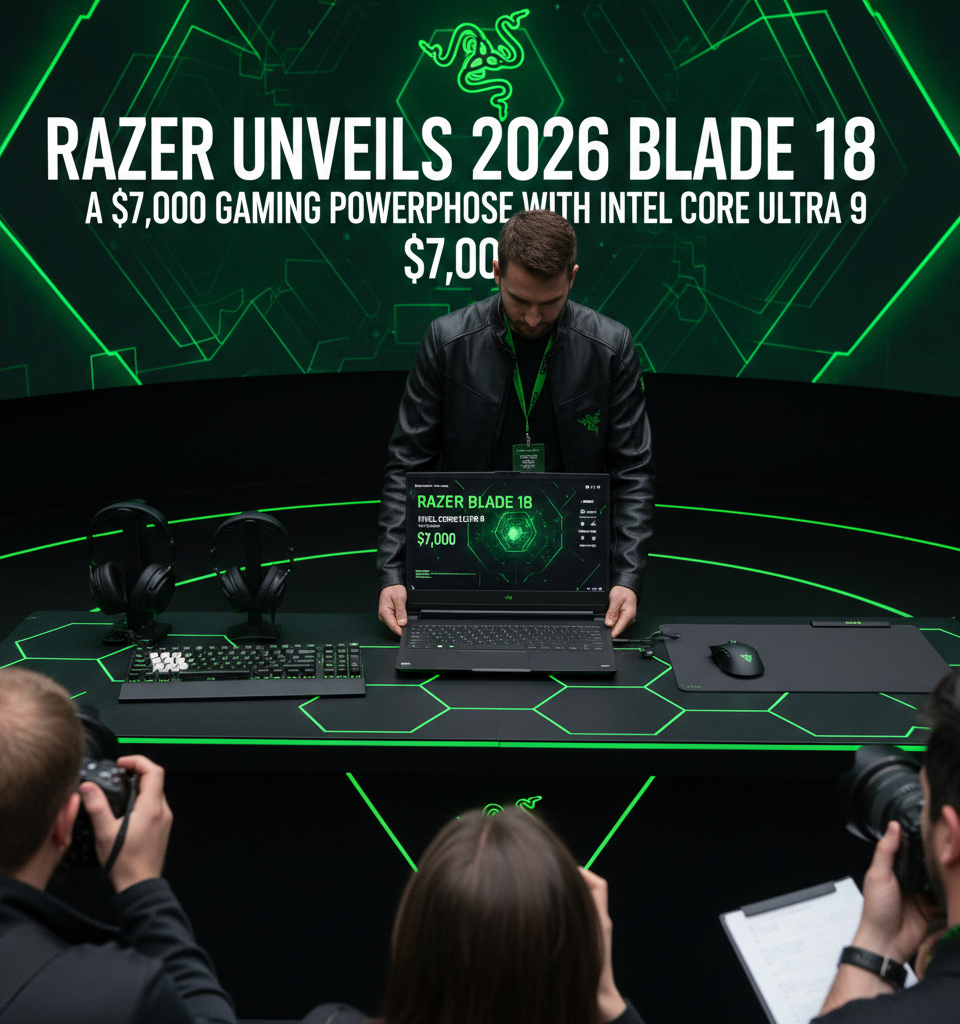
Razer, a dominant force in the high-performance gaming hardware market, has officially announced a significant refresh to its flagship Blade 18 laptop lineup for the forthcoming 2026 model. The marquee enhancement is the integration of the cutting-edge Intel Core Ultra 9 290HX Plus processor, positioning the device as a powerhouse for demanding tasks and next-generation gaming. This strategic upgrade aims to cement Razer's standing at the apex of the portable gaming segment, with a fully specced-out variant anticipated to reach a premium retail price of $7,000 upon its release.
Context and Significance
This refresh arrives amidst a fiercely competitive landscape in the high-end laptop market, where manufacturers are constantly pushing boundaries in processing power, graphical capabilities, and thermal management. The Blade 18 series has historically represented Razer's commitment to delivering uncompromised performance in a relatively sleek form factor. The decision to incorporate the Intel Core Ultra 9 290HX Plus underscores a broader industry trend towards leveraging advanced AI acceleration and increased core counts for enhanced productivity and gaming experiences. Razer's consistent investment in iterative improvements ensures its products remain relevant and desirable among a discerning user base willing to pay a premium for top-tier specifications.
Key Technical Details and Features
The 2026 Razer Blade 18 is expected to boast a suite of premium components alongside its new CPU. While full specifications are still emerging, industry analysts anticipate top-tier NVIDIA GeForce RTX graphics cards, potentially the latest 50-series, to complement the Intel Core Ultra 9 290HX Plus. Memory configurations are likely to reach 64GB or even 128GB of high-speed DDR5 RAM, paired with multiple NVMe PCIe Gen 5 SSDs for unparalleled storage performance. The device will likely feature advanced display technology, such as a high-refresh-rate QHD+ or 4K mini-LED panel, providing exceptional visual fidelity crucial for both gaming and creative professional workflows. Details on improved cooling solutions, crucial for maintaining peak performance under load, are also highly anticipated.
Market Impact and Competitive Landscape
The introduction of the updated Blade 18 is set to intensify competition within the ultra-premium gaming laptop segment. Brands like Alienware, MSI, and ASUS ROG consistently vie for market share with their own high-performance offerings. Razer’s strategy, often characterized by its meticulous design and premium build quality, aims to differentiate the Blade 18 beyond raw specifications. The $7,000 price point for the top configuration places it firmly in the niche category of luxury gaming machines, appealing to professionals, content creators, and esports enthusiasts who require the absolute best in mobile computing without compromise. This move signals Razer's confidence in its brand premium and its target demographic's willingness to invest in leading-edge technology.
Expert Analysis and Future Implications
Technology analysts are closely watching Razer's move. "The integration of the Intel Core Ultra 9 290HX Plus isn't just about raw clock speeds; it's about leveraging Intel's latest architecture, which likely includes significant AI capabilities and improved power efficiency," notes Sarah Chen, a senior analyst at Tech Insights Group. "This allows Razer to market a device that not only excels in gaming but also in demanding creative applications, justifying its hefty price tag." Chen also suggests that the continued push towards integrated AI silicon in CPUs will be a defining characteristic of future high-end laptops, influencing everything from gaming performance to battery life and software optimizations. Razer's early adoption positions it as a leader in this evolving technological wave.
What's Next for Razer
Looking ahead, the success of the 2026 Blade 18 will undoubtedly influence Razer's product roadmap. The company will likely collect extensive user feedback to refine future iterations, potentially exploring even more innovative cooling technologies or exploring alternative display options like OLED. There's also an ongoing industry discussion about a convergence of gaming and professional workstations, and the Blade 18, with its high-end specifications, sits squarely in this intersection. Further investments in software optimization, particularly Razer Synapse, will be crucial to maximize the capabilities of the new hardware and maintain a seamless user experience. The release of the Blade 18 model will also set benchmarks for other manufacturers, driving innovation across the entire premium laptop sector in the coming months.