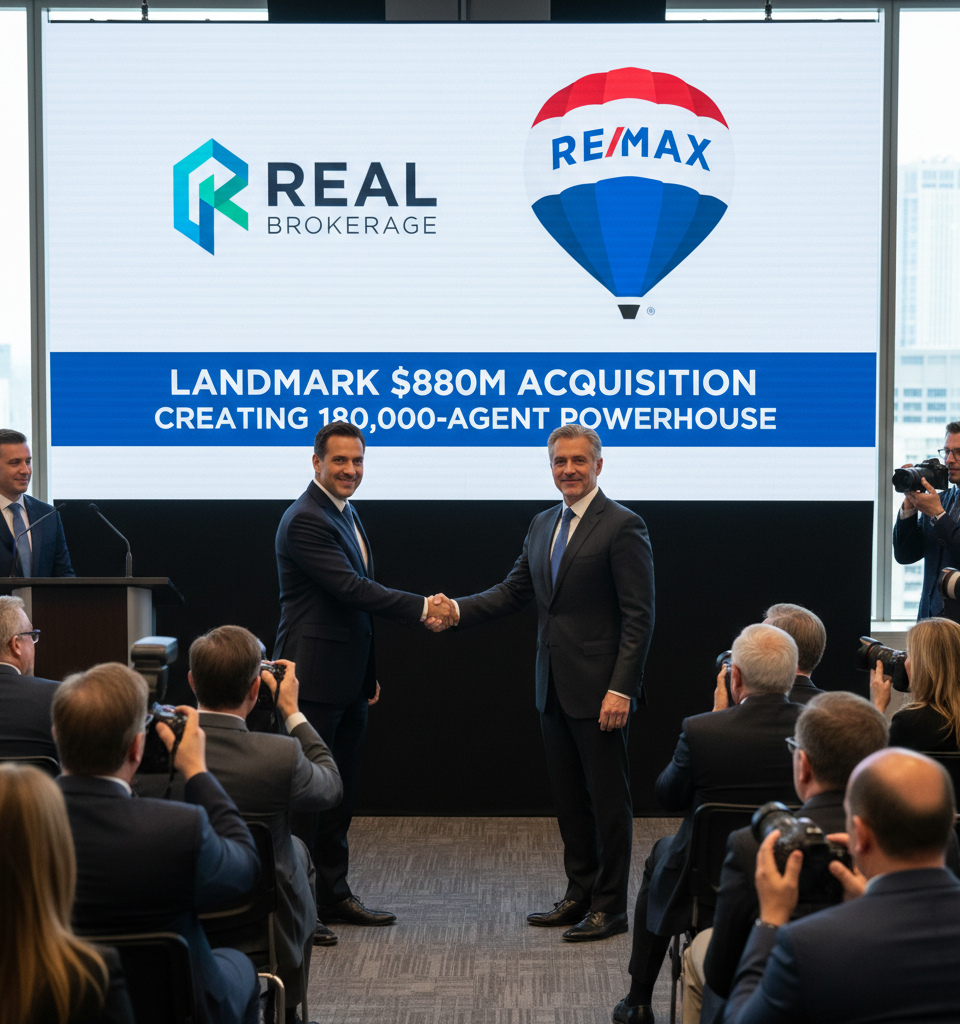
Real Brokerage Inc. has unveiled its intent to acquire the iconic real estate franchisor REMAX Holdings, Inc. in a strategic move valued at roughly $880 million, primarily through an all-stock deal. This significant transaction, anticipated to close in early 2025 pending regulatory approvals and shareholder consent, is poised to merge two substantial forces in the real estate industry, creating an agent network exceeding 180,000 professionals and marking a pivotal moment in brokerage consolidation.
Context and Strategic Imperative
This acquisition arrives amidst a period of rapid evolution and increasing pressure within the real estate brokerage sector. Persistent high interest rates, fluctuating housing inventory, and the dramatic shifting sands of commission structures following recent legal settlements have intensified the need for scale and operational efficiencies. For Real, a brokerage known for its technology-forward, agent-centric model and competitive commission splits, acquiring REMAX offers an immediate and massive expansion of its footprint and brand recognition. For REMAX, a venerable brand established in 1973 with a vast franchise network, this deal potentially provides access to Real's newer technological infrastructure and a pathway to navigate the challenging modern market dynamics.
Transaction Details and Synergies
The proposed acquisition will see REMAX shareholders receive Real stock at a yet-to-be-disclosed exchange ratio, valuing REMAX at approximately $880 million based on Real's recent trading prices. The combined entity is projected to boast a staggering 180,000 agents across its various brands, including Real, REMAX, and Motto Mortgage. Management from both companies have emphasized that the synergy lies not just in agent count, but in leveraging Real's scalable technology platform to enhance services for REMAX agents and franchisees, while also integrating Real's capital-light, revenue-share model into parts of the combined operation. Leadership has indicated a commitment to maintaining the distinct identities and operational models of key brands where appropriate, while seeking significant cost efficiencies and cross-selling opportunities across the vast network.
Broader Market Implications
This consolidation is set to send reverberations throughout the residential real estate market. The creation of such a massive agent platform could increase competitive pressures on other large brokerages like Keller Williams, eXp Realty, and Compass. It highlights a growing trend where scale, technology integration, and attractive agent value propositions are becoming paramount for survival and growth. Smaller independent brokerages may find themselves under even greater pressure, as the resources and technological capabilities of these combined giants become increasingly difficult to match. The deal also underscores the ongoing strategic recalibration prompted by the NAR commission settlement, which is compelling brokerages to re-evaluate their business models and find new avenues for profitability.
Expert Perspectives Industry analysts have largely viewed the deal as a bold, albeit complex, strategic maneuver.
"This is a game-changing announcement that reflects the tremendous pressures and opportunities in today's real estate market," commented Sarah Jenkins, a senior analyst at PropTech Insights. "The challenge will be in successfully integrating two very different corporate cultures and agent models, especially maintaining the franchise relationships under the REMAX umbrella while scaling Real's tech-first approach. However, if executed well, the potential for market dominance and efficiency gains is substantial." Others highlight the strategic timing, suggesting that acquiring a legacy brand with a strong agent base during a period of disruption could yield long-term advantages if integration is handled adeptly.
The Path Forward
The coming months will be critical as Real navigates the intricate process of regulatory approvals and seeks shareholder endorsement. Integration plans will need to be meticulously developed to ensure a smooth transition for agents and franchisees under both banners. The focus will be on demonstrating to the market how the combined entity can offer enhanced value propositions, improved technology, and greater earning potential for its vast agent base. Furthermore, the industry will keenly observe how the new combined entity positions itself concerning future commission models and agent compensation structures, which remain a hot-button issue. The successful execution of this acquisition could set a new benchmark for industry consolidation and strategic growth in residential real estate for the decade to come.