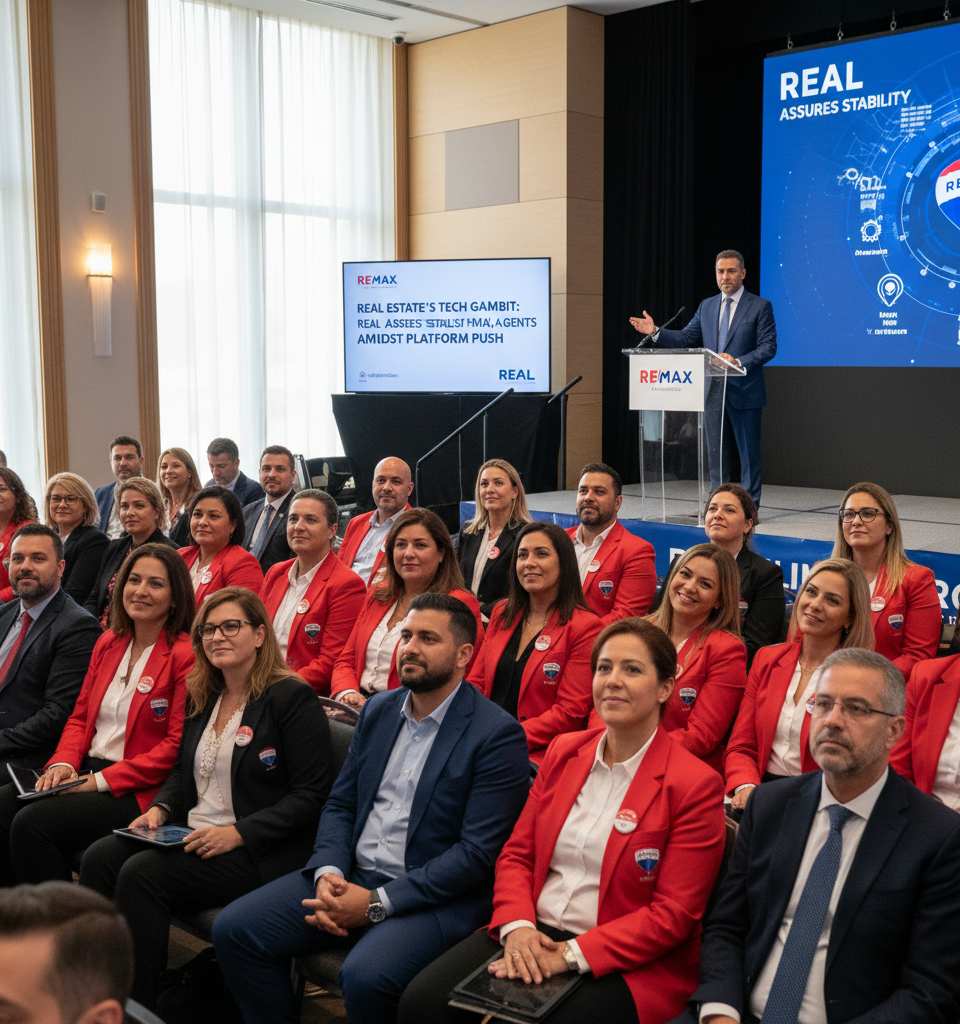
Real, a rapidly expanding cloud-based real estate brokerage, has assured REMAX agents that their operational environment will remain unchanged despite Real's ongoing strategic push to integrate its proprietary technology platform throughout the extensive REMAX franchise system. This initiative, while significant for Real's long-term growth trajectory, operates on a voluntary adoption basis for individual REMAX franchises, presenting both opportunities and challenges for the company's ambitious tech-centric strategy.
Contextualizing Real's REMAX Strategy
This development comes at a pivotal time for both Real and the broader real estate industry. Real, known for its asset-light, technology-first approach, aims to enhance agent productivity and streamline operations through its integrated platform, which includes tools for CRM, transaction management, and marketing. For REMAX, a venerable brand built on a franchise model, the integration signifies a potential modernization effort without mandating a top-down overhaul.
The move is designed to leverage the existing brand recognition and agent base of REMAX while gradually introducing Real's technological efficiencies. Historically, the real estate sector has been characterized by a fragmented technology landscape, with many brokerages either building their solutions or relying on an array of third-party vendors. Real's strategy seeks to consolidate and optimize these functions under one umbrella, a value proposition that could resonate with tech-savvy agents.
Key Details of the Integration Push
Real's assurances to REMAX agents emphasize business continuity. The company has explicitly stated that there are no immediate requirements for agents to switch systems or adopt new protocols. Instead, the focus is on a gradual, value-driven integration, where franchises and agents will be encouraged to explore and embrace Real's platform due to its perceived benefits in efficiency and support.
While specific adoption targets haven't been publicly disclosed, industry observers suggest that successful integration will depend heavily on the platform's user-friendliness, the quality of training provided, and the demonstrable ROI for agents and franchisees. Real’s executive team has highlighted a commitment to maintaining the distinct brand identities of REMAX offices while offering an underlying technological enhancement. This "soft integration" approach aims to minimize resistance and foster organic adoption rather than through mandate.
Industry Impact and Competitive Landscape
This strategic maneuver by Real holds significant implications for the broader real estate technology and brokerage markets. Should Real successfully drive widespread adoption within the REMAX network, it could set a precedent for how established franchise models can integrate modern technological solutions without eroding their foundational structure. It also intensifies the competition among real estate technology providers, as companies like Real compete not only for direct brokerage clients but also for strategic partnerships within larger networks. The success of this strategy could demonstrate the viability of a hybrid model — leveraging a legacy brand’s reach with a nimble, tech-first operational backbone. Conversely, if adoption remains low, it could highlight the challenges of integrating new tech into deeply entrenched business models, even with compelling value propositions.
Expert Perspectives on the Strategy
Industry analysts are closely watching Real's deployment. "Real's strategy is undeniably ambitious, aiming to bring a significant portion of the REMAX ecosystem onto its platform without a mandatory directive," commented Sarah Chen, a senior analyst specializing in real estate technology at PropTech Insights. "The key challenge will be demonstrating such compelling value that voluntary adoption becomes the path of least resistance for agents and franchisees.
" Other experts point to the current economic climate as a potential catalyst, suggesting that agents are more inclined to seek out tools that can genuinely improve their efficiency and reduce overheads in a tighter market. The ability to offer a seamless, integrated suite of tools at a competitive cost could be a major differentiator.
What Lies Ahead
Looking forward, Real’s success will be measured by the metrics of platform adoption, agent retention, and ultimately, the tangible business improvements reported by REMAX franchises utilizing their technology. The company is expected to roll out enhanced training programs, dedicated support channels, and perhaps even financial incentives to encourage platform usage. Further iterations of their technology platform, incorporating feedback from early REMAX adopters, are also anticipated.
This dynamic period will likely stretch over the next 12 to 24 months, with periodic updates expected from Real regarding its progress. The outcome will not only shape Real’s trajectory but could also offer a blueprint for how legacy real estate brands can future-proof their operations in an increasingly technology-driven market, proving whether voluntary tech integration can indeed yield widespread transformation.