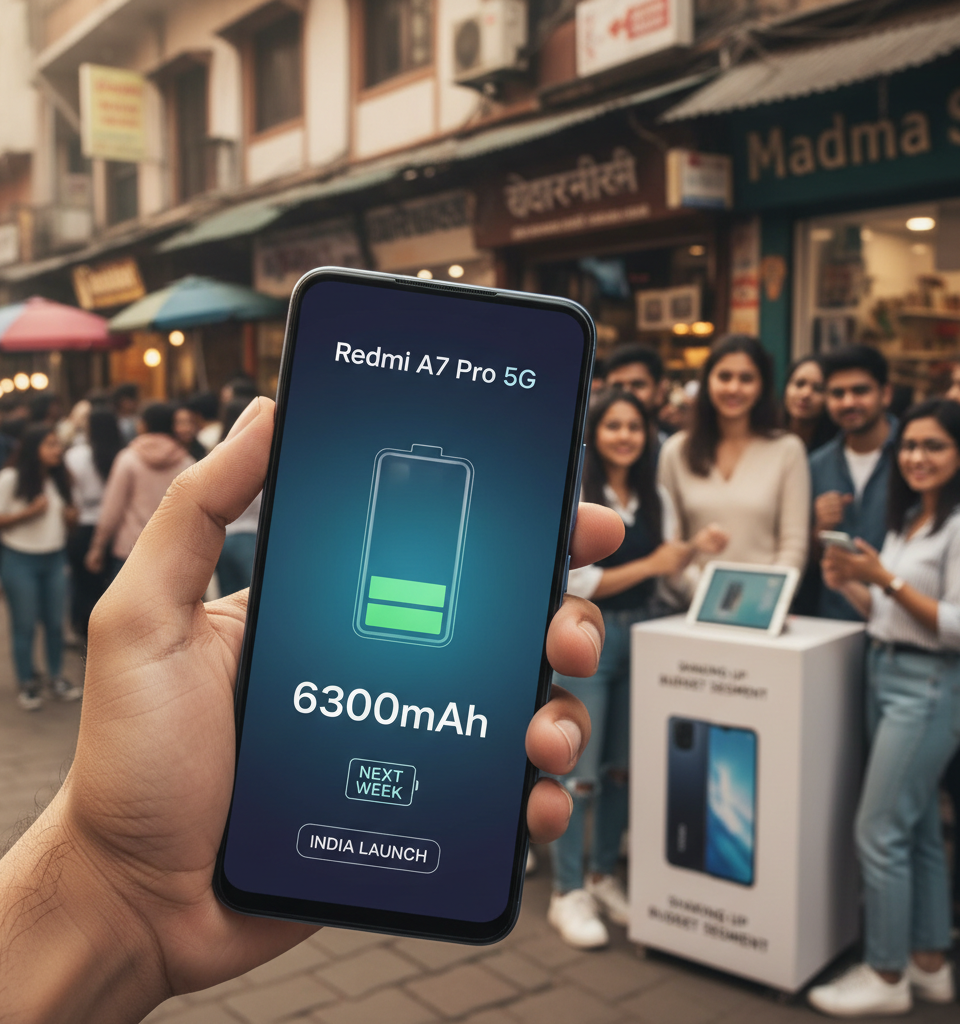
NEW DELHI, INDIA – Redmi, the value-focused subsidiary of Chinese tech giant Xiaomi, is set to make a significant splash in the Indian smartphone market with the imminent launch of its Redmi A7 Pro 5G. Scheduled for an unveiling next week, the device promises to redefine endurance in the budget 5G segment, boasting an impressive 6,300mAh battery. This strategic introduction positions Redmi to capitalize on India's burgeoning demand for affordable 5G connectivity coupled with strong battery performance, a critical factor for Indian consumers.
India's Budget 5G Market Heats Up
The launch of the Redmi A7 Pro 5G comes at a pivotal time for the Indian smartphone industry. With 5G network rollouts accelerating across the subcontinent, consumer demand for 5G-enabled devices, particularly in the sub-₹15,000 (~$180 USD) category, has surged. Reports indicate a 60% year-on-year growth in 5G smartphone shipments in India during Q4 2023. Redmi, already a dominant player in the budget and mid-range segments, aims to further solidify its position by offering a compelling package of future-ready connectivity and class-leading battery life, directly addressing key consumer pain points like device longevity and network access.
Key Features and Strategic Positioning
While specific technical specifications beyond the battery capacity remain under wraps, the headline 6,300mAh battery is a clear differentiator. This capacity significantly exceeds the industry average for budget smartphones, which typically hover around 5,000mAh. Such a large power unit suggests the Redmi A7 Pro 5G is designed for heavy usage, appealing to users who prioritize uninterrupted connectivity and extended screen time. Given Redmi's established strategy, consumers can expect a competitive price point, a decent camera setup, and a display suitable for multimedia consumption, all running on a modern version of Android with MIUI.
Impact on the Competitive Landscape
The entry of the Redmi A7 Pro 5G with its unprecedented battery capacity is poised to intensify competition within India's hyper-competitive budget 5G segment. Rivals such as Samsung's A-series, Realme, and POCO will likely face renewed pressure to innovate or adjust their offerings. This launch could trigger a 'battery war' among manufacturers, pushing the baseline for battery capacity higher across the entire budget segment. Furthermore, by offering strong 5G capabilities at an accessible price, Redmi contributes to the broader democratization of advanced mobile technology in India.
Expert Insights on Market Strategy
Industry analysts view Redmi's move as strategically sound. "Battery life remains a top three purchasing factor for Indian smartphone buyers, alongside price and camera," comments Ms. Anya Sharma, a senior analyst at TechMarket Insights. "By offering a 6,300mAh battery, Redmi is not just providing a feature; they are providing a solution to a daily frustration. This, combined with their established distribution network and brand loyalty, gives the A7 Pro 5G a strong competitive edge in a crowded market." She anticipates the device to quickly become a best-seller in its price bracket, potentially capturing an additional 2-3% market share in the budget 5G segment for Xiaomi Group.
The Road Ahead: Future Implications and Ecosystem Integration
The Redmi A7 Pro 5G's launch could pave the way for a new generation of budget smartphones prioritizing core user needs like battery life and reliable connectivity over marginal improvements in other areas. This focus aligns with Xiaomi's broader strategy of deep integration within its ecosystem, potentially offering seamless connectivity with Redmi's other AIoT (Artificial Intelligence of Things) products. Future iterations of Redmi devices may continue this trend, pushing the boundaries of what consumers expect from affordable smartphones. The success of the A7 Pro 5G will also inform Redmi's product development pipeline for other emerging markets with similar consumer profiles and infrastructure challenges.