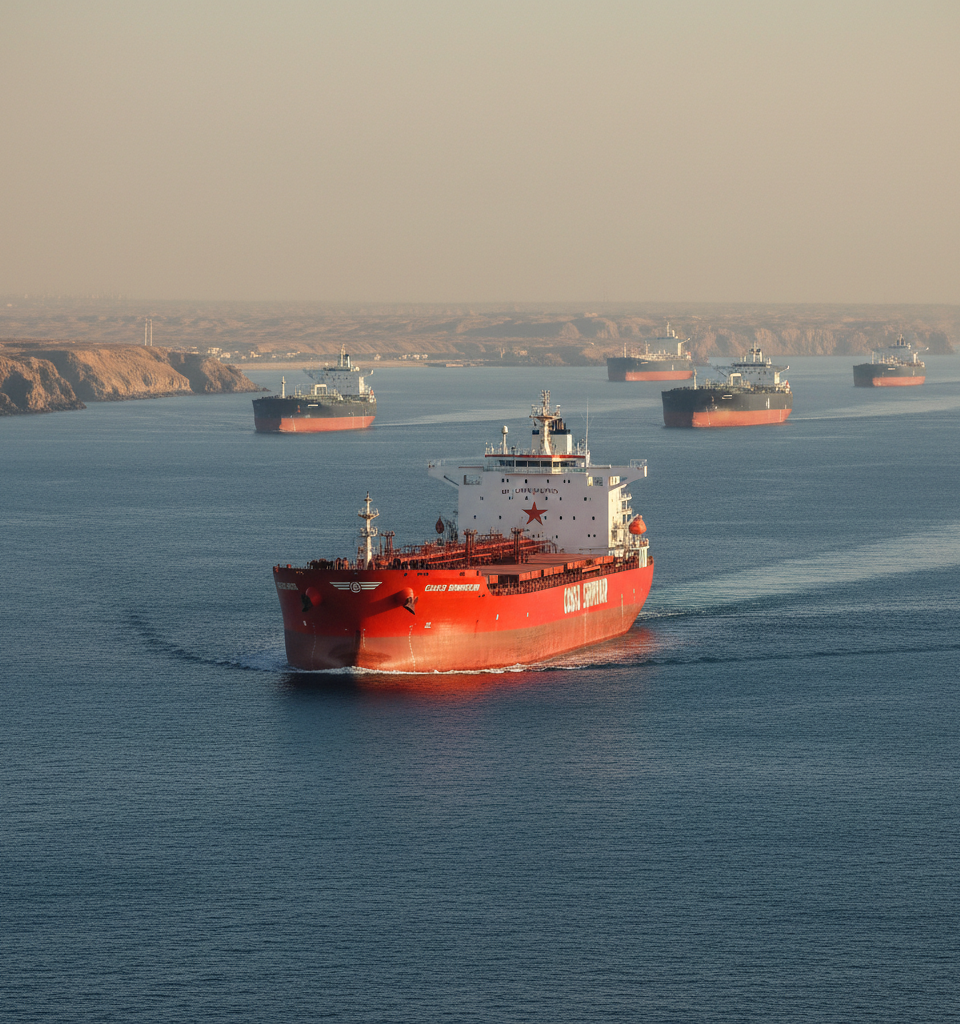
A new report critically examines the intricate economic repercussions of the ongoing conflict in Iran, particularly its impact on the vital Strait of Hormuz, revealing a challenging landscape for many Asian economies. The analysis, published today, posits that while numerous nations across the continent are grappling with the fallout, China appears to be emerging in a comparatively more advantageous position amidst the regional instability.
The volatility in the Middle East, specifically the protracted conflict in Iran, has been a significant disrupter to global energy markets and essential shipping lanes for some time. The Strait of Hormuz, a narrow maritime chokepoint between the Persian Gulf and the Arabian Sea, remains arguably the world's most strategically important oil transit channel. Any heightened tension or disruption in this strait inevitably sends ripples through global supply chains and energy prices, disproportionately affecting energy-dependent economies in Asia that rely heavily on Middle Eastern crude.
Economic Strain on Asian Nations
The report details how various Asian economies have faced considerable headwinds due to the crisis. Surging oil prices, a direct consequence of perceived or actual threats to oil supplies transiting the Strait of Hormuz, have translated into higher import bills, inflationary pressures, and increased operational costs for industries across the continent. Nations heavily reliant on oil imports for their manufacturing sectors and transportation networks are experiencing slower growth, currency depreciation, and a squeeze on consumer spending power. The general atmosphere of geopolitical uncertainty also deters foreign investment, further dampening economic prospects for several regional players.
China's Emerging Advantage
Unlike many of its neighbors, the report highlights several factors contributing to China's relatively stronger standing. Analysts suggest that China's diversified energy supply strategy, including its increasing domestic production capabilities and long-term agreements with various non-Middle Eastern oil and gas producers, provides a buffer against the most severe fluctuations originating from the Strait of Hormuz. Furthermore, China's substantial strategic petroleum reserves offer a cushion during periods of extreme price volatility or supply disruption.
Beyond energy, China's vast economic scale and its leading role in global supply chains allow it to absorb some of the shocks that might cripple smaller, more specialized economies. The crisis may also be accelerating shifts in global trade routes and investment patterns, potentially favoring China's Belt and Road Initiative as an alternative framework for trade and energy transit, bypassing some of the traditional chokepoints. This geopolitical re-alignment could deepen China's influence while other nations struggle with legacy dependencies.
Broader Geopolitical and Economic Implications
The implications of this analysis extend beyond immediate economic metrics. The perceived weakening of some Asian economies relative to China could lead to a rebalancing of power dynamics within the continent. As countries grapple with economic stress, their capacity for independent maneuver and resistance to more powerful economic partners may diminish. This situation could reinforce existing economic hierarchies and accelerate China's ascendance as the undisputed economic hegemon in Asia, leveraging its relative stability during a period of widespread regional turbulence.
Future Outlook
Looking ahead, the report implies that the longer the conflict in Iran persists and the Strait of Hormuz remains a flashpoint, the more entrenched China's advantageous position could become. While the immediate focus remains on mitigating the economic damage across affected Asian nations, the ongoing crisis presents a complex challenge that may reshape regional economic structures and geopolitical alignments for years to come. Policymakers across Asia will undoubtedly be scrutinizing these developments closely, evaluating strategies to build resilience against similar future external shocks and to navigate an increasingly complex international landscape.