The strategic use of political rhetoric, particularly in framing opponents, directly influences public sentiment and legislative landscapes, impacting investor confidence and policy stability. Businesses often face heightened uncertainty during periods of intense political polarization.
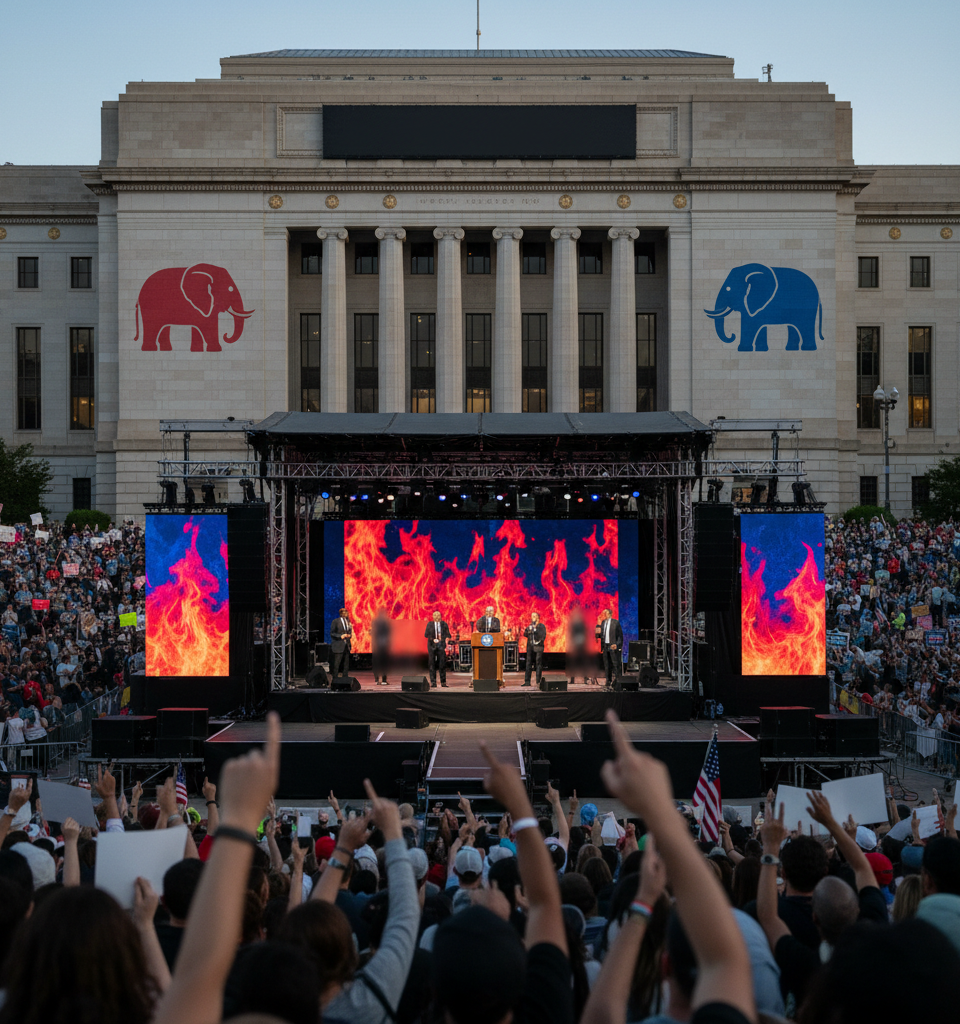
Republicans, reportedly grappling with unfavorable poll numbers as the midterm elections approach, are embracing a familiar tactic: leveraging fear. At a recent, unusually timed midterm gathering, President Trump and his key allies articulated a narrative portraying Democrats as dangerously un-American. This framing marks a significant turn in their campaign strategy, aiming to galvanize support amidst electoral challenges.
The Midterm Strategy Unfolds
The gathering, described as unusual given its timing outside of typical campaign cycles, served as a platform for prominent Republican figures to deliver a unified message. The central theme focused on defining the Democratic agenda and ideology as fundamentally at odds with core American principles. This tactic, often deployed in previous election cycles, seeks to create a clear dichotomy for voters, positioning the Republican party as the sole defender of national identity.
President Trump, a central figure at the event, led the charge in this rhetorical offensive. His statements and those of his allies aimed to imbue Democratic policies and perspectives with a sense of existential threat. This approach is designed to resonate with a segment of the electorate that may feel alienated or concerned about the direction of the country, potentially solidifying the Republican base and swaying undecided voters through an appeal to national security and cultural anxieties.
Historical Context of Fear-Based Campaigns
The use of fear in political campaigns is not new to American politics, nor is it exclusive to any single party. Historically, both Republicans and Democrats have, at various times, attempted to cast their opponents in a negative, even dangerous, light to mobilize their base and discredit rival platforms. This strategy often intensifies when a party perceives itself to be on the defensive or facing an uphill battle in public opinion polls.
For the Republican party, this particular application of fear-based rhetoric appears to be a direct response to their current standing in pre-midterm surveys. When polls indicate a decline in public approval or a disadvantage against the opposition, political strategists often revert to tried-and-true methods of energizing their supporters. Painting the opposition as 'un-American' is a potent message intended to bypass nuanced policy debates in favor of a simpler, more emotionally charged narrative.
Potential Impact on the Political Landscape
This aggressive rhetorical stance could have several implications for the upcoming midterm elections. It may further entrench partisan divisions, making bipartisan cooperation even more challenging in the next legislative session. For voters, it could simplify complex political choices into a stark 'us vs. them' narrative, potentially increasing voter turnout among highly motivated segments of the electorate, but also risking alienation among those seeking more moderate discourse.
Looking ahead, the effectiveness of this fear-based campaign will be closely watched. Its success will likely be measured not only by election outcomes but also by its ability to reshape public perception of the Democratic party. Should Republicans see an uptick in their poll numbers or favorable election results, it could solidify the notion that this type of messaging remains a powerful tool in modern political campaigning, potentially influencing future election strategies across the political spectrum.
The coming weeks will reveal how the public responds to these overtures and whether the strategy yields the desired electoral gains for the Republican party amidst the critical midterm contests.