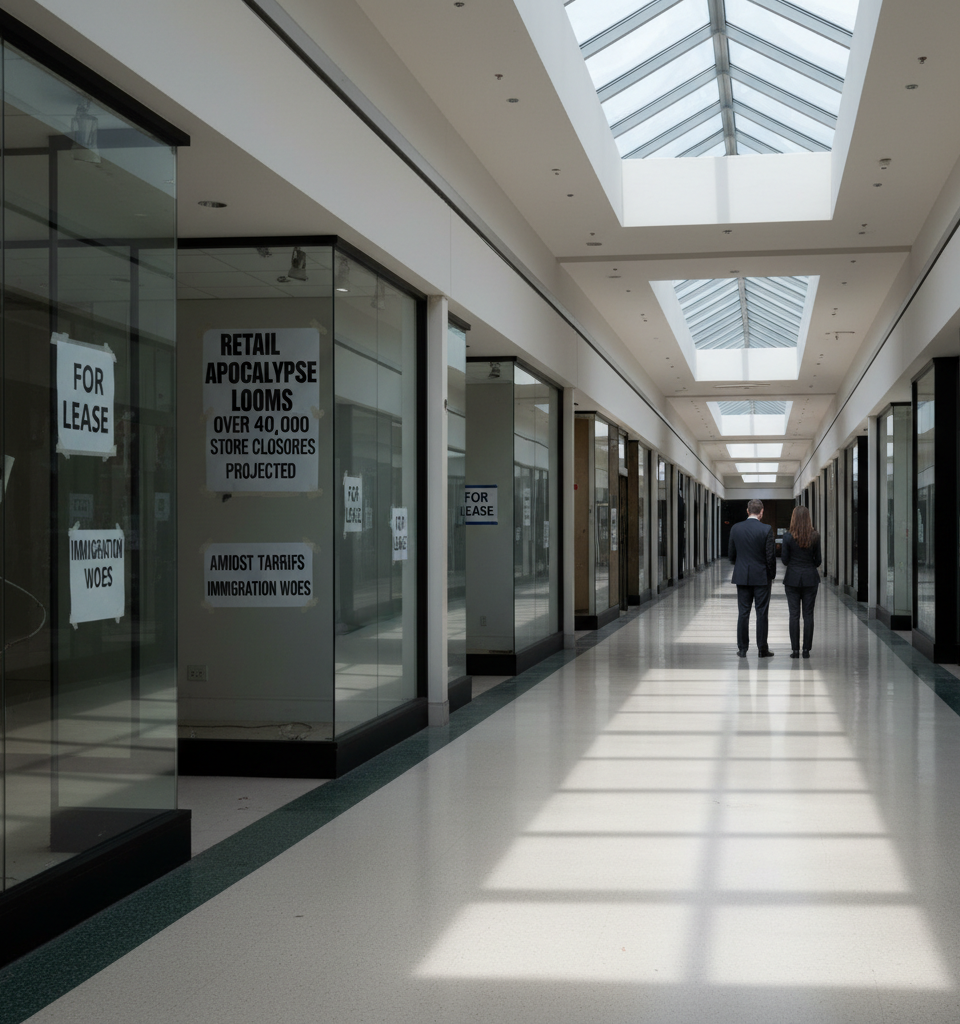
S. retail sector faces a deepening crisis, with a recent report from UBS analysts forecasting the closure of more than 40,000 brick-and-mortar stores nationwide over the next five years. This alarming prediction, released earlier this month, highlights the substantial headwinds buffeting the industry, primarily driven by the escalating costs associated with trade tariffs and the challenges posed by evolving immigration policies.
The anticipated closures are expected to impact a wide array of retail categories, further accelerating the transformative shifts already underway in how Americans shop.
The Unfolding Retail Landscape
This projection arrives at a critical juncture for retail, an industry that has been grappling with systemic changes for over a decade. The rise of e-commerce, consumer shifts towards experiential spending, and an oversaturated physical footprint have already led to tens of thousands of store closures in recent years. However, the UBS report suggests that external economic and political factors are now poised to intensify this trend exponentially. The potential loss of over 40,000 stores represents a significant portion of the current retail ecosystem, underscoring a period of unprecedented consolidation and restructuring.
Economic Headwinds and Policy Impacts
The primary drivers cited by UBS are multifaceted. Trade tariffs, particularly those imposed on goods imported from China, have significantly increased the cost of inventory for many retailers. These added expenses often cannot be fully passed on to consumers without impacting demand, forcing retailers to absorb lower margins or, in extreme cases, rethink their operational viability. Analysts indicate that a sustained 25% tariff on a broad range of consumer goods could slice profit margins by several percentage points, pushing many struggling retailers into insolvency. Concurrently, immigration policies are impacting the retail sector in two critical ways: first, by potentially limiting the availability of a vital labor force, particularly for entry-level positions and logistics; and second, by affecting consumer spending in communities with significant immigrant populations, particularly in sectors that cater to specific demographics or rely on new household formation.
Broader Market Repercussions
The ripple effects of such widespread closures would extend far beyond individual retailers. Shopping mall operators, commercial real estate developers, and local economies reliant on sales tax revenue stand to face substantial challenges. The report estimates that the closures could lead to a significant increase in retail vacancy rates, potentially reaching well into the double digits in some regions. This, in turn, could depress commercial property values and strain municipal budgets, impacting public services. Furthermore, supply chains would be forced to adapt to a much leaner physical retail network, potentially leading to further consolidation among logistics providers and distributors.
Analyst Insights and Expert Consensus
Industry experts largely concur with the UBS assessment, albeit with varying degrees of emphasis on specific factors. Dr. Eleanor Vance, a retail economist, noted, "While e-commerce has been a long-term disrupter, the current confluence of trade policy uncertainty and labor market pressures stemming from immigration changes creates a potent cocktail that could accelerate the 'retail apocalypse' far beyond our earlier predictions." She emphasized that smaller, independent retailers and mid-tier department stores are particularly vulnerable, lacking the scale and financial buffer to absorb prolonged profit erosion. Many analysts also point to the fact that retail square footage per capita in the U.S. remains significantly higher than in many other developed nations, suggesting that a significant right-sizing of the physical footprint is overdue.
The Path Forward: Adaptation and Resilience
Looking ahead, the retail sector is expected to undergo an intense period of transformation. Successful retailers will likely be those that can swiftly adapt their business models, embracing omnichannel strategies that seamlessly integrate online and offline experiences. Investment in automation, particularly in warehousing and inventory management, may also become more critical to offset rising labor costs. Furthermore, advocacy groups are actively lobbying for more stable trade policies and comprehensive immigration reform, arguing that predictable regulatory environments are essential for long-term business planning. The next five years will be a crucible for retail, determining which brands and business models can withstand the mounting pressures and emerge stronger. Stakeholders across the retail ecosystem will need to closely monitor these macroeconomic and policy shifts. The report suggests that while some closures are inevitable, strategic innovation and responsive policy interventions could mitigate the most severe impacts, though the landscape of American shopping is undeniably set for a dramatic overhaul.