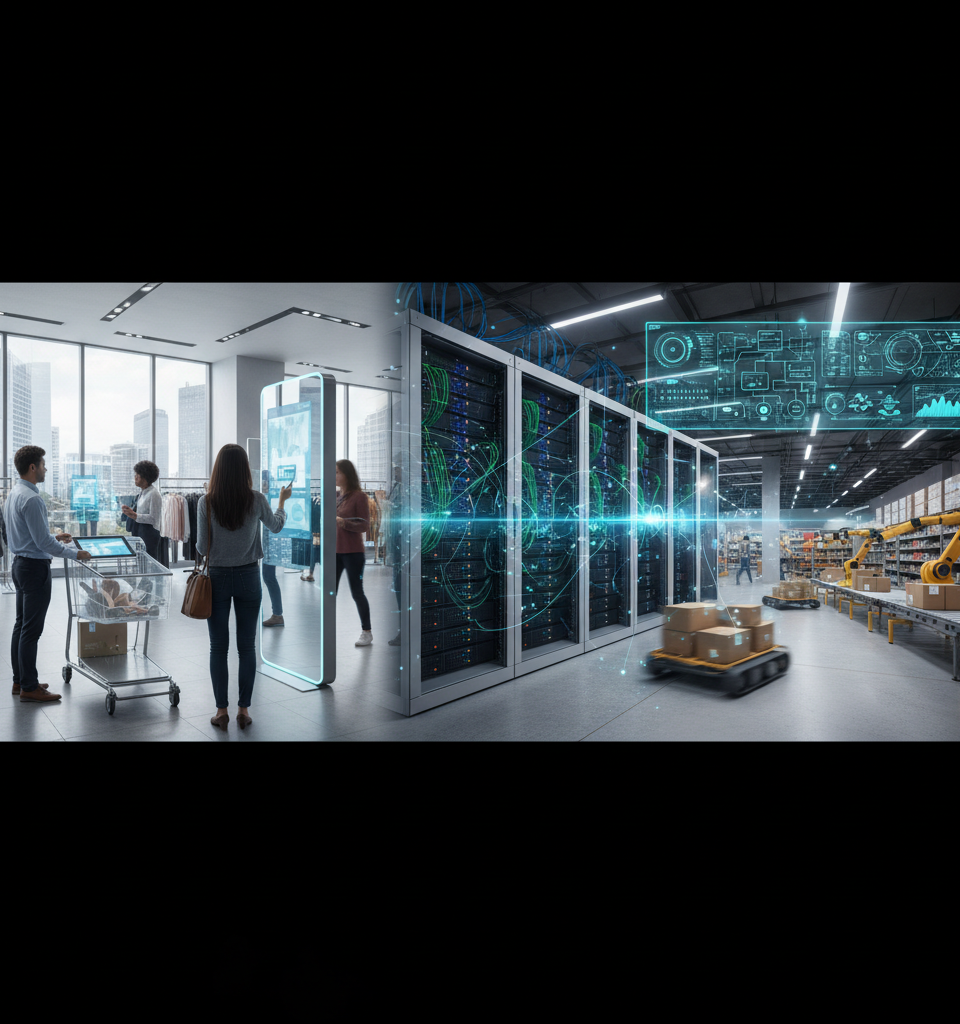
Global businesses reliant on efficient international logistics and competitive customer offerings face significant shifts as major retailers invest heavily in Artificial Intelligence. These investments directly impact the operational costs, supply chain resilience, and customer expectations that global sellers must navigate.
Retailers are actively deploying Artificial Intelligence (AI) technologies across their operations, aiming to significantly improve customer experience, optimize supply chains, and create more personalized shopping opportunities. This strategic integration of AI has been a prominent theme discussed during recent Q2 earnings calls, signaling a clear industry trend. The widespread adoption reflects a belief that AI can unlock new efficiencies and revenue streams in a competitive market.
Driving Forces Behind AI Adoption
The move towards AI is driven by a desire to address long-standing challenges in retail, such as inventory management complexities, fluctuating consumer demands, and the need for more engaging customer interactions. By automating and optimizing various processes, retailers aim to reduce operational costs and enhance overall efficiency. The insights gained from AI-driven analytics also provide a competitive edge in understanding market trends and consumer behavior more deeply.
Core Applications of AI in Retail
Retailers are primarily focusing AI applications in two critical areas: customer experience and supply chain management. In customer experience, AI is being used to power sophisticated personalization engines that recommend products based on individual shopping histories and preferences. This extends to AI-driven chatbots and virtual assistants that provide instant customer support and guide purchasing decisions, creating a more tailored and efficient shopping journey for consumers. The goal is to make every interaction feel bespoke, whether online or in-store.
For supply chains, AI is proving transformative. It enables more accurate demand forecasting, helping retailers predict what customers will want and when, thereby minimizing stockouts and overstocking. AI algorithms are also optimizing logistics, from warehouse operations to last-mile delivery, by identifying the most efficient routes and methods. This leads to faster delivery times, reduced shipping costs, and improved inventory turnover, which are crucial for maintaining profitability in a high-volume industry.
Broader Industry Impact
The increased investment in AI by leading retailers is setting new benchmarks for operational excellence and customer engagement across the entire sector. This trend is likely to accelerate, pressuring smaller retailers to also adopt similar technologies to remain competitive. The capabilities demonstrated by early adopters suggest that AI will become a fundamental component of successful retail strategies, influencing everything from product development to marketing campaigns. The shift could also lead to new business models and services designed around AI-powered insights.
Future Outlook
Looking ahead, the integration of AI in retail is expected to deepen and broaden. Future developments may include more advanced predictive analytics for market shifts, highly autonomous supply chain operations, and even more immersive and personalized customer interfaces using augmented or virtual reality combined with AI. As AI technologies continue to mature, their ability to drive innovation and efficiency within the retail sector is projected to grow significantly, fundamentally reshaping how businesses operate and interact with their customers. This ongoing evolution will likely see continuous innovation in how retailers leverage data for strategic advantage.