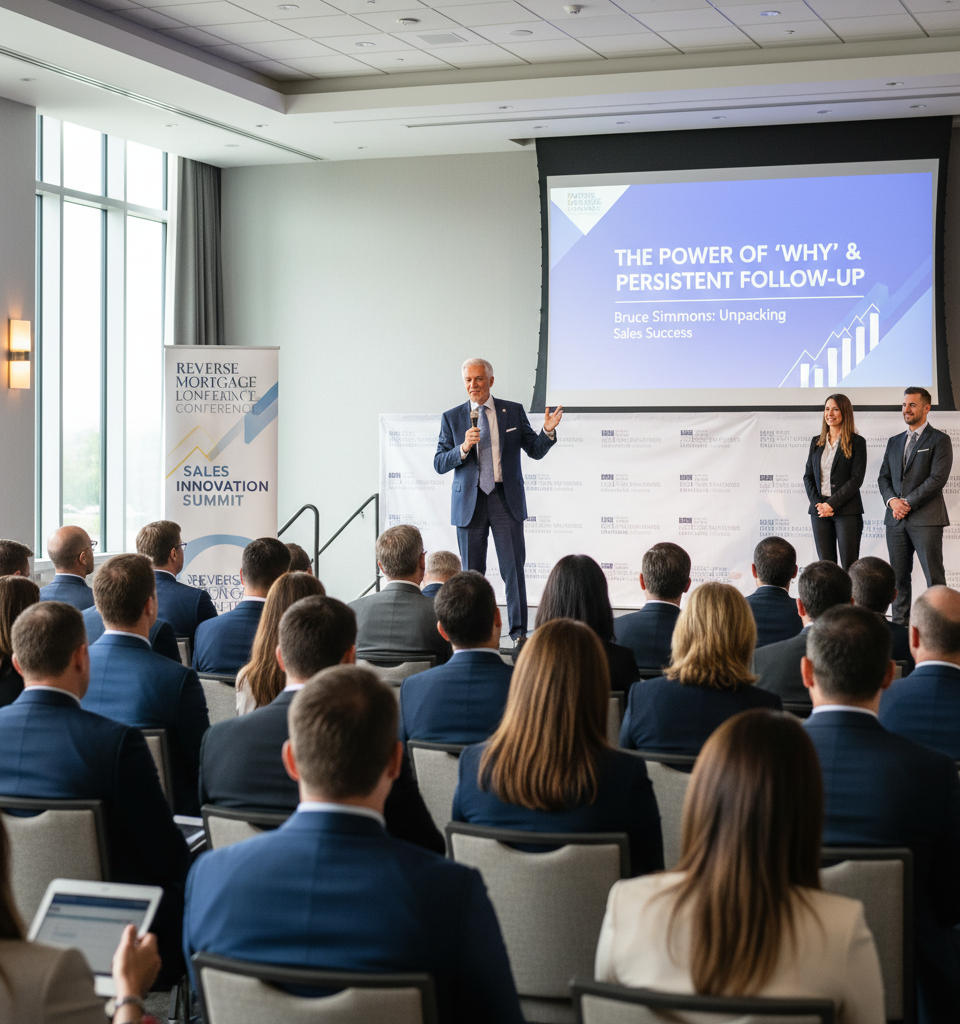
Bruce Simmons, a venerable figure in the reverse mortgage sector, recently shared his foundational principles for achieving sustained success in sales, shedding light on the often-overlooked mechanics of effective client engagement and personal drive. His discourse centered on the pivotal questions of "What is my why?" – a deep dive into personal motivation – alongside practical strategies such as rigorous goal setting, diligent time blocking, and a persistent follow-up methodology that posits 80% of sales requiring at least five contacts. Simmons's insights, drawn from years of frontline experience, offer a compelling blueprint for professionals seeking to elevate their performance in a competitive market.
Context & Background
The reverse mortgage industry, while niche, plays a crucial role in providing financial flexibility for senior homeowners, allowing them to convert home equity into cash flow without selling their homes. This segment of the financial services market demands a high degree of trust, education, and sustained client relationship building. Simmons's emphasis on identifying a personal 'why' resonates deeply within this context, as originators often navigate complex financial decisions with clients, requiring not just product knowledge but also empathy and a genuine understanding of client needs.
His focus on disciplined sales habits harks back to timeless sales principles, reinforcing their enduring relevance even in an increasingly digitized and complex financial landscape. The challenge of building rapport and trust, particularly with an older demographic, makes consistent, value-driven follow-up indispensable.
Key Details & Strategies
Simmons meticulously outlined several pillars of his sales philosophy. Central to his approach is the concept of goal setting, not merely as an aspiration but as a structured, quantifiable pursuit. He advocates for breaking down large annual targets into monthly, weekly, and daily actionable steps, ensuring continuous progress.
Complementing this is time blocking, a technique that dedicates specific time slots to high-priority sales activities, minimizing distractions and maximizing productivity. For instance, an originator might block off 9 AM to 11 AM daily for outbound calls or 1 PM to 3 PM for client meetings and follow-ups. Perhaps his most salient point concerned the often-underestimated power of persistence: Simmons asserts that 80% of sales require at least five follow-ups.
This statistic challenges the common misconception of a quick close, highlighting the necessity of nurturing leads over time through multiple touchpoints, whether via phone calls, emails, or personalized correspondence. He stressed that without understanding one's core motivation—the 'why' behind the work—even the most meticulously planned strategies can falter under pressure or during lean periods.
Industry & Market Impact
Simmons's message serves as a timely reminder for the reverse mortgage industry, which has seen its share of scrutiny and evolution over the years. In a sector where consumer education and trust are paramount, the disciplined, client-centric approach he champions can significantly enhance industry reputation and client satisfaction. For individual originators, adopting these methods could translate into higher conversion rates, stronger client relationships, and more robust referral networks. The industry has grappled with various challenges, including regulatory changes and fluctuating public perception. By focusing on fundamental sales excellence rooted in genuine motivation and persistent client engagement, professionals can help elevate the industry's standing and demonstrate the true value proposition of reverse mortgage products.
Expert Perspective
Industry analysts and sales trainers often concur with Simmons's core tenets. "The 'why' is your North Star," explains Dr. Sarah Jenkins, a prominent sales psychologist. "Without a compelling personal motivation, professionals are more susceptible to burnout and less likely to navigate difficult sales cycles." She adds, "Simmons's emphasis on follow-up is not just anecdotal; behavioral economics research consistently shows that multiple, value-driven contacts are essential for building trust and guiding complex purchasing decisions. Many salespeople give up too soon, leaving significant opportunities on the table." Financial planners also highlight that in transactions like reverse mortgages, which involve significant financial planning, a consistent and patient approach earns client confidence.
What's Next
As the reverse mortgage market continues to adapt to an aging demographic and evolving financial needs, the principles articulated by Bruce Simmons are likely to become even more critical for success. The increasing sophistication of digital tools for lead management and automated follow-ups may offer new avenues for implementing Simmons's strategies with greater efficiency, but the human element—the 'why,' the personal connection, and the persistent, empathetic engagement—will remain irreplaceable. Future developments may see enhanced training programs within the industry placing greater emphasis on these soft skills alongside technical product knowledge, recognizing that sustained sales performance is a synergy of both discipline and genuine motivation.
Professionals who master these fundamentals will be best positioned to thrive in the years to come, building lasting client relationships and a robust business pipeline.