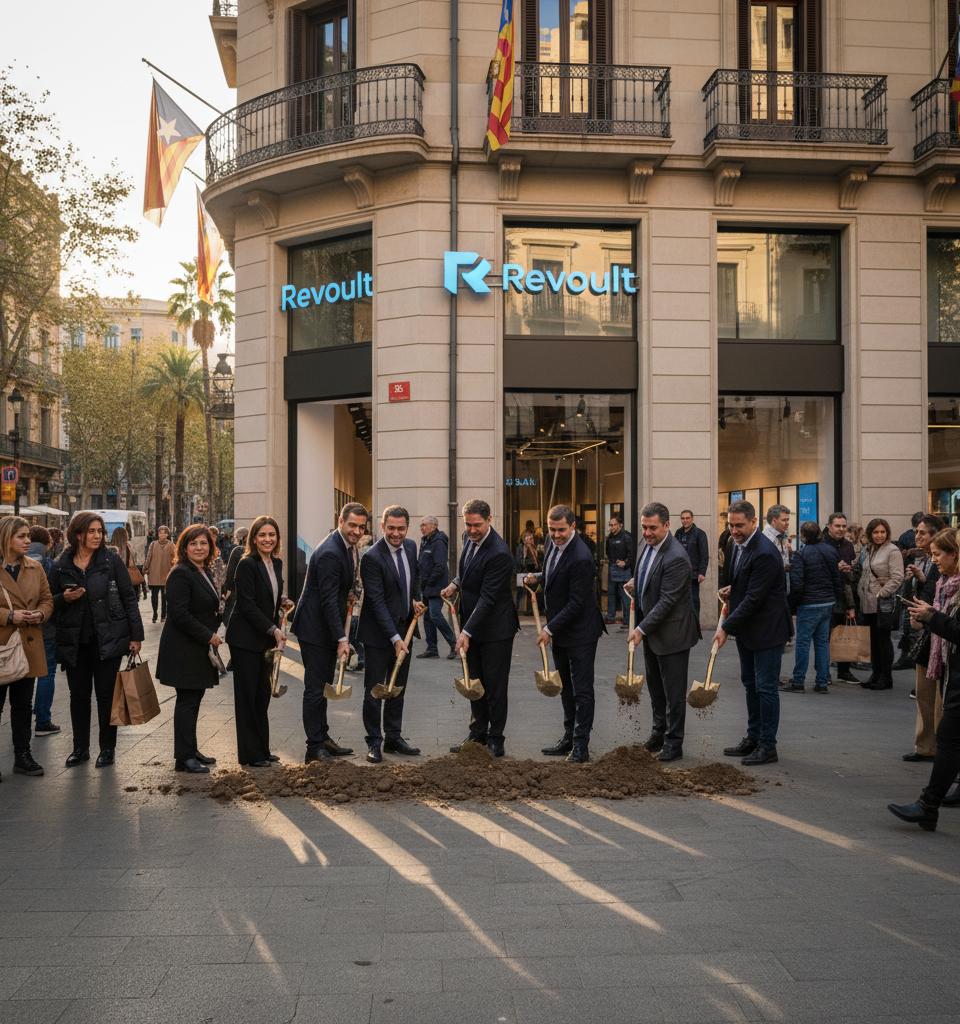
Revolut, the European fintech powerhouse, is poised to inaugurate its first-ever physical retail store in Barcelona, Spain. This move, a notable departure from its purely digital operational model, represents a permanent pilot project designed to test the efficacy of a brick-and-mortar presence in enhancing customer engagement and brand visibility. The launch in Barcelona is particularly strategic, given Spain's standing as Revolut's third-largest global market, suggesting a calculated effort to deepen its roots in regions exhibiting robust adoption.
Context and Strategic Rationale For a company that has, until now, championed a fully digital user experience, the decision to invest in a physical storefront marks a pivotal moment.
This initiative reflects a broader trend among digital-native companies exploring omnichannel strategies to capture a wider demographic and build stronger customer loyalty. Historically, challenger banks have prided themselves on their asset-light models, avoiding the overheads associated with traditional banking infrastructure. Revolut's pivot, even on a pilot basis, suggests an evolving understanding of consumer needs and market saturation points within the fintech landscape. The move also comes amidst reports of Revolut's ambitious financial targets, with an initial public offering (IPO) valuation target reportedly soaring up to $200 billion, though a listing is not anticipated before 2028. This long-term outlook provides context for strategic investments aimed at sustainable growth and market penetration.
Key Details and Pilot Expansion The
Barcelona store is not a temporary pop-up but a permanent fixture, indicating a serious commitment to the concept. While specific details regarding the store's services have not been fully disclosed, it is anticipated to offer customer support, product demonstrations, and potentially facilitate account opening processes, bridging the gap for consumers who prefer face-to-face interactions. Should this pilot prove successful, Revolut has confirmed plans to replicate the physical store model in other key markets globally. Spain's burgeoning digital economy and high smartphone penetration rates make it an ideal testing ground for such an experiment, potentially serving as a blueprint for similar expansions across Europe and beyond. Revolut, currently valued at an impressive $75 billion, is Europe's most valuable startup, underscoring the significance of its strategic decisions.
Industry and Market Impact
This development sends ripples through the fintech sector, challenging the long-held assumption that digital-only models are the sole path to success for challenger banks. It could prompt other digital financial service providers to reconsider their pure-play online strategies, potentially leading to a hybridization of banking services. For traditional banks, Revolut's move into physical retail could be viewed as both a validation of the enduring importance of physical touchpoints and a new form of competition on their home turf. The move also signals an increasing maturity in the fintech industry, where companies are moving beyond solely disrupting established players to actively shaping new customer engagement paradigms.
Expert Perspectives Financial analysts suggest that Revolut's
Barcelona store could be a shrewd move to tap into segments of the population less comfortable with purely digital banking, such as older demographics or those in rural areas. "This isn't about abandoning their digital roots; it's about expanding their reach," states Dr. Elena Rodriguez, a fintech analyst at Global Insight Partners. "By offering a physical presence, Revolut can build trust and provide a more tangible brand experience, which can be crucial for customer acquisition and retention, especially in high-growth markets like Spain where personal relationships are often valued in financial services." Others highlight the importance of physical spaces for resolving complex customer service issues that are often more effectively handled in person.
What's Next: Future Implications
The success of the Barcelona pilot will be closely monitored as it will dictate the pace and scope of Revolut's potential physical expansion. If the model demonstrates a clear return on investment through increased customer acquisition, higher engagement rates, or improved brand perception, expect to see similar Revolut stores appearing in strategic locations across Europe, Latin America, and Asia. This hybrid approach could redefine the future of banking, offering consumers the best of both digital convenience and physical accessibility. Furthermore, the data collected from this pilot will be invaluable in refining Revolut's omnichannel strategy as it prepares for its eventual public listing, aiming to justify its ambitious valuation to prospective investors through diversified and robust growth avenues.
Conclusion Revolut's venture into physical retail is a bold and calculated risk, reflecting its aggressive expansion strategy and an adaptive approach to market dynamics. The
Barcelona store represents more than just a new branch; it's a testbed for the future of fintech, potentially heralding a new era of hybrid banking that seamlessly integrates the digital and physical realms to better serve a diverse customer base.