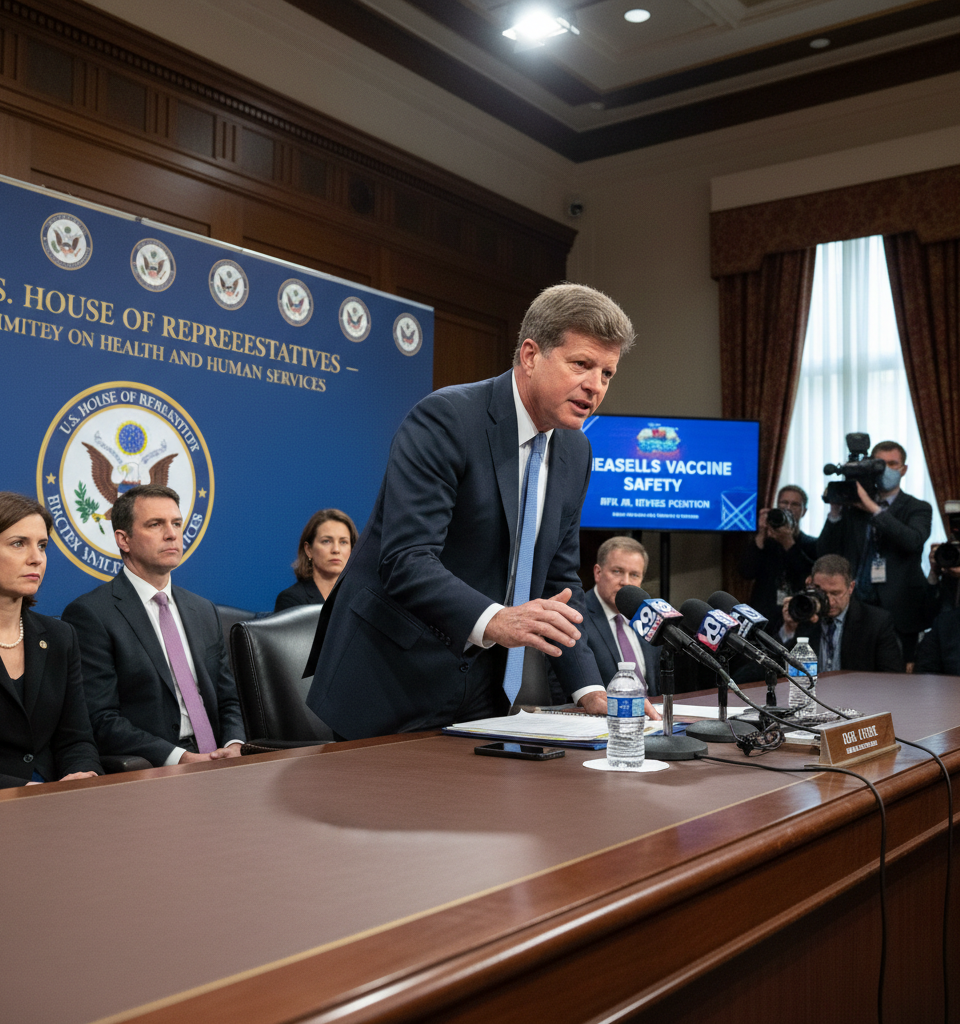
Washington D.C. - In a significant and widely observed congressional hearing yesterday, Robert F. Kennedy Jr., a perennial voice in the anti-vaccine movement and a surprisingly strong contender for the Democratic presidential nomination, offered a nuanced but notable departure from his long-held positions on public health policy. Testifying before the House Select Subcommittee on the Coronavirus Pandemic, Kennedy conceded that the measles vaccine is both safe and effective "for most people" and, crucially, presented a remarkable pivot by acknowledging it is safer than enduring a measles infection. This high-stakes exchange unfolded against a backdrop of increasing public health anxieties and intense scrutiny of vaccine discourse.
Kennedy's testimony carries substantial weight due to his widespread influence among vaccine skeptics and his current political ambitions. For years, he has been a leading proponent of theories linking vaccines to various health conditions, often challenging established scientific consensus. His organization, Children's Health Defense, has actively campaigned against mandatory vaccination policies and promoted alternative medical viewpoints. This public concession regarding measles vaccine safety, even with the qualifier "for most people," represents a strategic recalibration that could signal an attempt to broaden his appeal or perhaps temper his image amidst the rigors of a presidential campaign.
The specific phrasing of Kennedy's statement – acknowledging safety for "most people" – leaves room for continued scrutiny of his broader views on vaccine mandates and the efficacy of other immunizations. However, the direct affirmation of the measles vaccine's superiority over the disease itself is a substantial point of common ground with public health organizations. The measles vaccine boasts a near 97% effectiveness rate after two doses and has been instrumental in preventing hundreds of millions of cases and countless deaths globally since its introduction in 1963. The World Health Organization (WHO) estimates that measles vaccination has averted over 23 million deaths between 2000 and 2018 alone.
This shift, however subtle, could have a profound impact on the public discourse surrounding vaccines, particularly among those who have been influenced by Kennedy's past positions. While it is unlikely to fully assuage the concerns of public health advocates who demand unequivocal support for vaccination, it nonetheless dilutes the potency of one of the anti-vaccine movement's most prominent voices on a critical issue. Pharmaceutical companies and public health initiatives, which have faced persistent challenges from vaccine hesitancy, might view this as a small, positive data point, though significant funding and public education efforts will still be required to rebuild trust and address misinformation.
Public health experts and political analysts are carefully dissecting the implications of Kennedy's testimony. Dr. Anthony Fauci, former Director of the National Institute of Allergy and Infectious Diseases, who has frequently countered vaccine misinformation, remarked, "Any acknowledgment of vaccine safety and efficacy from a figure like Mr. Kennedy is a step in the right direction, though the broader challenge of combatting medical misinformation remains immense." Political strategists speculate that this calculated softening of his stance could be an attempt to appeal to a wider moderate electorate in his presidential bid, recognizing that an unyielding anti-vaccine position could be a significant electoral hurdle.
The immediate future will reveal whether this marks a genuine evolution in Kennedy's overall approach to public health or merely a strategic adjustment for political expediency. His campaign is expected to clarify and potentially expand upon his views on other vaccines and public health policies in the coming weeks. Meanwhile, public health organizations are likely to seize on this partial concession while continuing to press for broader, unambiguous support for evidence-based vaccination programs, especially as concerns about declining childhood vaccination rates persist in several states, with some reporting as much as a 5-7% drop in routine immunizations since the start of the pandemic. The national conversation around vaccine confidence, and Kennedy’s role within it, remains a complex and evolving narrative within the broader public health landscape.
Expert Perspectives
Medical professionals and public health advocates largely welcomed Kennedy's specific remarks on the measles vaccine, though many expressed caution. Dr. Leana Wen, an emergency physician and public health professor, noted, "While this is a positive development regarding a single vaccine, the key will be to see if this represents a fundamental shift in his understanding of immunology and public health, or merely a targeted statement. The ongoing challenge of broader vaccine misinformation persists." Analysts suggest that for Kennedy to truly pivot, he would need to address his past statements on other vaccines and their alleged links to conditions like autism, claims that have been widely debunked by scientific research.
Industry and Political Ramifications
For the pharmaceutical industry, particularly companies like Pfizer and Merck, which develop and distribute critical vaccines, Kennedy's statement offers a minor reprieve from the constant narrative of skepticism generated by influential figures. However, the market impact is negligible, as vaccine policy is driven more by regulatory bodies and public health consensus than by individual political figures' pronouncements. Politically, this move may allow Kennedy to attract a segment of voters who are wary of extreme anti-vaccine rhetoric but still resonate with his broader anti-establishment messaging. It complicates the narrative for his opponents, who will now have to navigate this nuanced position rather than a purely oppositional one.
What's Next?
Attention will now turn to Kennedy's future statements and the clarity with which he addresses other vaccine-related issues. His campaign is expected to issue further explanations of his public health platform as the Democratic primary race intensifies. Public health authorities will continue their efforts to combat vaccine misinformation and promote robust immunization schedules, leveraging any shift in public discourse to reinforce scientific consensus. The upcoming vaccine mandates debate for various infectious diseases will be a critical juncture to observe the long-term impact of this congressional testimony.