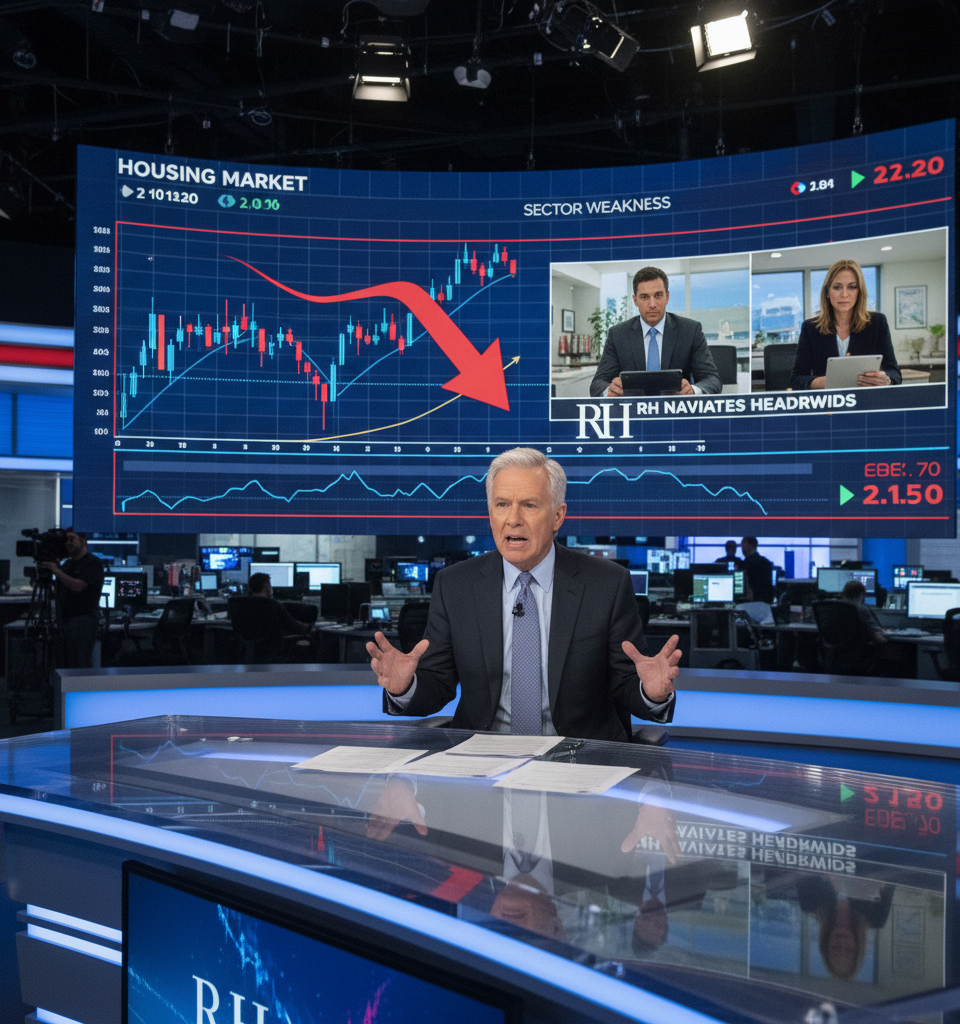
New York, NY – [Date] – Luxury home furnishings retailer RH (NYSE: RH) is facing substantial headwinds as a severely challenging housing market continues to exert pressure on consumer spending in high-end segments, according to CNBC's Jim Cramer. The outspoken financial analyst, speaking on an episode of "Mad Money," underscored RH's vulnerability to the current economic climate, positioning the company as a key indicator of the broader residential sector's struggles. This assessment comes amid sustained high interest rates, inflationary pressures, and a notable slowdown in both new and existing home sales across the United States.
A Bellwether's Battle: Understanding the Stakes
RH, formerly known as Restoration Hardware, operates a distinctive business model focused on high-end consumers, making its financial performance highly sensitive to fluctuations in discretionary income and the health of the housing market. Its robust showrooms and catalog sales are directly tied to consumers' willingness to invest in home improvements and new home purchases. The current environment, characterized by rising mortgage rates nearing 7-8% for conventional loans and persistent supply chain issues, severely curtails such investments, directly impacting RH's revenue streams and profit margins. Cramer's comments highlight that RH's predicament is not an isolated incident but rather a symptom of deeper systemic issues within the housing economy.
Key Financial Pressures and Industry Indicators
While specific financial figures from RH were not detailed in the initial report, market analysts broadly anticipate downward revisions for companies heavily exposed to the housing sector. The National Association of Realtors (NAR) recently reported a significant decline in existing home sales, with year-over-year figures showing a slump of over 15% in recent months. New home sales, although showing some resilience in certain areas due to limited inventory, are also facing affordability challenges. RH's inventory levels, discounting strategies, and forward guidance on revenue and earnings will be critical metrics for investors scrutinizing its upcoming quarterly reports. The company's strategy of offering 'membership' programs and curated experiences aims to build customer loyalty, but even these initiatives struggle against a macroeconomic tide that discourages large-ticket purchases tied to home ownership.
Broader Market Resonance: A Ripple Effect
RH's struggles are emblematic of a wider downturn affecting various segments of the housing and home improvement industries. Manufacturers of building materials, appliance retailers, and even home services companies are all feeling the pinch. Lumber prices, while off their pandemic-era highs, remain volatile, and labor shortages continue to plague construction and renovation sectors. The ripple effect extends to financial institutions heavily invested in mortgage-backed securities and real estate lending. A prolonged slump in the housing market could dampen overall economic growth, impacting employment figures and consumer confidence beyond the immediate sector.
Expert Commentary: Analysts' Mixed Outlook
Financial analysts are largely in agreement with Cramer's assessment regarding the challenging environment. Several major investment banks have downgraded their outlooks for housing-related stocks. For instance, Goldman Sachs recently revised down its forecasts for U.S. home sales by an additional 5% for the coming year, citing persistent inflation and Federal Reserve hawkishness. Expert consensus suggests that while RH possesses a strong brand and loyal customer base, even premium brands are not immune to such significant macroeconomic shifts. Some analysts, however, maintain that RH's strategic emphasis on experiential retail and its move into hospitality (like RH Guesthouses) could provide diversification and long-term resilience, albeit with short-term pain.
Navigating the Future: Potential Recovery and Strategic Adjustments
The immediate future for RH and the broader housing market remains uncertain. A significant factor influencing a potential recovery will be the Federal Reserve's monetary policy. Any indication of a pivot towards lower interest rates could alleviate some pressure on mortgage rates, potentially stimulating buyer activity. However, most experts do not anticipate a substantial rate cut in the near term. For RH, this means a continued focus on inventory management, cost control, and potentially innovative strategies to attract and retain customers in a constricted market. The company may need to adapt its product offerings or pricing structures to appeal to a more cautious consumer base, alongside its ongoing expansion efforts into new market segments. Investors will be keenly watching RH's upcoming earnings calls for insights into its adaptive strategies and revised outlooks amidst these persistent challenges.