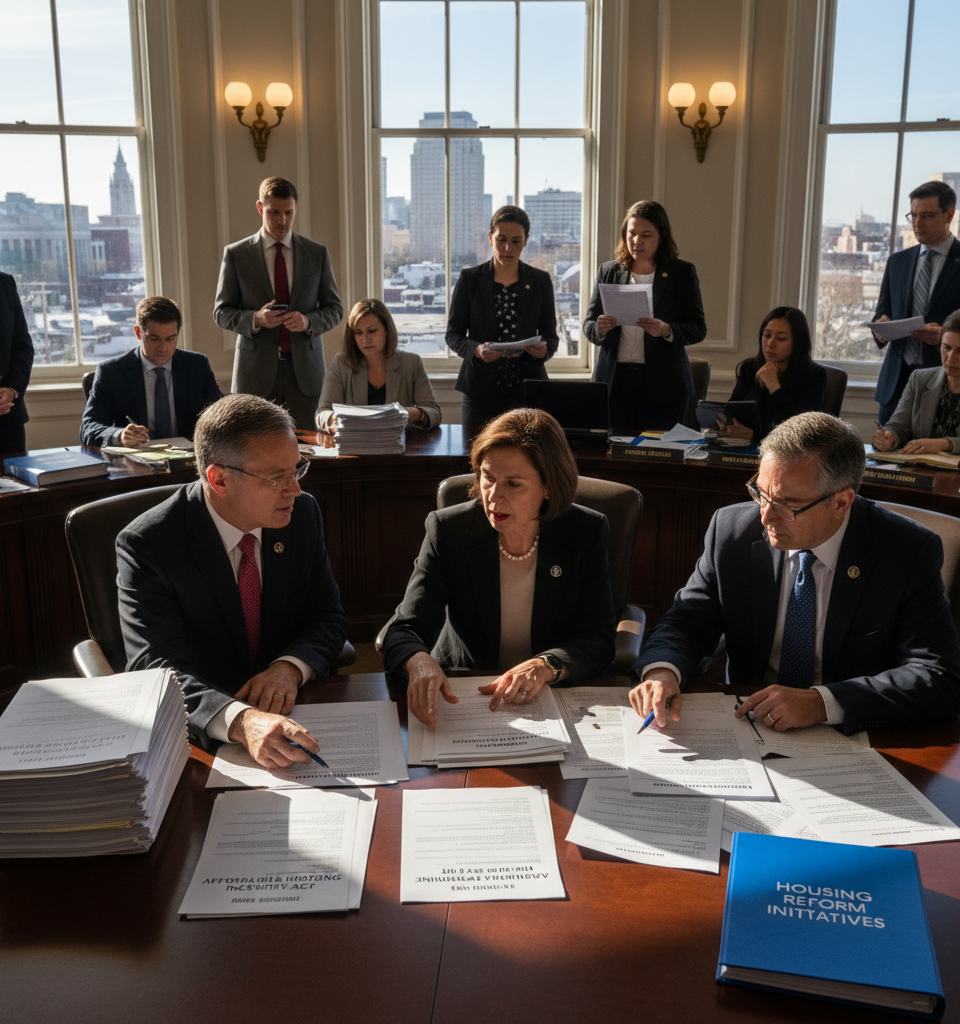
PROVIDENCE, RI – Rhode Island is poised to enact a transformative package of housing legislation, with three pivotal bills advancing through the General Assembly designed to dramatically increase the state's housing supply and foster greater affordability. At the forefront is a proposal granting faith-based organizations the ability to develop affordable housing on their owned land without the current rezoning hurdles, a move emulated by other states grappling with similar housing scarcities. This initiative, alongside two complementary bills, underscores a concerted effort to mitigate a crisis that has seen rents surge and homeownership become increasingly out of reach for many Rhode Islanders.
The Urgency of the Ocean State's Housing Deficit
Rhode Island, like many coastal states, has been wrestling with a protracted housing crisis characterized by low inventory, escalating prices, and widening affordability gaps. Decades of underbuilding, coupled with increased demand, have created a critical deficit. The Rhode Island Housing agency reported a statewide vacancy rate of just 1.1% in 2022, far below the healthy 5-7% considered indicative of a balanced market. This scarcity has fueled a nearly 30% increase in median rental prices over the past five years, pushing a significant portion of the population into housing stress, defined as spending more than 30% of income on housing costs. The economic ramifications are profound, impacting workforce development, attracting new businesses, and exacerbating socioeconomic disparities.
Core Pillars of the Legislative Package
The most prominent bill, known as the 'Faith-Based Affordable Housing Act,' seeks to bypass traditional zoning restrictions for housing projects undertaken by religious institutions. Modeled after similar successful legislation in states like California and Massachusetts, it leverages underutilized land assets owned by faith organizations, often located in well-established neighborhoods with access to services and transportation. The two accompanying bills tackle broader systemic issues: one aims to streamline the complex and often lengthy permitting process for housing developments statewide by setting clear timelines and reducing bureaucratic red tape, while the other proposes state incentives and funding mechanisms to encourage mixed-income housing projects and infill development, particularly in urban centers. Advocates argue these reforms are essential to accelerate construction and diversify housing options beyond single-family homes.
Broader Economic and Social Implications
These legislative efforts could have a profound impact extending beyond housing. A robust and affordable housing supply is a cornerstone of economic stability and growth. Businesses often cite the cost and availability of housing as a major impediment to recruiting and retaining talent. By easing the housing crunch, Rhode Island could become a more attractive location for companies and skilled workers, potentially boosting tax revenues and fostering a more dynamic economy. Furthermore, addressing housing insecurity has direct positive externalities on public health, education outcomes, and overall community well-being, reducing societal costs associated with homelessness and transience. The proposed legislation also represents a significant philosophical shift, acknowledging that housing is not merely a commodity but a fundamental right requiring legislative intervention.
Expert Perspectives on the Reforms
Housing policy experts and urban planners largely commend Rhode Island's proactive stance. Dr. Maria Garcia, a professor of urban planning at Brown University, states, "Empowering faith-based organizations is an innovative approach that taps into existing community assets and leadership, often in areas where traditional developers face higher barriers. The combination of land utilization, permitting reform, and financial incentives creates a comprehensive attack on the housing crisis, rather than piecemeal solutions." She cautions, however, that successful implementation will require continued state oversight and robust community engagement to ensure projects meet real needs and integrate seamlessly into existing neighborhoods. Developers, while generally welcoming the streamlined processes, are keen to see the specific details of the incentive programs, emphasizing that financial viability remains paramount for large-scale projects.
The Road Ahead: Implementation and Potential Challenges
While the bills are gaining significant momentum, their journey through the legislative process is not without potential obstacles. Concerns about local control over zoning, environmental impact, and infrastructure capacity could arise, particularly from fiercely independent municipal governments. Opponents may argue that overriding local zoning diminishes community input. Should these bills pass and be signed into law, the immediate next steps will involve the creation of regulatory frameworks and guidance for municipalities and developers. The true measure of success will be the tangible increase in housing unit production and whether these new options truly address the affordability gap. Rhode Island aims to add 25,000 new housing units by 2030, and these reforms are seen as critical enablers of that ambitious goal.
Learning from Other States
Rhode Island’s strategy aligns with a growing trend among states seeking innovative solutions to housing shortages. California’s Senate Bill 4, for example, allows churches and colleges to build affordable housing on their land regardless of local zoning, a policy that has already yielded numerous shovel-ready projects. Massachusetts has also adopted similar measures, recognizing the unique role faith-based organizations can play. By observing the implementation challenges and successes in these pioneering states, Rhode Island can refine its own approach, ensuring that its legislative reforms translate effectively into desperately needed housing units and a more equitable housing market for all its residents.