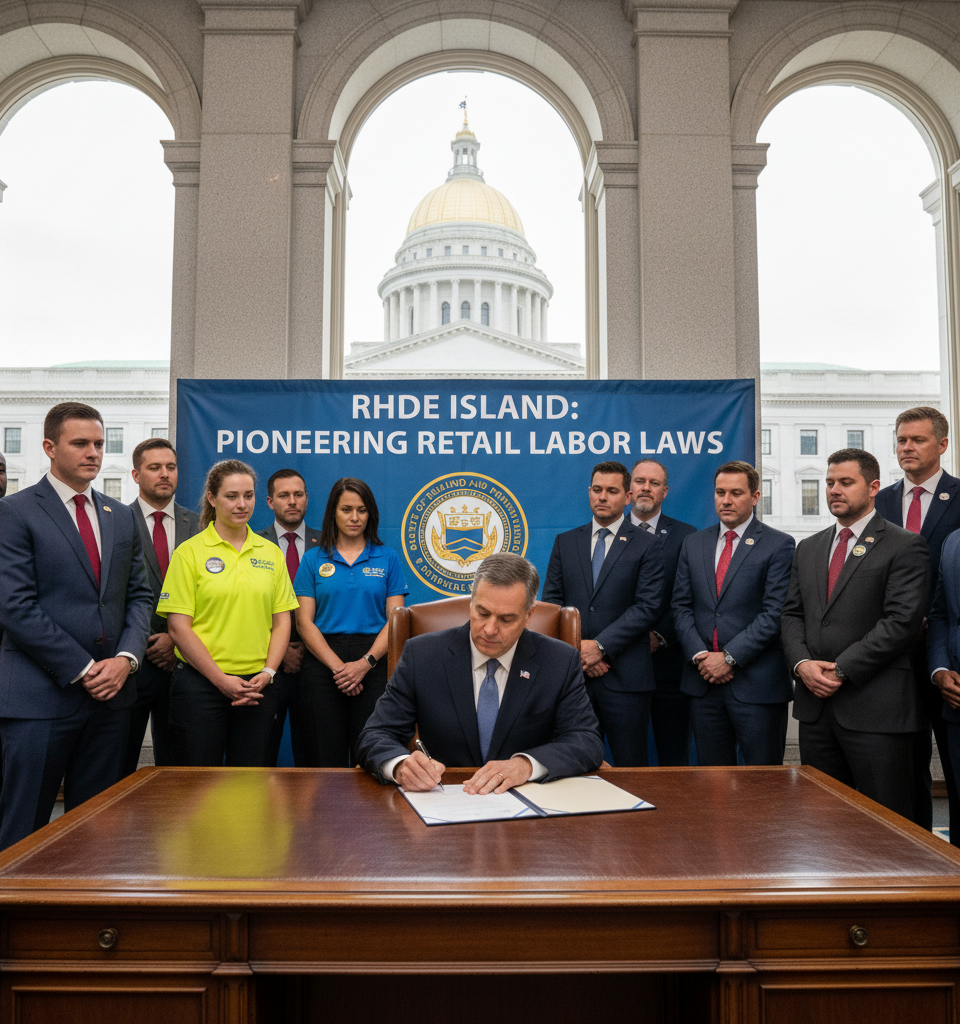
Rhode Island is poised to implement a groundbreaking legislative change in the retail sector, as Governor Dan McKee signed a bill into law mandating specific staffing ratios for self-checkout stations. This landmark decision, set to take effect in 2027, positions Rhode Island as the first state in the nation to establish such a requirement. The move signals a growing sentiment among lawmakers to regulate the increasing prevalence of automated retail technologies and address potential impacts on labor and consumer experience.
The new law reflects an evolving debate surrounding the balance between technological advancement and human employment, as well as customer service standards. While self-checkout systems have been lauded by retailers for their potential to reduce labor costs and improve operational efficiency, they have also faced scrutiny over job displacement and the burden placed on consumers to perform tasks once handled by store employees. Consumer groups and labor advocates have frequently voiced concerns about the lack of dedicated assistance at self-checkout terminals, leading to frustration, errors, and potential security issues.
Legislative Details and Rationale
The specific details of the mandated staffing ratios were not immediately elaborated upon in the initial announcement; however, the core intent is to ensure that a certain number of retail staff members are available to assist customers using self-checkout kiosks. Proponents of the legislation argue that dedicated staffing will enhance the self-checkout experience by providing prompt help for technical glitches, price checks, age-restricted item approvals, and other common issues. This is expected to mitigate wait times and improve overall customer satisfaction, while also supporting a continued human presence in retail environments. Governor McKee's signing of the bill underscores a political commitment to addressing these concerns proactively.
Broader Industry Context
Rhode Island's pioneering action comes amid a broader national discussion regarding the role and regulation of self-checkout technologies. Several other states are reportedly considering similar legislative measures, indicating a potential trend toward increased oversight of automated retail practices. This legislative push is partly fueled by a post-pandemic re-evaluation of essential frontline work and an increased focus on worker protection and fair labor practices. Retailers, who have heavily invested in self-checkout infrastructure, will now need to adapt their operational models and budgeting to accommodate these new staffing requirements, potentially influencing future technology adoption strategies.
Economic and Social Implications
The economic implications for retailers in Rhode Island could be significant, necessitating adjustments to staffing budgets and operational strategies. While the exact cost impact will depend on the final ratio specifications, it is likely to increase labor expenses for stores heavily relying on self-checkout. From a social perspective, the law could be seen as a victory for labor advocates, potentially creating new retail jobs or preserving existing ones that might otherwise be phased out. It also represents a consumer-centric approach, aiming to enhance the shopping experience by ensuring adequate assistance at points of sale.
What's Next
Over the coming months, details regarding the implementation of the law will likely be ironed out, including precise staffing ratios and enforcement mechanisms. Retail chains operating within Rhode Island will need to begin preparations for compliance well in advance of the 2027 effective date, which may involve training existing staff or hiring new employees dedicated to self-checkout supervision. This legislation could also serve as a blueprint or catalyst for similar policy changes in other states, shaping the future landscape of retail operations across the United States. The long-term impact on retail innovation and consumer behavior will be closely watched as the implementation date approaches.