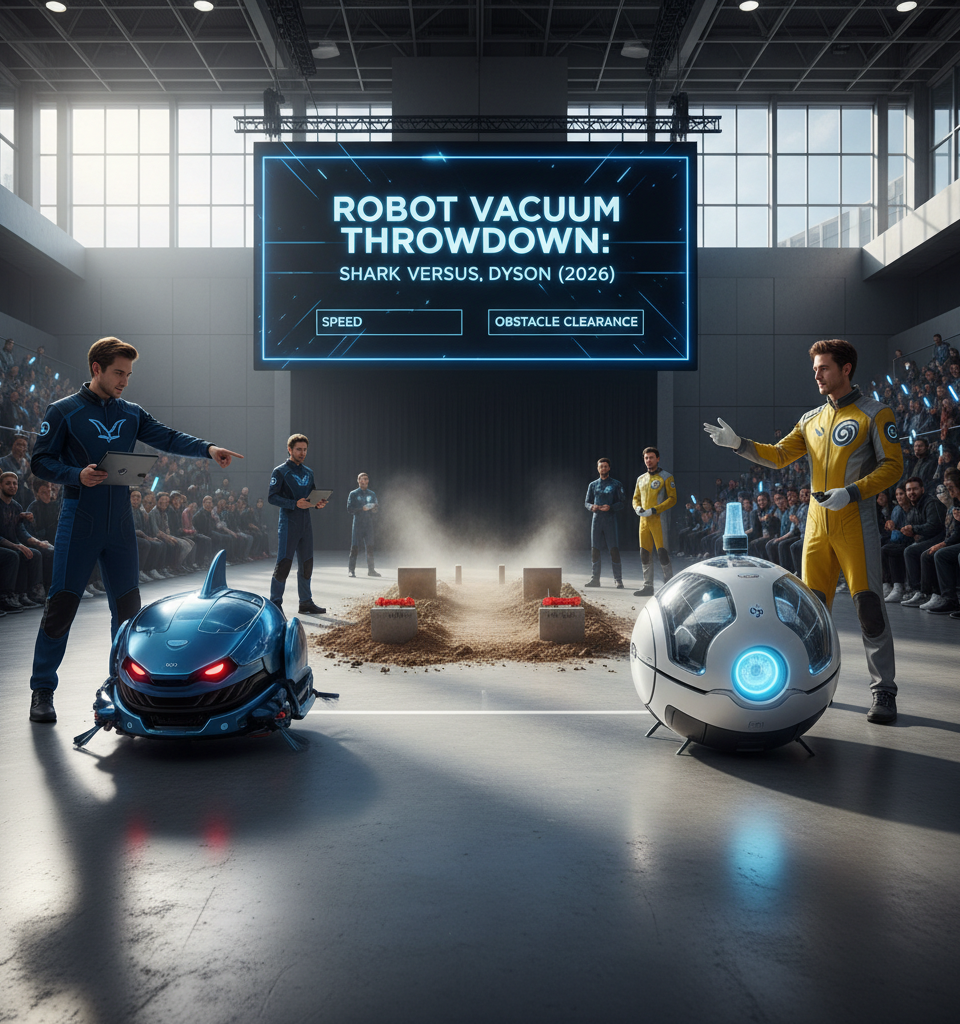
In a keenly anticipated real-world trial, the newest AI-driven robot vacuum-mops from industry giants Shark and Dyson were deployed for an intensive evaluation within a private residence. The objective was to ascertain the practical efficacy of these advanced cleaning technologies in a lived-in setting, moving beyond laboratory benchmarks to assess their performance under everyday conditions. This informal but revealing comparison aimed to offer consumers a direct perspective on which brand's latest offering truly delivered on its promises of intelligent, autonomous home cleaning.
The growing market for smart home appliances, particularly in the automated cleaning segment, underscores the significance of such comparative analyses. As Artificial Intelligence continues to integrate more deeply into consumer electronics, products like AI-powered robot vacuum-mops are becoming central to smart home ecosystems. Consumers are increasingly valuing not just raw power, but also navigational intelligence, obstacle avoidance, and adaptive cleaning capabilities. The stakes for manufacturers like Shark and Dyson are high, as leadership in this rapidly evolving category can significantly influence market share and brand perception in the competitive household appliance sector.
Unpacking the Technology Under Review
Both Shark and Dyson have invested heavily in developing sophisticated AI algorithms for their latest robot vacuum-mop models. These advancements are designed to enable superior mapping, more efficient path planning, and improved recognition of different floor types and debris. The specific models under review, while not detailed by name, represent the pinnacle of each company’s current offerings, incorporating features such as enhanced suction power, integrated mopping functionalities, and the ability to learn and adapt to a home's layout over time. The trial's focus was on assessing how these theoretical advancements translated into tangible cleaning performance and user convenience.
Beyond raw computational power, the integration of advanced sensors—including LiDAR, optical sensors, and acoustic sensors—plays a crucial role in these devices. These sensor arrays feed data to the AI, allowing the robots to navigate complex environments, identify dirtier areas for targeted cleaning, and avoid common household obstacles. The trial specifically looked at how well each robot managed unexpected real-world challenges, such as pet hair accumulation, spills, and varied floor surfaces ranging from hardwood to thick rugs, without constant human intervention.
Market Impact and Competitive Landscape
The outcome of such head-to-head comparisons, even informal ones, can have a notable impact on consumer purchasing decisions and influence industry trends. Both Shark and Dyson are formidable players, renowned for their innovation in the home cleaning domain. A clear victory by one product over the other could signal a technological advantage that competitors would be compelled to address. The broader implications extend to research and development cycles, marketing strategies, and ultimately, the next generation of smart home cleaning devices slated for release in the coming years. This competitive pressure continually pushes the boundaries of what these automated systems can achieve.
Industry analysts frequently highlight the accelerating pace of innovation in the robot vacuum sector. With companies like iRobot, Ecovacs, and Roborock also contending for market dominance, the performance benchmarks set by leaders like Shark and Dyson often become de facto standards. The integration of advanced AI not only enhances cleaning efficacy but also promises a more seamless, hands-free user experience, which is a key differentiator in a crowded market. The trial's findings are therefore indicative of current best-in-class performance and shed light on future directions for the entire industry.
Looking Ahead: The Future of Autonomous Cleaning
The results of this direct comparison underscore the rapid evolution of autonomous cleaning technology. While one unit reportedly emerged as a "clear winner," the precise details of its superior performance—whether in navigation, cleaning thoroughness, battery life, or user interface—remain under wraps pending a full report. However, such insights are invaluable for consumers making significant investments in smart home technology, and for manufacturers aiming to refine their products and capture larger market segments. The continuous drive towards more intelligent, efficient, and user-friendly robot vacuum-mops suggests that future iterations will likely boast even more sophisticated AI capabilities, possibly including advanced object recognition, predictive maintenance, and enhanced integration with broader smart home ecosystems for truly automated domestic management. The race for superior autonomous home cleaning is clearly far from over.