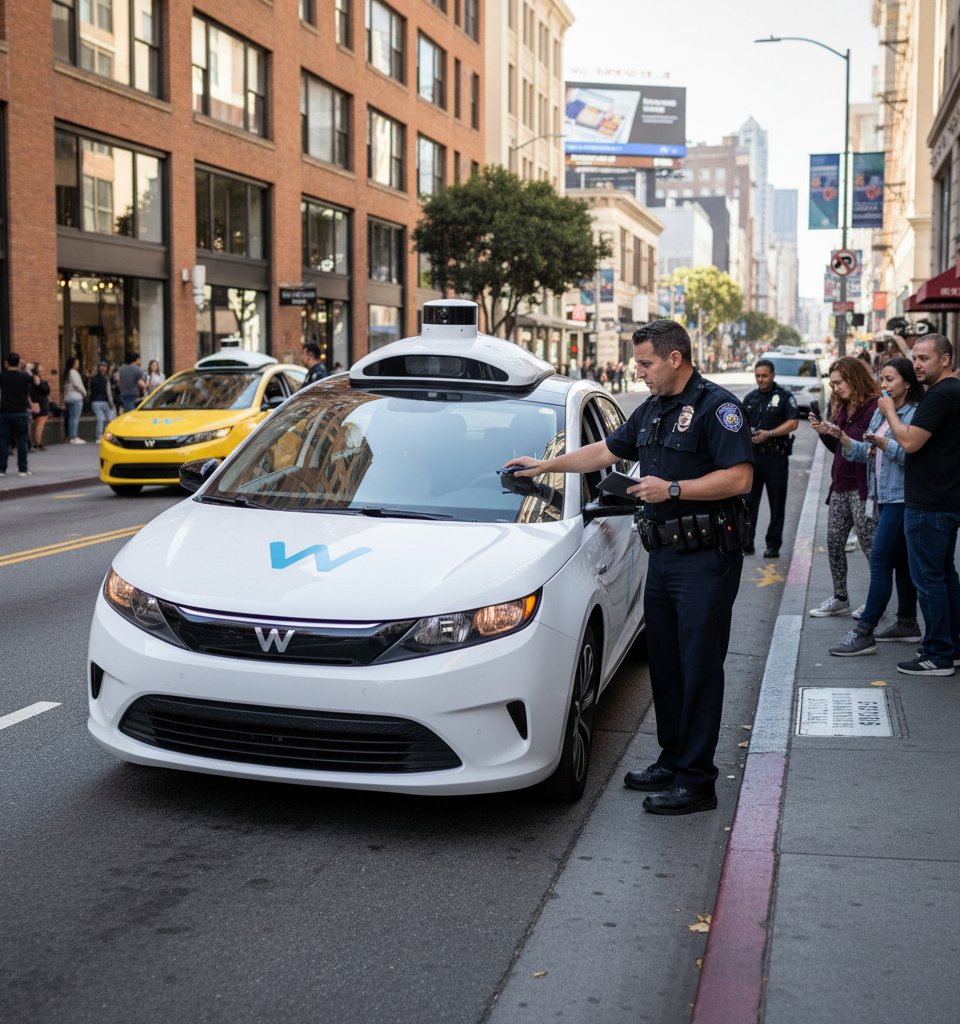
The burgeoning presence of robotaxis on urban thoroughfares is forcing a critical reevaluation of existing traffic law enforcement, with municipalities and law enforcement agencies confronting the novel dilemma of how to ticket an autonomous vehicle. This uncharted territory highlights a fundamental disconnect between rapidly evolving technology and established regulatory paradigms, posing complex questions for public safety, liability, and the future of urban mobility.
This conundrum arises as autonomous vehicle (AV) companies like Waymo and Cruise expand their operations into more cities, introducing thousands of driverless cars into daily traffic flows. Unlike human-driven vehicles, robotaxis operate without an on-board human operator to receive a citation or respond to an officer’s instructions. This technological leap challenges traditional procedures for infractions ranging from parking violations to more serious moving violations, exposing a legal and logistical void that necessitates urgent attention from policymakers and law enforcement alike.
Key issues center on identification, notification, and accountability. Current law enforcement protocols are designed for human interaction; an officer typically pulls over a vehicle, interacts with the driver, and issues a physical citation. With a robotaxi, there is no driver to interact with. Questions abound: Does an officer approach the vehicle? How is the vehicle's owner or operator identified in real-time? Who is responsible for paying the fine – the AV company, the software developer, or the vehicle manufacturer? In some pilot programs, AV companies have provided direct contact numbers for law enforcement, but this is not a standardized or scalable solution. Moreover, the evidentiary process for AV incidents, including data logs and remote monitoring, adds another layer of complexity to traditional traffic stop procedures.
The implications for the broader transportation industry are significant. Without clear guidelines, AV deployment could face unexpected hurdles, including public skepticism and operational inefficiencies. Cities might be hesitant to grant permits for widespread AV operation without robust regulatory frameworks in place. Conversely, a lack of clear penalties for AV infractions could lead to perceived impunity, potentially undermining public trust and safety. The ongoing debates surrounding AV preemption laws, which dictate whether state or local governments have primary regulatory authority, further complicate the landscape.
Experts in transportation law and artificial intelligence emphasize the urgency of proactive policy development. Dr. Sarah Chen, a leading AI ethics researcher, noted, “The technology is advancing faster than our legal and ethical frameworks can adapt. We need collaborative efforts between urban planners, legal scholars, engineers, and law enforcement to create agile regulations that foster innovation while ensuring accountability.” Many analysts believe that solutions will likely involve a combination of remote identification systems, direct digital communication channels with AV operators, and potentially new legal classifications for autonomous vehicle ownership and operation.
Looking ahead, several jurisdictions are beginning to explore potential solutions. Some proposals include mandating unique digital identifiers for robotaxis that can be linked to the operating company for automated citation issuance. Others suggest a system where AVs are programmed to pull over safely and transmit violation data directly to a central authority, with fines automatically levied against the registered operating entity. The development of standardized protocols for incident response and data sharing between AV companies and law enforcement agencies will be crucial. This regulatory evolution is not merely about traffic tickets; it’s about establishing the foundational rules for a radically new era of transportation that demands innovative legal and enforcement solutions to match its technological advancements.