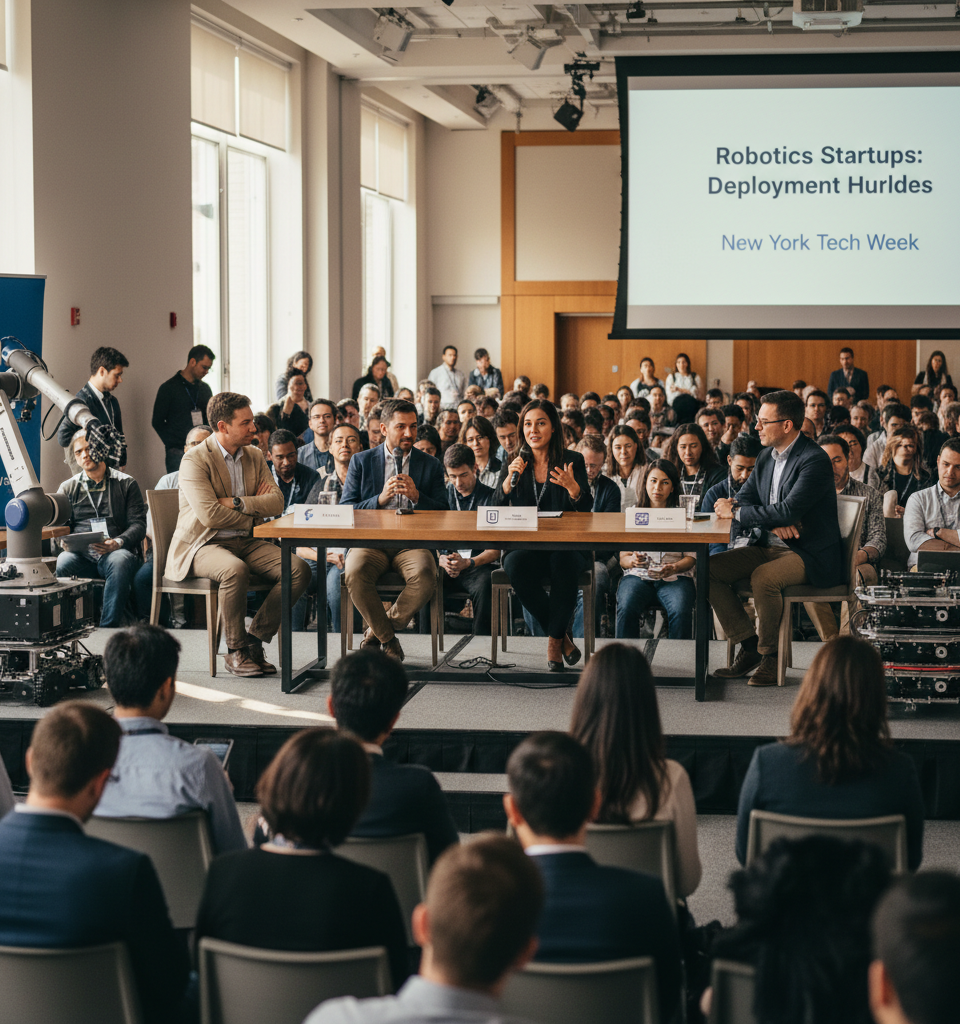
NEW YORK – Navigating the intricate landscape of industrial robotics, startup executives from Fauna, Ultra, and Standard Bots recently pulled back the curtain on the often-unseen struggles of deploying advanced robotic systems. Their panel discussion at New York Tech Week shed light on the critical lessons learned, emphasizing the formidable gap between laboratory prototypes and robust shop floor realities.
The conversation underscored a pivotal moment in the industrial automation sector, as smaller, agile companies increasingly vie for market share alongside established players. These startups bring innovative solutions, but their journey from concept to widespread application is fraught with technical, operational, and financial hurdles. The insights shared are crucial for both potential customers weighing automation investments and other nascent robotics firms attempting similar deployments.
During the candid discussion, executives elaborated on various pain points. While specific examples were not detailed, their collective experience pointed to issues ranging from unexpected integration complexities with existing manufacturing infrastructure to calibration difficulties in dynamic industrial environments. The human element, including workforce training and overcoming initial resistance to new technologies, also emerged as a recurring theme. The challenge isn't merely about building a functional robot; it's about seamlessly weaving it into the fabric of a working factory, often without disrupting ongoing production.
The broader industrial robotics market is experiencing rapid expansion, driven by demands for increased efficiency, precision, and safety. However, the experiences of Fauna, Ultra, and Standard Bots highlight that this growth is not without its growing pains. The success of these startups — and the future adoption of their technologies — hinges not just on robotic prowess but on their ability to manage and mitigate these deployment challenges effectively. Their transparency at New York Tech Week could serve as a valuable blueprint for the industry.
Industry analysts often focus on the technological advancements of new robots, such as improved AI, enhanced dexterity, or greater payload capacities. However, the panel's discussion redirected attention to the practical, on-the-ground difficulties that often determine a robot's true value proposition. The consensus among these startup leaders was that robust pre-deployment planning, modular system design, and strong customer collaboration are paramount to overcoming these operational obstacles.
Looking ahead, the perspectives shared by Fauna, Ultra, and Standard Bots are likely to influence future product development cycles and go-to-market strategies within the robotics sphere. As industrial automation continues its upward trajectory, the focus is expected to shift more towards user-friendliness, ease of integration, and comprehensive support services. Companies that can address these deployment complexities effectively will be best positioned to capture market leadership and accelerate the adoption of next-generation robotics across diverse industrial settings.