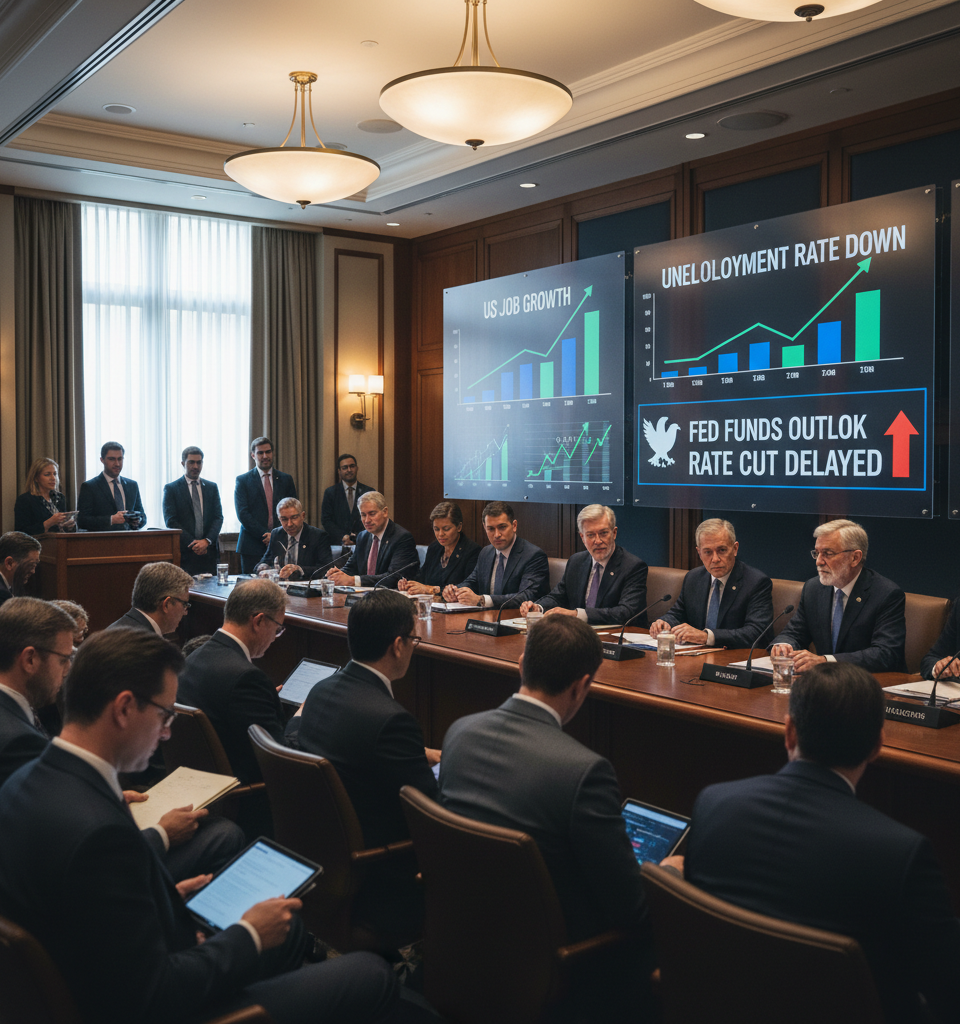
The latest jobs data, reflecting a noticeable stabilization and improvement in payroll figures compared to earlier projections for 2025, is significantly influencing the Federal Reserve's monetary policy outlook. With the unemployment rate holding firm at 4.3% and jobless claims remaining at historically low levels, central bank officials who prioritize inflation containment over economic stimulus, often referred to as 'hawks,' are finding renewed justification for maintaining current interest rates, effectively pushing back against anticipated cuts in 2026.
Context and Background
For much of the past year, financial markets have been keenly anticipating the Federal Reserve's pivot towards interest rate reductions, following an aggressive tightening cycle initiated to combat soaring inflation. The narrative has largely centered on when, not if, these cuts would commence. However, persistent strength in the labor market has consistently complicated this outlook. The Fed's dual mandate includes achieving maximum employment and price stability. While inflation has shown signs of moderating, the robust employment picture suggests that the economy may be overheating, or at least operating at a pace that could reignite inflationary pressures if monetary policy is eased too soon. This unexpected resilience challenges the widely held belief that higher interest rates would inevitably lead to a significant slowdown in hiring and a rise in unemployment.
Key Details and Figures
Recent reports indicate that payroll additions for 2025 have surpassed earlier, more conservative forecasts, demonstrating a healthy, albeit decelerating, pace of job creation. The headline unemployment rate of 4.3% has remained remarkably stable, slightly above the multi-decade lows observed in previous periods but still well within what many economists consider full employment. Furthermore, weekly initial jobless claims have consistently remained below the 220,000 threshold, a strong indicator of low layoff activity and sustained labor demand. "This data underscores the underlying strength of the U.S. economy," noted Dr. Eleanor Vance, chief economist at Global Insights Group. "It provides a clear signal to the Fed's more cautious members that there's no immediate imperative to cut rates to support employment."
Industry and Market Impact
The implications of this steadfast labor market are far-reaching for various sectors. Industries such as technology, manufacturing, and services continue to report challenges in finding skilled labor, leading to sustained wage growth pressures. For businesses, the prolonged period of higher interest rates means borrowing costs remain elevated, potentially dampening investment in expansion and M&A activity. Equity markets, which had largely priced in multiple rate cuts for 2026, may face some readjustment as investors recalibrate their expectations. Bond yields have also responded positively, with longer-term Treasury yields firming up as the prospect of earlier rate cuts diminishes, reflecting a belief that the economy can withstand higher rates for longer.
Expert Perspective
Economists and market strategists are largely in agreement that the current labor market statistics empower the Federal Open Market Committee's (FOMC) hawkish contingent. "The hawks now have compelling evidence," stated Mr. David Chen, a senior analyst at Capital Markets Advisory. "When you have stable unemployment and improving payrolls, the risk of overtightening diminishes significantly, giving them more leverage to argue against pre-emptive cuts." He added that while some policymakers still lean towards cuts to avert a potential recession, the current data strengthens the case for a 'higher for longer' rate environment, at least through the first half of 2026. Dovish arguments, which prioritize stimulating economic growth and avoiding a downturn, are becoming increasingly difficult to justify given the present state of employment.
What's Next
The immediate focus will remain on upcoming inflation reports, particularly the Consumer Price Index (CPI) and Personal Consumption Expenditures (PCE) data, as well as further updates on wage growth. Any signs of inflation reaccelerating would further bolster the hawkish position, while a significant weakening of the labor market would undoubtedly shift the discourse towards rate cuts. The Federal Reserve's next policy meetings will be closely scrutinized for any changes in guidance or the 'dot plot' projections for future interest rates. Analysts anticipate that unless there's a material deterioration in economic conditions, the Fed is likely to maintain a cautious stance, potentially deferring any rate reductions until later in 2026, or even into 2027, as it seeks conclusive evidence that inflation is sustainably trending towards its 2% target.
Looking Ahead
The ongoing strength of the U.S. labor market presents both opportunities and challenges. It underscores the economy's resilience but also prolongs the period of restrictive monetary policy, impacting borrowing costs and investment decisions for businesses and consumers alike. The Federal Reserve's ultimate decision on interest rates will hinge on a delicate balance of these evolving economic indicators, ensuring both price stability and maximum employment without inadvertently tipping the economy into a recession. The coming months will be critical in shaping the trajectory of monetary policy.