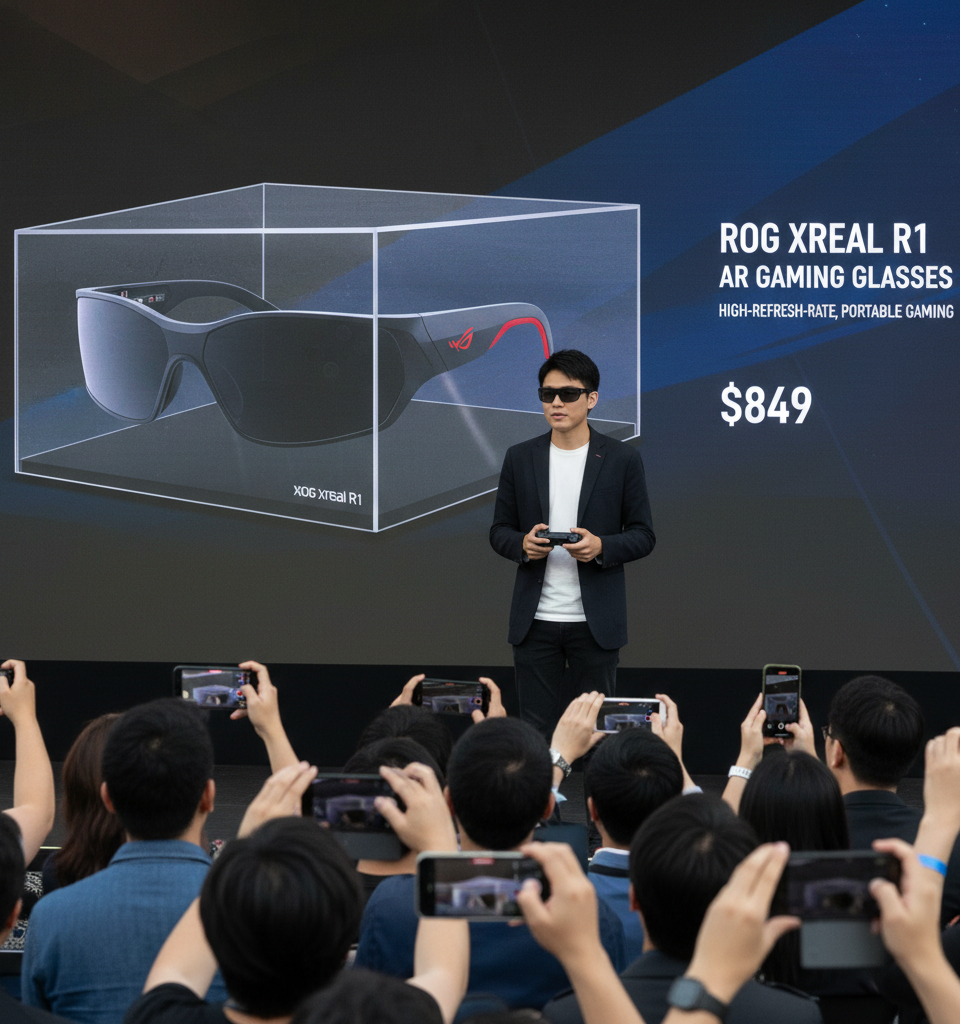
ASUS Republic of Gamers (ROG) and augmented reality specialist Xreal have officially launched pre-orders for their collaborative R1 AR Gaming Glasses, with a price tag of $849. This new device, which promises to deliver a high-fidelity, immersive augmented reality experience, is designed primarily for gamers seeking portable, high-performance visual output and includes a dedicated connectivity dock to ensure broad compatibility with a range of gaming devices.
Context and Significance
This launch marks a significant step in the convergence of high-end gaming hardware and nascent AR technology. While AR glasses have been available for some time, the ROG Xreal R1 distinguishes itself by targeting the demanding gaming segment with a specific focus on performance metrics like refresh rate, which is crucial for fluid gameplay. The collaboration between a gaming hardware giant like ROG and an AR pioneer like Xreal lends credibility and technical expertise, positioning the R1 as a serious contender in the evolving landscape of wearable displays. It builds upon a foundation of incremental improvements in display technology and processing power, making advanced AR experiences more attainable for consumers.
Key Features and Specifications
The most prominent feature of the ROG Xreal R1 AR Gaming Glasses is its 240Hz refresh rate, a specification traditionally found only in high-end gaming monitors. This ultra-high refresh rate is designed to eliminate motion blur and provide an exceptionally smooth visual experience, critical for fast-paced gaming. The glasses bundle a dedicated connectivity dock, which is pivotal for their versatility.
This dock likely houses additional processing power, battery life, and facilitates connections to various gaming sources, from PCs and consoles to handheld gaming devices. While specific display resolution wasn't detailed in the immediate announcement, the emphasis on refresh rate suggests a commitment to visual fidelity. Ergonomics and weight distribution will be key for comfort during extended gaming sessions, and consumers will be keen to understand the field of view and perceived display size offered by the optics.
Industry and Market Impact
The introduction of the ROG Xreal R1 could have a notable impact on both the AR hardware market and the broader gaming accessories industry. For AR, it legitimizes the segment as a viable platform for high-performance consumption, moving beyond niche enterprise applications or basic media viewing. For gaming, it offers an alternative to traditional monitors and handheld screens, potentially creating a new category of portable, immersive display. Competitors in the AR space, such as Meta and Apple with their more comprehensive hardware suites, will be watching closely to see how a gaming-focused, tethered AR solution performs. The $849 price point positions it as a premium accessory, challenging consumers to weigh its benefits against established gaming peripherals and standalone VR headsets.
Expert Perspectives
Industry analysts view the ROG Xreal R1 as a strategic move to capture an early share in the burgeoning AR gaming market. "The 240Hz refresh rate is a game-changer for AR glasses, pushing the limits of what's possible for fluid visual feedback," commented a senior analyst at Tech Insights Group. "However, the success will hinge on the size of the virtual screen, the comfort for long sessions, and perhaps most crucially, the ecosystem of compatible games and applications the dock can support. The bundling of a dock is smart; it addresses connectivity challenges that often plague early AR devices." Concerns remain regarding the overall adoption rate of AR eyewear, which has historically been slow, but the direct appeal to gamers might provide a stronger incentive for early adopters.
Future Implications and Developments
The launch of the ROG Xreal R1 is likely just the beginning of a more aggressive push into AR by gaming hardware manufacturers. We can anticipate future iterations that might integrate more standalone processing, offer wireless connectivity, or incorporate advanced features like eye-tracking or haptic feedback. The success of this initial model will undoubtedly influence strategic decisions for subsequent products from both ROG and Xreal. Furthermore, its presence could spur a greater emphasis on AR compatibility from game developers, potentially leading to a richer library of experiences optimized for wearable displays. The partnership also hints at a broader trend of cross-industry collaborations to advance next-generation computing platforms beyond traditional screens.
Conclusion
The pre-order availability of the ROG Xreal R1 AR Gaming Glasses marks an exciting moment for both augmented reality and the gaming industry. With its high refresh rate and bundled connectivity, it aims to establish a new benchmark for portable, immersive gaming. Its reception by the market will provide valuable insights into the readiness of consumers for advanced AR experiences and the future trajectory of wearable gaming technology.