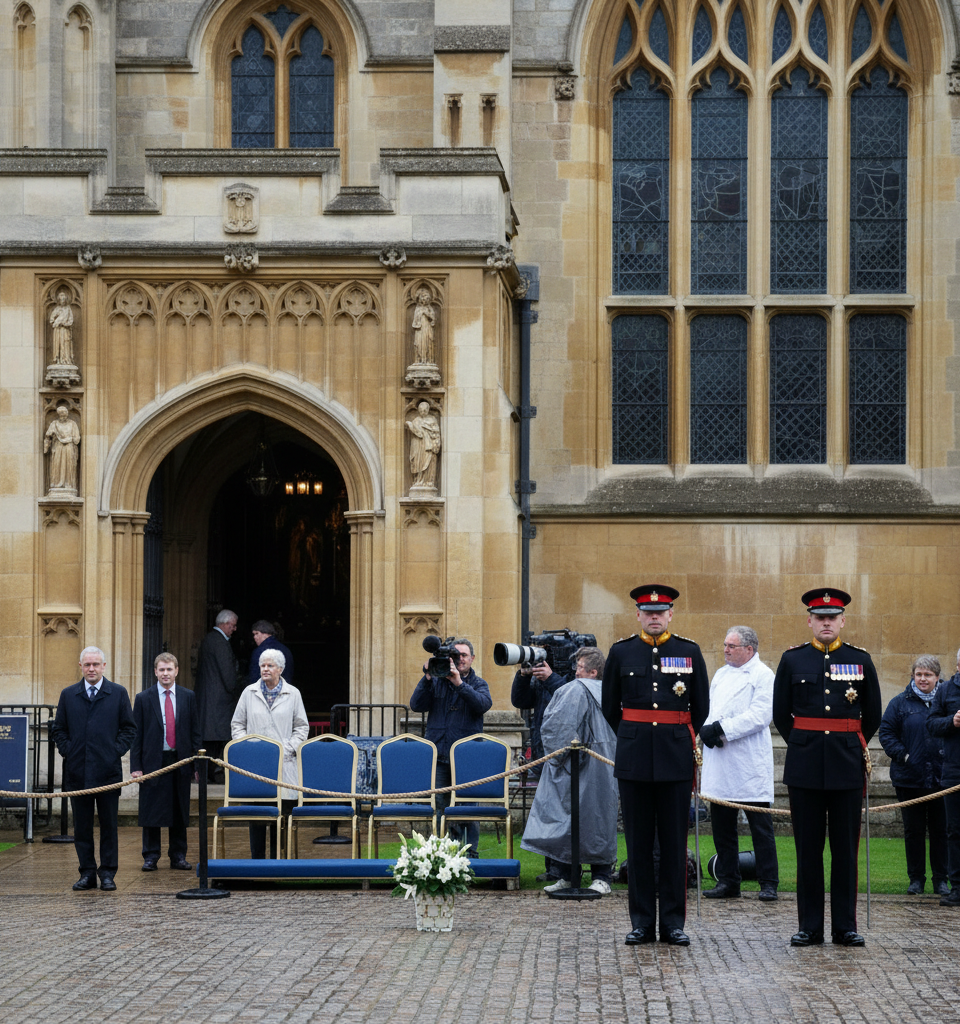
Windsor, UK – The hallowed grounds of St. George's Chapel at Windsor Castle once again played host to the Royal Family's traditional Easter Sunday service, a cornerstone of their annual calendar. However, this year's solemn observance was marked by a conspicuous and widely noted absence: that of Andrew-Mountbatten Windsor, commonly known as Prince Andrew, Duke of York, and his immediate family. Their non-attendance at what is typically a full family gathering has undeniably fueled renewed discussions and scrutiny regarding the future direction and public image of the British monarchy, particularly in the wake of recent controversies and transitions within the House of Windsor.
Historical Context and Royal Traditions
The Easter Sunday service at Windsor holds significant historical and symbolic weight for the Royal Family. It is one of the few occasions throughout the year where a substantial portion of senior royals gather publicly, offering a visual demonstration of familial unity and continuity. This tradition has been upheld for centuries, serving as a powerful emblem of the monarchy's enduring presence in British life. The late Queen Elizabeth II meticulously observed this custom, with her attendance often a highlight of the Easter period. Any deviation from this established pattern is therefore carefully observed and often interpreted as a signal, however subtle, of underlying dynamics within the royal institution.
Key Absences and Their Implications
While the primary focus remained on the presence of King Charles III, Queen Camilla, and other senior working royals, Prince Andrew's absence was particularly poignant given recent events. Following his removal from royal duties and military patronages in January 2022 due amidst ongoing fallout from his association with Jeffrey Epstein, his public engagements have been severely curtailed. Though he has made occasional appearances at strictly family-only events, public-facing royal duties, such as the Easter service, remain off-limits. His daughters, Princess Beatrice and Princess Eugenie, and their respective families, also did not attend, reinforcing the perception of Andrew's broader isolation from the public-facing aspects of the monarchy. This stands in stark contrast to previous years, where the entire York family was a regular fixture at such gatherings.
Public Perception and Monarchy's Evolution
The continued marginalization of Prince Andrew from core royal events is a strategic move by Buckingham Palace aimed at safeguarding the monarchy's reputation and public trust. Research by YouGov in late 2023 indicated that only 11% of Britons held a positive view of Prince Andrew, a stark decline from prior decades. The Palace's efforts to project an image of a slimmed-down, efficient, and ethical monarchy mean that individuals embroiled in scandal are increasingly being distanced from traditional royal duties. This approach is critical as the institution navigates a post-Elizabethan era, striving to remain relevant and respected amidst shifting societal values and increasing republican sentiment, which has seen support for the monarchy drop to 53% among 18-24 year olds according to a 2023 IPSOS poll.
Expert Analysis on Future Role
Royal commentators and political analysts largely view Andrew's continued absence as an unshakeable reality rather than a temporary measure. Dr. Eleanor Vance, a historian specializing in British royalty at the University of London, commented, "The Palace has made it unequivocally clear that Andrew's role within the public-facing monarchy is effectively over. Events like the Easter service serve as stark reminders of this new reality. The monarchy, under King Charles III, is prioritizing stability and public confidence above all else, even if it means significant familial concessions." This strategic distancing is often seen as a necessary pain point for the institution's long-term endurance.
Financial Implications and Accountability
While Prince Andrew no longer receives public funding for royal duties, his continued security costs, reported to be in the region of £3 million annually, remain a point of contention for some taxpayers. The lack of public engagements means no corresponding reciprocal benefit to the public purse, fueling ongoing debates about the financial accountability of non-working royals. This issue is part of a broader conversation about the monarchy's funding and expenditure, particularly in an era of economic austerity, where every public penny is scrutinized.
The Path Forward for the Monarchy
The Windsor Easter Sunday service, therefore, offered more than just a glimpse into a traditional religious observance; it provided a window into the evolving landscape of the British monarchy. With younger working royals like Prince William and Princess Catherine stepping into more prominent roles, the focus is firmly on presenting a modern, duty-bound, and accessible institution. The continued sidelining of Prince Andrew and his family, while perhaps personally painful, appears to be an integral part of this strategic repositioning. The Palace's intention is clear: to ensure that the monarchy remains a relevant and respected symbol of national unity well into the 21st century, by carefully curating its public image and presenting a cohesive front focused on service and duty.
Upcoming Developments and Future Speculation
Looking ahead, observers will be keen to see how the Palace manages other significant royal events throughout the year, such as Trooping the Colour or the Christmas Day service at Sandringham. Each public gathering provides a fresh opportunity to reinforce the new 'slimmed-down' monarchy model. While a complete public re-integration of Prince Andrew appears highly unlikely, his private family life will undoubtedly continue to attract media attention. The long-term implications for his daughters, Princess Beatrice and Princess Eugenie, who hold minor royal roles and undertake some charity work, also remain a subject of ongoing speculation as the institution continually refined its public presentation.