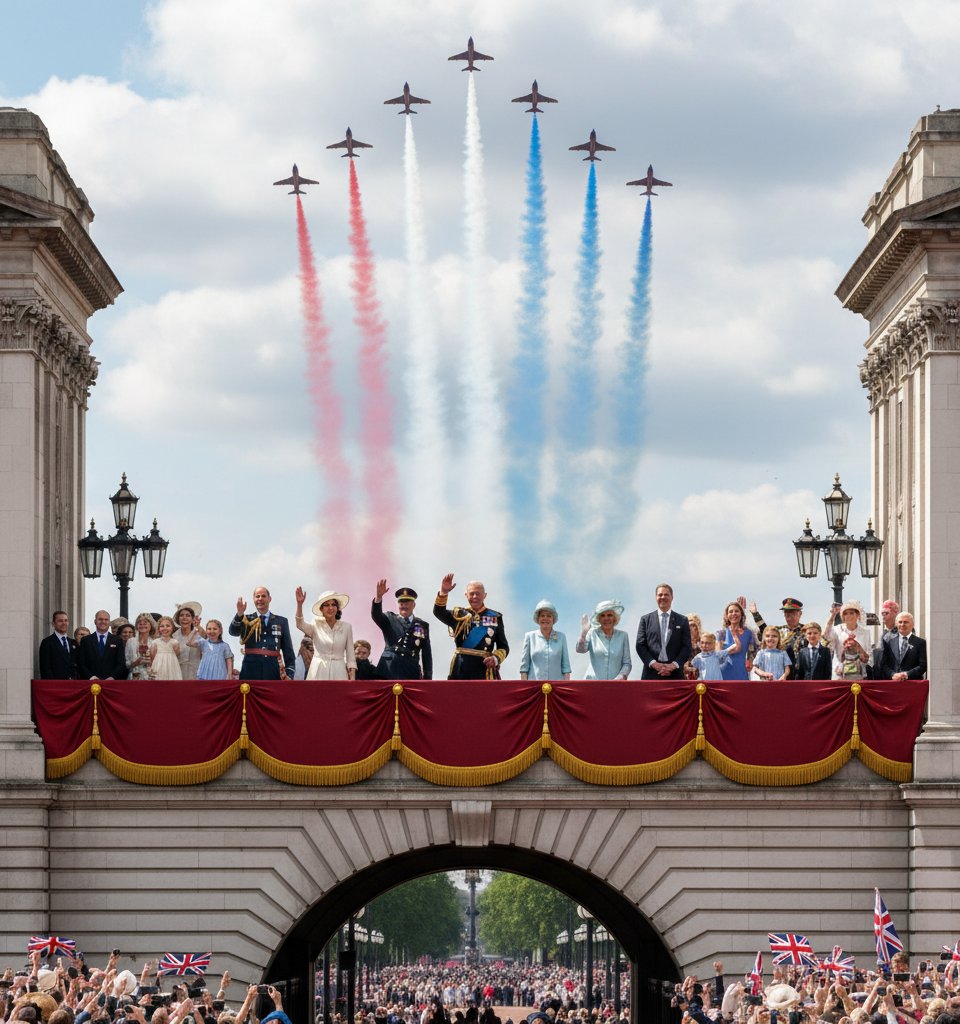
London is once again preparing for a quintessential display of British pageantry as the Royal Family gathers on the iconic Buckingham Palace balcony to witness the annual Red Arrows flypast. This cherished tradition serves as a central highlight of the King's official birthday celebrations, bringing together the monarchy and the military in a symbolic show of national unity and respect. The event, a cornerstone of the summer ceremonial calendar, underscores the enduring appeal and significance of royal traditions in contemporary Britain.
The Tradition of Trooping the Colour
The flypast is the capstone of Trooping the Colour, a centuries-old ceremony that officially celebrates the sovereign's birthday, regardless of their actual birth date. While the King's actual birthday falls in November, the official celebration is strategically moved to June to take advantage of more favorable weather conditions. This practice dates back to King George II in 1748. The spectacle itself is a meticulously choreographed affair, featuring regiments of the Foot Guards, Household Cavalry, and other branches of the armed forces. The procession typically moves from Buckingham Palace, down The Mall, to Horse Guards Parade, where the King reviews his troops before returning for the ultimate aerial display.
A Grand Military Showcase
The sheer scale of the event is impressive, involving more than 1,400 members of the armed forces. This vast contingent includes soldiers, musicians, and horses, all performing in unison with precision and discipline honed over months of rigorous training. The participation of such a large number of service personnel highlights the close ties between the monarchy and the military, with the King serving as Commander-in-Chief of the UK Armed Forces. Beyond the ceremonial aspects, the event serves as a public demonstration of military readiness and the professionalism of Britain's fighting forces.
The Red Arrows: A National Icon
The highlight for many spectators, and certainly for the Royal Family, is the dramatic flypast by the Royal Air Force Aerobatic Team, the Red Arrows. Known globally for their distinctive red Hawk jets and breathtaking aerial maneuvers, the Red Arrows are a symbol of British excellence and precision engineering. Their formation flying over Buckingham Palace, trailing plumes of red, white, and blue smoke, is a moment of collective national pride. The intricate timing required to execute this display perfectly, often involving multiple aircraft types from across the RAF, is a testament to the skill and coordination of the armed forces.
Public Engagement and Economic Impact
Beyond its ceremonial significance, the King's birthday parade and accompanying flypast draw immense crowds to central London, generating considerable public engagement and a boost to the local economy. Tourists and locals alike line The Mall and gather around Buckingham Palace to catch a glimpse of the procession and the aerial display. This influx of visitors supports businesses in the hospitality, retail, and tourism sectors. The event is also widely broadcast, reaching a global audience and contributing to Britain's image as a nation rich in history and tradition.
Evolution of a Tradition
While the core elements of Trooping the Colour remain largely unchanged, the event has adapted over time. The composition of participating regiments may vary, and the specific aircraft involved in the flypast can evolve with advancements in military aviation. However, the consistent presence of the Royal Family on the balcony – a tradition popularized by Queen Victoria and firmly established by King George V – remains a crucial visual anchor for the populace, symbolizing continuity and stability. The balcony appearance allows a direct connection between the reigning monarch and their subjects, albeit a fleeting one.
Future Implications and Enduring Relevance
The annual King's official birthday celebration, capped by the Red Arrows flypast, continues to serve as a vital demonstration of national identity and military tradition. In an era of rapid change, these events provide a sense of continuity and shared experience. As the monarchy navigates its modern role, such public spectacles reinforce its cultural significance and its position as a unifying national institution. The meticulous planning and execution behind these events also reflect a deep respect for heritage and an understanding of their enduring appeal to both domestic and international audiences, ensuring their place in the national calendar for years to come.