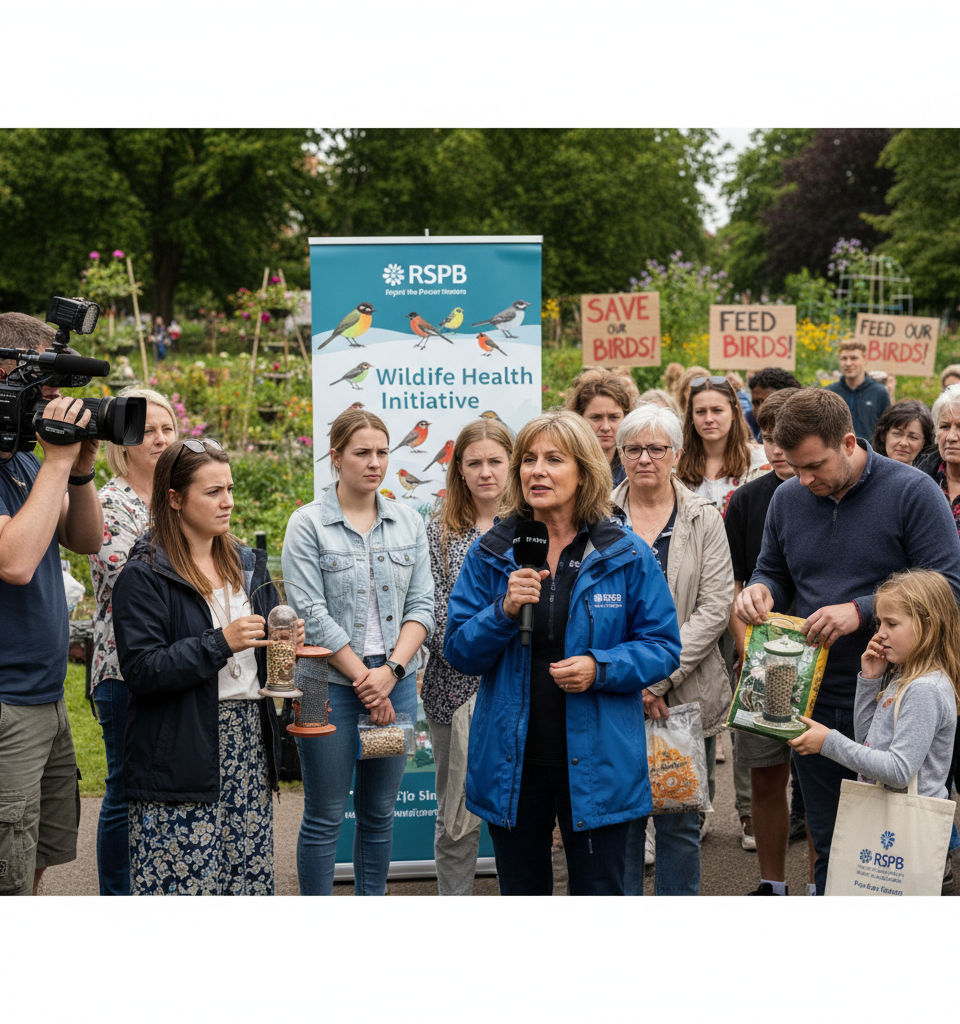
London, UK – In a significant departure from long-standing advice, the Royal Society for the Protection of Birds (RSPB) has issued new guidance recommending that the British public cease feeding garden birds during the warmer spring and summer months. The leading conservation charity, which boasts over 1.2 million members, announced the controversial directive today, emphasizing that halting supplementary feeding during these crucial periods will encourage birds to seek out natural food sources, thereby fostering stronger, healthier ecosystems and deterring the spread of disease. This strategic pivot aims to recalibrate human interaction with wildlife, moving towards an approach that prioritizes self-sufficiency among avian populations.
For decades, providing supplementary food to garden birds has been a cherished national pastime in the UK, often promoted as a vital conservation effort, especially during harsh winters. Bird feeding has grown into a substantial industry, with data from the Pet Food Manufacturers' Association (PFMA) indicating that the UK wild bird food market is valued at approximately £275 million annually, a testament to the public's engagement. The previous RSPB stance broadly endorsed year-round feeding, with minor adjustments for seasonal specificities. This new guidance, however, marks a fundamental re-evaluation, suggesting that continuous human intervention may inadvertently create more harm than good, particularly by concentrating birds in artificial feeding hubs where disease transmission is heightened and natural foraging skills may diminish.
Key details of the new RSPB advice highlight several concerns. The charity points to scientific studies demonstrating that an over-reliance on feeders can lead to nutritional deficiencies if the offered food isn't diverse enough to meet all dietary needs, particularly for growing chicks. Furthermore, congested feeding stations can become breeding grounds for pathogens like Trichomoniasis, a parasitic disease that has caused significant declines in greenfinch and chaffinch populations. The RSPB states that during spring and summer, natural food sources such as insects, berries, and seeds are abundant, providing a more balanced and appropriate diet for wild birds. By reducing artificial feeding, the charity hopes to prompt birds to explore and exploit these natural resources, which in turn supports wider biodiversity through pollination and pest control.
This revised guidance is expected to ripple through the avian care industry and among environmental organizations. Manufacturers of wild bird feed and accessories might see a seasonal shift in demand, potentially necessitating a re-evaluation of product lines and marketing strategies. Conservation groups and local wildlife trusts, many of whom have historically echoed the year-round feeding message, will likely need to update their own public information campaigns. The move also underscores a broader philosophical shift within conservation towards minimizing human intervention and promoting self-sustaining ecological processes, rather than perpetual support.
Industry experts and environmental analysts have offered mixed reactions. Dr. Eleanor Gray, a prominent ornithologist and ecological consultant, commented, “This is a bold but necessary step. While the immediate public reaction might be concern, the long-term ecological benefits – particularly in terms of disease reduction and promoting natural behaviours – are substantial. It’s a move towards empowering nature, rather than simply aiding it.” However, others express worry that some members of the public, feeling discouraged, might cease all bird care, including providing water or creating bird-friendly habitats, which remain crucial year-round. The RSPB is clear that providing fresh water and planting native species remains highly beneficial.
Looking ahead, the RSPB plans extensive public awareness campaigns to educate its members and the wider public on the rationale behind the new guidance. This will include detailed online resources, informational videos, and partnerships with gardening and wildlife media outlets. The charity will also monitor bird population trends and health indicators closely to assess the efficacy of this policy shift. There may be future adjustments based on scientific observations and public feedback. The long-term implications could see a healthier, more robust wild bird population across the UK, more attuned to natural cycles and less dependent on human handouts, marking a new chapter in British bird conservation efforts.
Further research into the long-term impact of supplementary feeding on bird demographics, genetic diversity, and disease susceptibility is ongoing both within the RSPB and academic institutions. The guidance represents an evolving scientific understanding of wildlife interaction and is a testament to the dynamic nature of conservation science. The RSPB's proactive stance is likely to spark similar debates and policy reviews in other nations, as global conservation efforts increasingly seek sustainable, ecologically sound strategies.