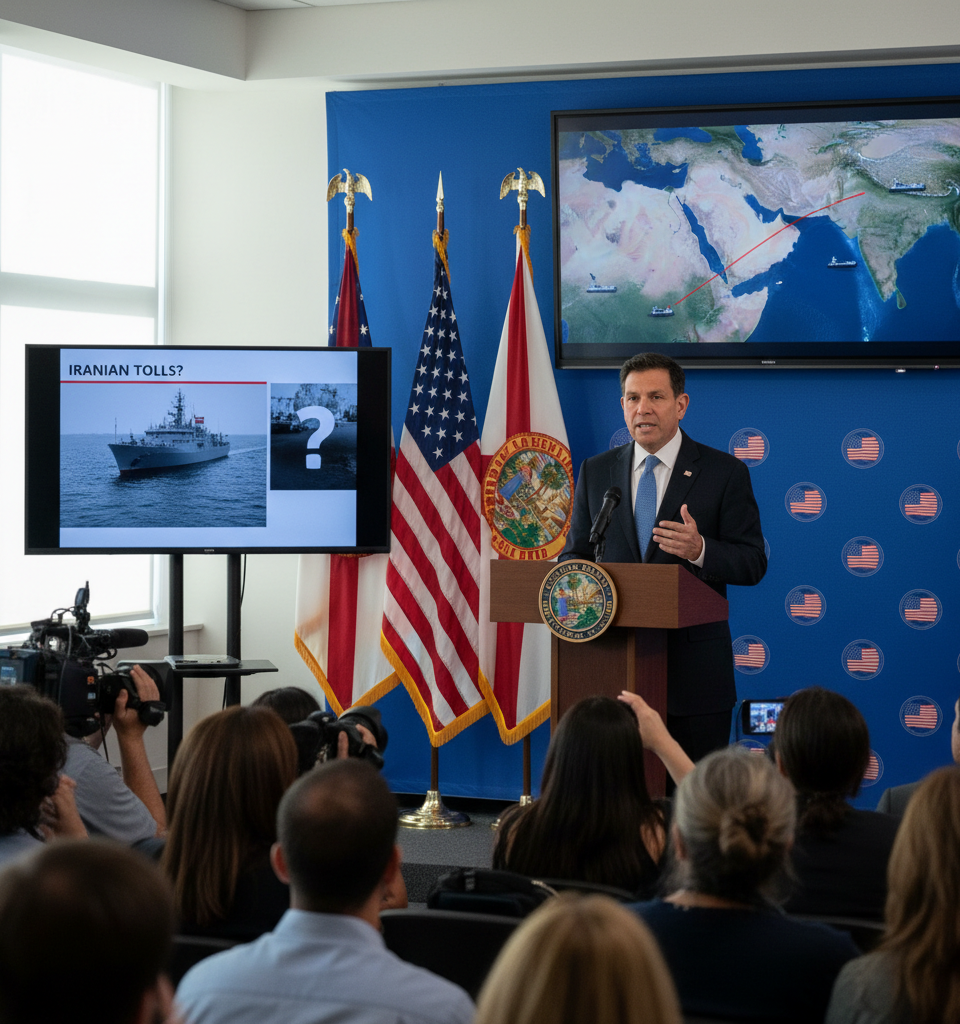
Amid escalating tensions surrounding the strategically crucial Strait of Hormuz, Senator Marco Rubio has unequivocally rejected Iran's assertion of the right to impose tolls on vessels transiting the international waterway. This declaration comes as Tehran maintains that the strait's operational status "will never return" to its pre-conflict state, arguing for its entitlement to charge fees for services provided. The ongoing dispute highlights the precarious balance of power and international law governing one of the world's most critical shipping lanes, through which a significant portion of global energy supplies passes.
Geopolitical Significance and Historical Context
The Strait of Hormuz, a narrow choke point between the Persian Gulf and the Arabian Sea, is paramount to global energy security. Roughly one-fifth of the world's oil supply, and a substantial volume of liquefied natural gas, transits through this 21-mile-wide passage daily. For decades, the strait has been a flashpoint in regional geopolitics, with Iran intermittently threatening to close it in response to international sanctions or military pressures. The current Iranian stance, claiming changes in its operational status and the right to levy tolls, challenges long-standing principles of international navigation and maritime law, specifically the right of innocent passage guaranteed under the United Nations Convention on the Law of the Sea (UNCLOS), even though Iran is not a signatory.
Iran's Stance and International Law
Tehran's position, as described, is rooted in its view that the altered geopolitical landscape and its sovereign control over parts of the strait's territorial waters grant it new prerogatives. The claim that the strait "will never return" to its prior conditions suggests a strategic reassessment by Iran regarding its role and control over the waterway. Their argument for charging fees for "services" is likely an attempt to legitimize revenue collection from international shipping, potentially citing navigational aid, security, or environmental protection measures as justification.
However, such unilateral actions are widely viewed by the international community as violations of established maritime law, which generally prohibits states from levying charges simply for passage through international straits unless specific services benefiting transit are universally and demonstrably provided, and even then, regulated by international agreements.
Impact on Global Shipping and Energy Markets
The prospect of Iran imposing tolls or otherwise disrupting free passage through the Strait of Hormuz carries profound implications for global shipping and energy markets. Any unilateral imposition of fees would inevitably increase the cost of crude oil, refined products, and natural gas, potentially triggering price spikes and adding inflationary pressures worldwide. Insurers would likely raise premiums for vessels operating in the region, further burdening shipping companies. Such uncertainty could also prompt some shippers to seek alternative, albeit longer and more expensive, routes, leading to logistical nightmares and delays across global supply chains. The stability of the global economy is intrinsically linked to the unimpeded flow of commerce through such pivotal maritime arteries.
Diplomatic and Military Ramifications
Senator Rubio's explicit rejection of Iran's claims underscores the international community's unified front against any attempts to unilaterally control or monetize passage through the strait. Should Iran proceed with its threats, it would likely face widespread international condemnation, potentially leading to further sanctions and increased military presence by international naval forces committed to upholding freedom of navigation. The United States, along with its allies, has a stated policy of ensuring the free flow of commerce through international waters, and any direct challenge to this principle in the Strait of Hormuz could significantly escalate regional tensions, risking military confrontation.
What Lies Ahead
The immediate future will likely involve a diplomatic standoff, with international bodies and individual nations reiterating their commitment to international maritime law. Naval patrols in the region are expected to remain robust, signaling a strong deterrent against any Iranian actions that could impede commercial shipping. While Iran's rhetoric is a serious concern, the practical implementation of toll collection or sustained disruption of passage would represent a significant escalation. The international community will be closely monitoring Iran's next moves, as the situation in the Strait of Hormuz continues to evolve. The potential for miscalculation remains high, making steadfast adherence to international norms crucial for regional stability.