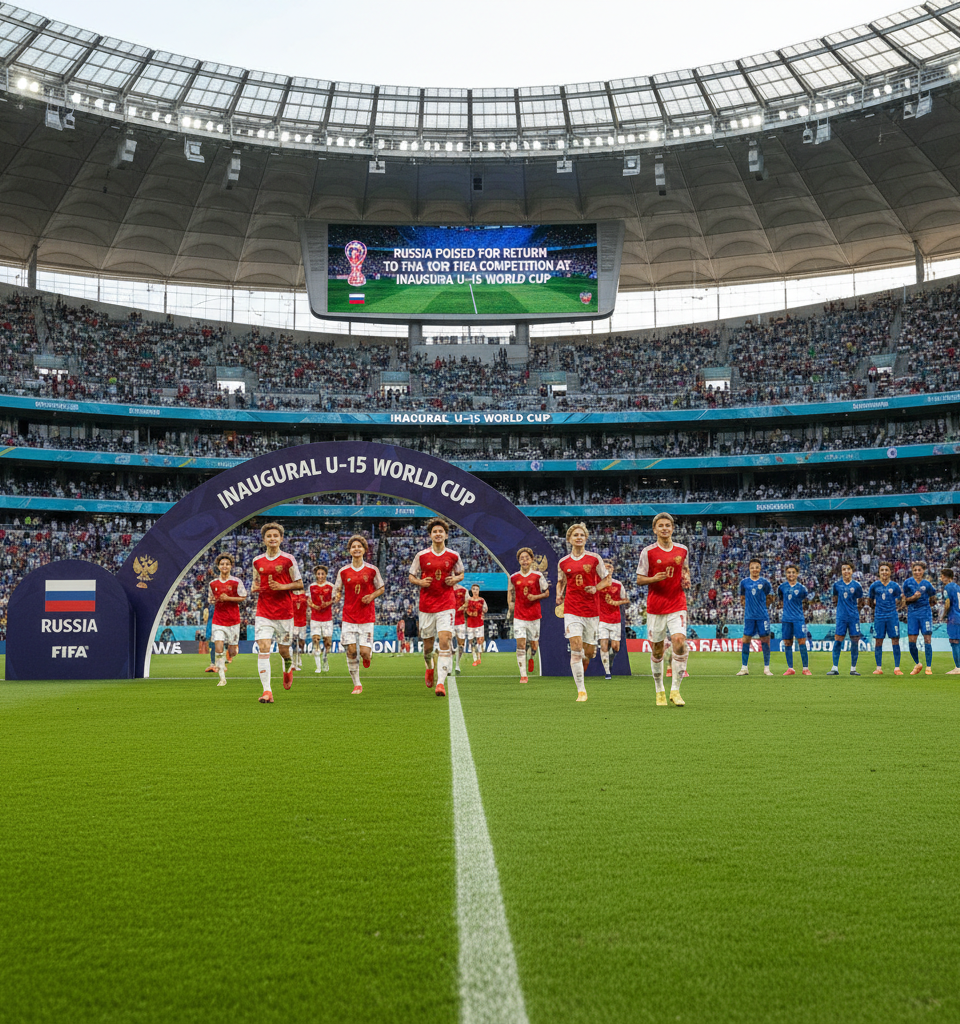
Russia appears poised to re-enter the international football arena under the FIFA banner this October, with the inaugural U-15 World Cup providing the potential avenue. The global football governing body has declared that all its member associations will be eligible to participate in the newly established youth tournament, effectively clearing a path for Russia's return to FIFA competition after an extended hiatus.
Background and Context
The potential reinstatement of Russian teams into FIFA tournaments marks a significant shift in the landscape of international sports sanctions. Following geopolitical events, Russian national teams and clubs have largely been excluded from competitions organized by major international sporting federations, including FIFA and UEFA. This exclusion has impacted all age groups and genders within football, isolating Russian players and officials from the highest levels of the sport. The U-15 World Cup, as a newly introduced tournament, offers FIFA a unique opportunity to potentially reintegrate a member association under specific conditions and at a junior level, initiating a phased approach to broader re-engagement.
The Inaugural U-15 World Cup
Details surrounding the inaugural U-15 World Cup, slated for October, remain a key aspect of this development. While the precise host nation and full tournament structure are still anticipated, the crucial stipulation for Russia's potential participation is FIFA's inclusive invitation policy. By explicitly stating that all member associations are open to compete, FIFA has laid the groundwork for the Russian Football Union (RFU) to field a team. This youth tournament, focusing on players aged 15 and under, is designed to foster emerging talent and could serve as a valuable platform for young Russian players to gain international experience, regardless of broader political considerations.
Industry and Geopolitical Implications
The potential return of Russia to FIFA competition, even at a youth level, carries substantial implications for international sports governance and diplomacy. It suggests a possible strategic pivot by FIFA, potentially signalling a move towards depoliticizing certain aspects of sports or implementing more nuanced approaches to sanctions. For the football industry, it could indicate a gradual normalization, albeit starting with junior categories. This move might also put pressure on other international sporting bodies to re-evaluate their own policies regarding Russian participation. While limited to a youth event, the decision will undoubtedly be scrutinized by national football associations, political entities, and human rights organizations globally, each with their own perspectives on the appropriate level of engagement with Russia.
Expert Perspectives
While no specific expert quotes are available in the initial reporting, analysts generally observe that such decisions by international sporting federations are rarely made without extensive internal deliberation and consideration of geopolitical currents. There would likely be discussions around setting precedents, managing public perception, and balancing sporting principles with broader ethical considerations. Some experts might view it as a necessary step towards maintaining the universality of sports, while others could raise concerns about the timing and potential implications for solidarity among nations currently sanctioning Russia across various sectors. The U-15 level might be seen as a way to allow competitive opportunities for young athletes without fully endorsing or normalizing senior-level athletic engagement.
Looking Ahead
The coming months will be critical in observing the follow-through on this development. Key aspects to watch include the official confirmation of Russia's participation, the reaction from other participating nations, and any further statements from FIFA clarifying the rationale behind this decision. Should Russia indeed compete, it would mark a significant step towards their re-entry into the global football framework, potentially paving the way for discussions regarding participation in other age groups or senior competitions in the future. The inaugural U-15 World Cup will not only showcase budding football talent but also serve as a test case for the evolving relationship between sport and international politics.
Future Considerations
Beyond direct participation, the potential inclusion of Russia in the U-15 World Cup could also influence sponsorship deals, broadcasting rights, and the overall commercial appeal of future FIFA tournaments. Corporate partners often monitor geopolitical alignments closely, and any shift in FIFA's stance on Russia could lead to re-evaluation of marketing strategies and brand associations. Moreover, the decision could spark debates within regional football confederations, prompting them to assess their own policies regarding Russian teams and athletes. The October tournament is therefore more than just a competition; it is a barometer for the evolving dynamics of international football governance.