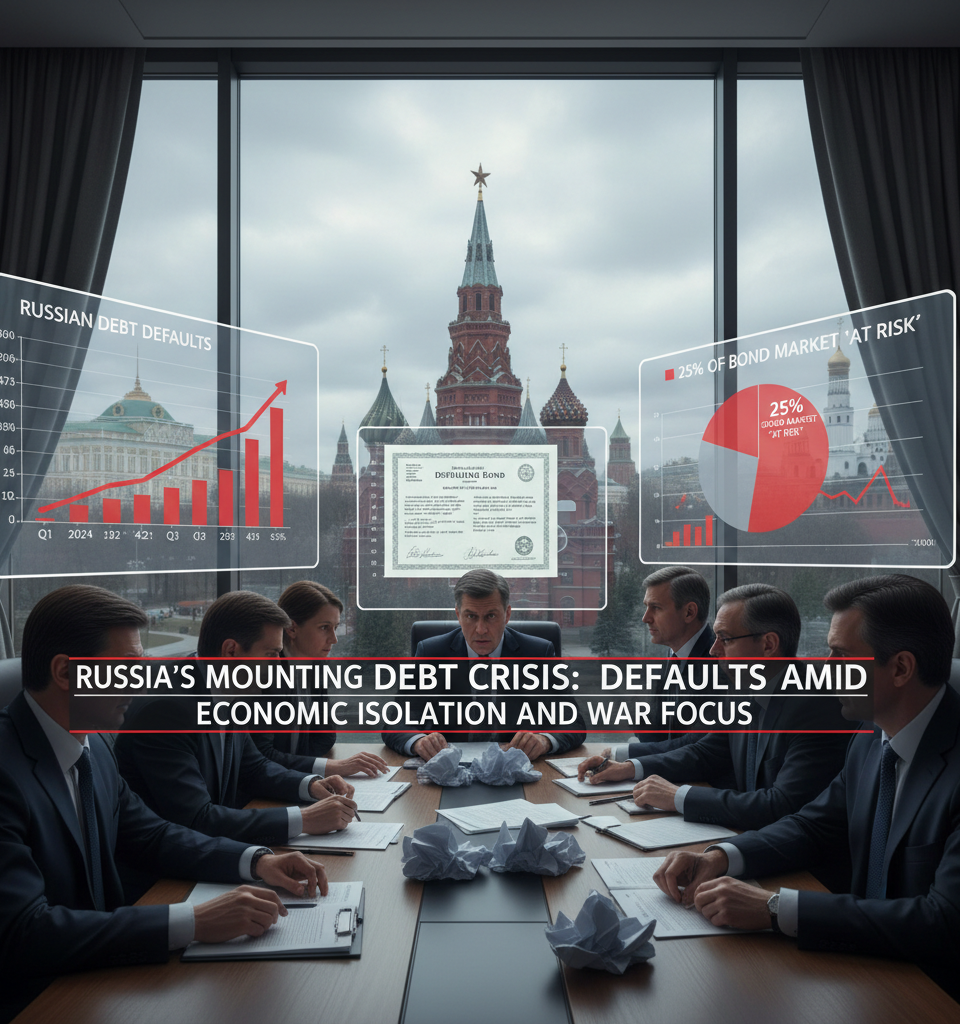
Russia's financial landscape is increasingly characterized by widespread defaults on its corporate and municipal bonds, signaling a deepening economic crisis. According to reports from the Russian financial newspaper Izvestia, the nation has already seen 11 technical defaults in 2024, followed by 24 in 2025, and a further 11 in just the first three months of 2026. This troubling trend suggests that roughly a quarter of Russia's bond market is now under significant threat, raising grave concerns about the Kremlin's management of its economy amidst ongoing geopolitical tensions and sanctions.
Context and Background
This surge in defaults underscores the cumulative impact of Western sanctions imposed since Russia's invasion of Ukraine, coupled with Moscow's inward-looking economic policies. Historically, Russia has prided itself on its low sovereign debt and substantial foreign currency reserves. However, the systematic isolation from global financial markets, the freezing of billions in assets, and the redirection of national resources towards military efforts have fundamentally altered this picture. The current defaults are primarily, though not exclusively, technical, arising from various factors including supply chain disruptions, difficulties in processing payments due to sanctions, and a re-prioritization of state-backed entities' financial obligations.
Key Details and Figures
The reports highlight that while the Russian federal government has largely managed to avoid sovereign default by fulfilling its obligations in rubles, the problem is festering at the sub-sovereign and corporate levels. The 11 defaults recorded in the first quarter of 2026 alone indicate an accelerating pace of financial distress. Specific examples cited include regional administrations struggling to refinance their debts and state-affiliated enterprises facing liquidity challenges due to limited access to international capital markets and reduced export revenues for certain sectors. These defaults often involve missed interest payments or principal repayments, even if eventually resolved, they erode investor confidence and increase the cost of borrowing for other Russian entities.
Industry and Market Impact
The ripple effects of these defaults are significant. Domestically, they indicate growing strain on Russia's banking sector, which often holds these bonds, and could lead to decreased lending to the real economy. For international investors who still hold Russian debt, even if restricted, these defaults represent further losses and complicate any future recovery efforts. The market perception of Russian assets continues to deteriorate, making it virtually impossible for Russian companies or regions to attract foreign investment. This isolation forces Russian entities to rely almost exclusively on domestic financing, which is finite and increasingly strained.
Expert Perspective
Financial analysts and economists generally concur that these defaults are a direct consequence of Russia's prolonged economic isolation and its government's strategic focus on the war. Dr. Anya Petrova, an expert on Russian economics at a prominent European think tank, commented last week, "What we're seeing is the slow but steady erosion of Russia's financial stability, particularly outside of the federal budget's immediate purview. The Kremlin's singular focus on military objectives means that municipal and corporate entities are increasingly left to fend for themselves in a very hostile economic environment." She added that while a full-scale sovereign default might be averted for now, the ongoing defaults severely restrict Russia's long-term economic growth potential.
What's Next
The trajectory of Russia's debt crisis is likely tied directly to developments in the ongoing conflict and the persistence of international sanctions. Should these conditions remain, or even intensify, the number of defaults is expected to continue its upward trend. The Russian government may be forced to implement more aggressive measures, such as direct bailouts for crucial enterprises or regions, which would further strain the federal budget. Without significant policy shifts or external relief, the deepening financial distress at the sub-sovereign and corporate levels will increasingly hamper Russia's ability to fund its domestic priorities and maintain economic stability beyond its immediate war efforts.