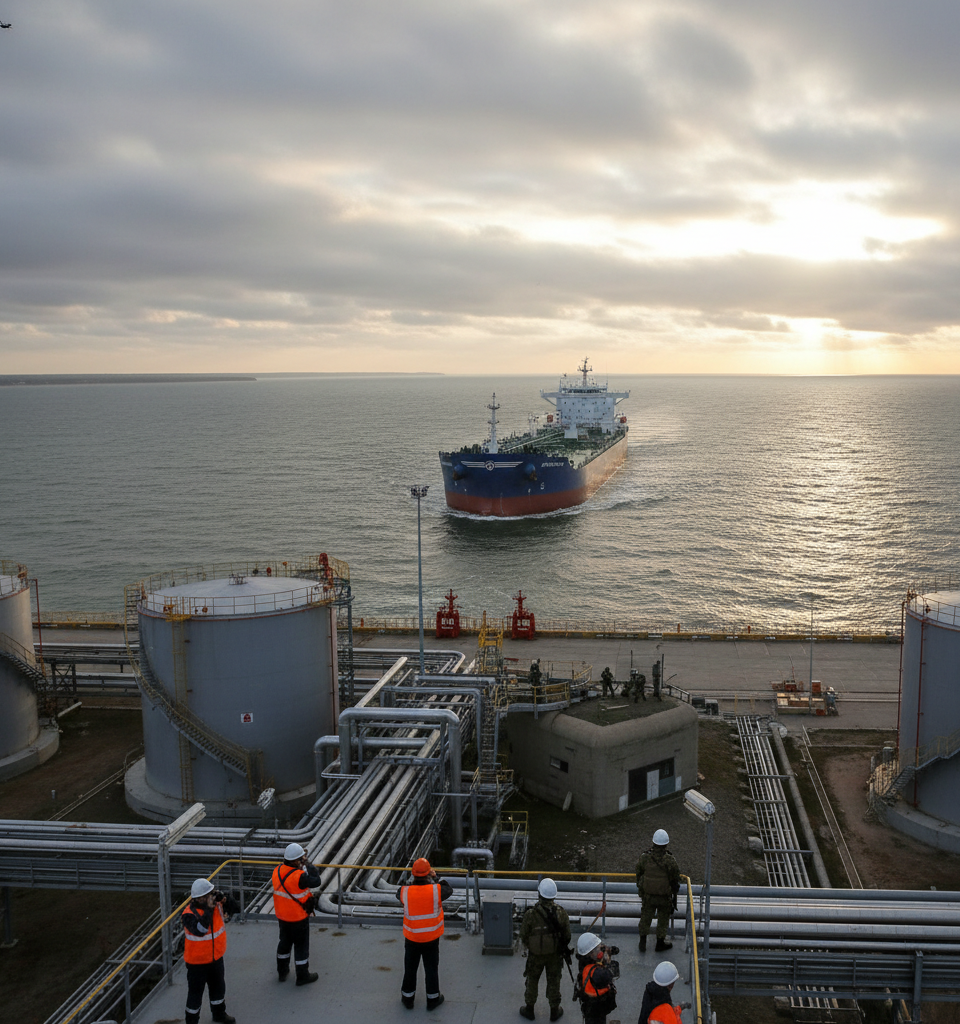
Ust-Luga, Russia – April 12, 2024 – The vital Ust-Luga port, a cornerstone of Russia's crude oil export operations in the Baltic Sea, has successfully resumed loadings after a temporary cessation prompted by a series of Ukrainian drone attacks targeting Russian energy infrastructure. Industry sources and vessel tracking data confirm that crude shipments have recommenced from the port's facilities, marking a crucial step in normalizing Russia's vital energy supply chain amidst ongoing hostilities.
Context and Escalating Tensions
The temporary disruption at Ust-Luga, which began in late March, underscored the growing vulnerability of Russia's distant energy assets to Ukrainian long-range drone capabilities. Kyiv has explicitly stated its intent to degrade Russia's military-industrial complex and disrupt its war funding, with energy infrastructure becoming a primary target. The Ust-Luga port, located approximately 170 kilometers southwest of St. Petersburg, is a strategic facility for exporting Urals crude, a key revenue generator for the Kremlin, primarily destined for international markets that continue to accept Russian oil.
Operational Details and Market Resilience
While specific figures on the quantity of crude loaded since the resumption remain undisclosed, vessel tracking platforms indicate the departure of multiple tankers from Ust-Luga's berths. Prior to the attacks, Ust-Luga consistently handled millions of tons of crude oil monthly, making it one of Russia's busiest export hubs. The port's owner, Novatek, one of Russia's largest independent natural gas producers, stated that the facility's operations were fully restored following safety assessments and repair work. The quick turnaround highlights Russia's robust emergency response protocols and its determination to minimize disruption to its lucrative oil exports, which despite Western sanctions, remain a backbone of its economy.
Broader Market Implications and Global Supply Chains
The pause in loadings, though brief, sent ripples through the global crude market, albeit minor given the short duration. Any significant disruption to Russian oil exports, which globally account for approximately 10-12% of total supply, has the potential to trigger price volatility. However, the swift resumption of operations at Ust-Luga has largely assuaged immediate fears of a prolonged supply shock. Analysts are closely watching other Russian ports and refineries, particularly those along the Black Sea and inland, as Ukraine's drone campaign has expanded its geographical reach, posing a persistent threat to global fossil fuel supply chains.
Expert Analysis on Strategic Warfare
Energy security experts and geopolitical analysts view the attacks on Ust-Luga and other Russian energy targets as a calculated strategy by Ukraine. "These attacks are not merely symbolic; they are designed to impose economic costs on Russia and strain its logistics, forcing a diversion of resources from the front lines to defend vital civilian infrastructure," commented Dr. Eleanor Vance, a senior fellow at the Institute for Energy Policy. "While Russia has demonstrated impressive resilience in restoring operations, the sustained threat will undoubtedly drive up insurance premiums for tankers and potentially complicate future investment in these facilities, even as Moscow seeks to demonstrate business as usual."
The Unfolding Future: Escalation and Adaptation
Looking ahead, the successful targeting and subsequent repair of Ust-Luga establish a dangerous precedent. Ukraine is likely to continue and potentially intensify its drone campaign against Russian energy assets, forcing Russia to invest heavily in air defense systems around these critical hubs. This ongoing tit-for-tat could lead to intermittent disruptions, higher operational costs for Russian energy firms, and a constant test of their logistical and repair capabilities. The international community also faces a dilemma: while condemning attacks on civilian infrastructure, some tacitly view the strikes as a legitimate self-defense measure by Ukraine, further complicating the geopolitical landscape surrounding global energy trade.
The coming months will reveal the true efficacy of Ukraine's strategy and Russia's ability to adapt. The Ust-Luga incident serves as a stark reminder of how regional conflicts can have far-reaching implications for global energy markets, security, and the future of international trade. The focus will now shift to whether Russia can sufficiently protect its vast energy infrastructure from persistent aerial threats, and how international buyers will react to the heightened operational risks associated with Russian crude.