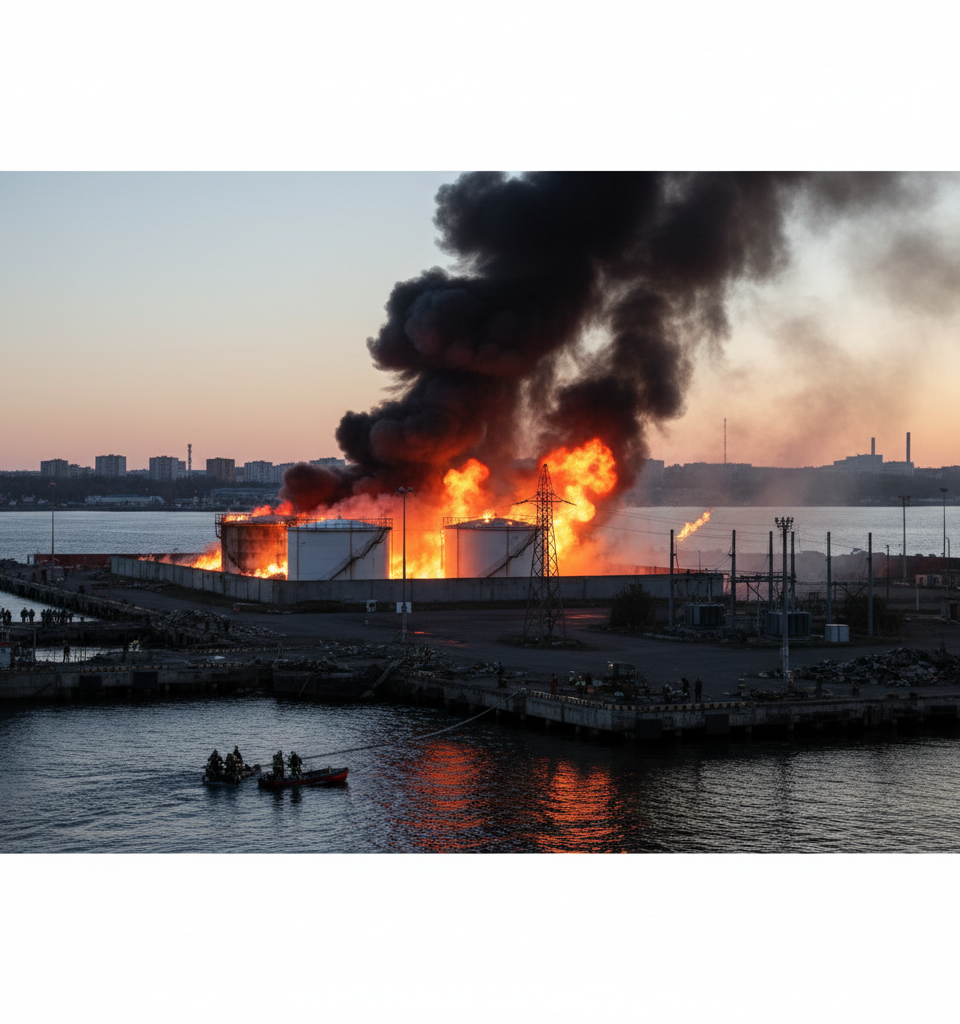
VYSOTSK, RUSSIA / KYIV, UKRAINE – A substantial fire engulfed an area of Russia's strategically vital Port of Vysotsk on the Baltic Sea in the early hours, an incident Russian authorities have attributed to a Ukrainian drone attack. This development, occurring overnight, coincides with reports from Ukraine detailing extensive power outages affecting approximately 380,000 users in its northern regions, also following alleged Russian strikes. The dual events underscore the relentless and escalating nature of the conflict, with both sides intensifying attacks on critical infrastructure.
Contextualizing the Escalation: A War of Infrastructure
This latest exchange of hostilities represents a concerning trend in the protracted conflict, where strikes on energy and logistical infrastructure have become a hallmark. The Port of Vysotsk, a key conduit for Russian energy exports – particularly coal and oil products – serves as a crucial economic artery. Any disruption there carries significant geopolitical and economic implications, potentially impacting global commodity markets. Ukraine, conversely, has been subjected to persistent and debilitating attacks on its energy grid since the war's inception, aimed at undermining its civilian and military capabilities. The ability of Ukraine to project drone power deep into Russian territory, targeting sensitive sites, demonstrates an evolving strategic capability.
Detailing the Strikes: Vysotsk and Northern Ukraine
According to preliminary reports from Russian emergency services, the fire at the Port of Vysotsk was localized to a storage facility, with investigations underway to ascertain the full extent of the damage. While specific details on casualties or the volume of goods affected remain scarce, the incident prompted a rapid response from local fire brigades. Concurrently, in Ukraine, the northern region experienced a mass power shutdown, impacting hundreds of thousands of residents. Ukrainian energy officials indicated that emergency repair crews have been deployed, but full restoration of services could take days, depending on the severity of the damage to substations and transmission lines. These figures align with previous reports indicating billions of dollars in damage to Ukraine's energy infrastructure since February 2022.
Broader Economic Repercussions and Market Volatility
The attack on Vysotsk carries potential ramifications for global energy markets, particularly for European nations seeking alternative energy sources. While the immediate impact on global oil and gas prices may be limited given Russia's redirection of exports, persistent disruptions to critical ports could introduce supply chain fragility and increase insurance premiums for shipping in the Baltic Sea. Analysts at commodity research firms indicate that any sustained disruption at Vysotsk could lead to a minor uptick in European coal prices, though the port's primary exports are often directed toward Asian markets. The incident also highlights the vulnerability of maritime trade routes to drone warfare, potentially prompting new security protocols and investments in counter-drone technologies for port operators worldwide.
Expert Analysis: Shifting Battlefield Dynamics
Military analysts suggest that Ukraine's increasing ability to strike targets deep within Russia, exemplified by the Vysotsk incident, reflects an evolving drone strategy aimed at disrupting Russian logistics and morale. "These acts are not merely symbolic; they are designed to impose economic costs and stretch Russian air defenses," stated Dr. Elena Petrova, a senior fellow at the Institute for Geopolitical Studies. "It's a clear signal that Russia's hinterland is not immune to the conflict, forcing a reallocation of resources." Conversely, Russia's continued attacks on Ukrainian infrastructure are seen as an attempt to degrade the country's resilience ahead of potential offensive operations, particularly as winter approaches.
Looking Ahead: Escalation and Resilience
The coming weeks are likely to witness a continued pattern of retaliatory strikes as both nations seek to gain strategic advantages. Ukraine will undoubtedly continue to press its technological advantage in drone warfare, while Russia is expected to maintain its pressure on Ukrainian energy and logistical assets. Humanitarian organizations are bracing for increased needs in affected Ukrainian regions, particularly with the onset of colder weather exacerbating the challenges of power outages. International efforts regarding de-escalation remain stalled, signaling a prolonged period of intense cross-border engagements and a deepening humanitarian crisis for millions.
The Unfolding Narrative: A Conflict Without Borders
The attacks on the Port of Vysotsk and Ukraine's northern power grid underscore a critical phase in the conflict, characterized by a broadening of the battlefield beyond traditional front lines. Civilian populations on both sides are increasingly bearing the brunt of these strategic assaults, with economic and social stability under constant threat. As international bodies continue to urge restraint, the reality on the ground points towards a conflict where the targeting of vital infrastructure remains a potent weapon, with significant and far-reaching consequences.