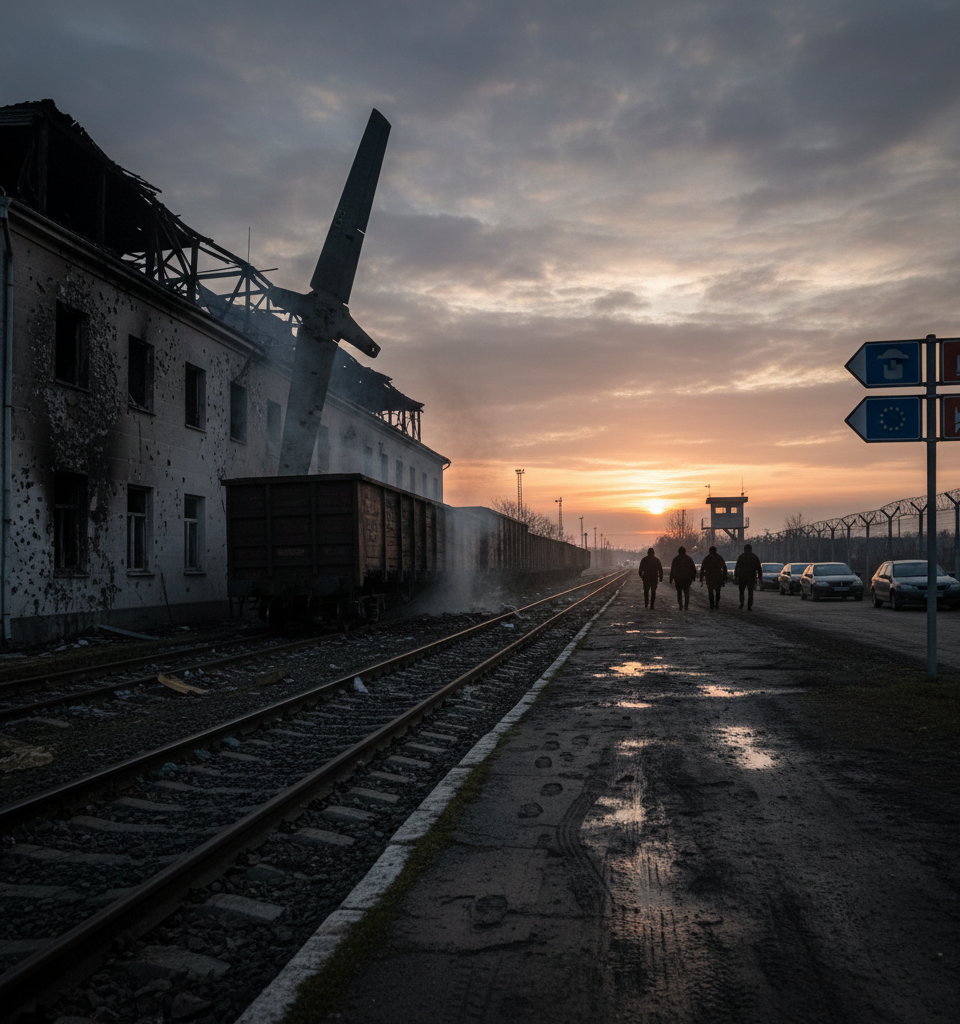
The drone attack on a train near the Ukraine-Poland border raises significant questions about logistics security and geopolitical stability. Businesses with supply chains relying on Eastern European infrastructure or operating in bordering regions should closely monitor developments for potential disruptions or heightened risk assessments.
A Russian drone reportedly struck a train near the Ukraine-Poland border recently. The incident occurred shortly after former UK Prime Minister Boris Johnson and other senior European officials had left the area. While initial reports indicate no casualties from the strike, its proximity to a NATO member's border and the timing relative to the officials' departure are drawing considerable attention.
Context of the Strike
The attack unfolded in a sensitive region, underscoring the persistent threat of spillover from the conflict. The border area between Ukraine and Poland is a critical transit point for humanitarian aid, military supplies, and civilian traffic. Such an incident, even without casualties, spotlights the inherent dangers for infrastructure and personnel operating in the vicinity of active conflict zones. The presence of high-ranking officials moments before the strike could suggest either a coincidence or a broader message.
Details of the Incident
Specific details about the drone's origin, precise target, or the extent of damage to the train have not been fully released. However, the confirmation that no casualties were reported is a crucial detail. The train's cargo or destination was also not immediately specified. The fact that the attack happened 'shortly after' the departure of prominent European figures like Boris Johnson adds a layer of geopolitical intrigue to the event. These officials have been vocal supporters of Ukraine, and their presence near the border is often symbolic of international solidarity.
Geopolitical Implications
This incident could mark a significant moment in the conflict, potentially indicating an escalation in Russia's targeting strategy. The strike's proximity to a NATO border, particularly Poland, is a critical factor. NATO has maintained a firm stance on defending its territory, and any actions perceived as encroaching on its borders are met with serious concern. While the strike was on Ukrainian territory, the geographic closeness to Poland could be interpreted as a deliberate signal or a heightened disregard for de-escalation.
Potential for Escalation
Analysts are examining whether this event represents a tactical shift by Russia or merely an unfortunate consequence of continued hostilities. A deliberate targeting of infrastructure near a NATO border, especially following the departure of high-profile Western figures, could signal a more aggressive posture. Such actions could compel NATO to re-evaluate its defensive strategies and potentially increase its presence in frontline states. The possibility of accidental incursions or miscalculations leading to broader conflict remains a serious concern for policymakers.
What Comes Next
Authorities in Ukraine and international bodies will likely conduct further investigations into the drone strike. The international community will be closely watching for official statements from Kyiv, Warsaw, and Moscow regarding the incident. The reaction from NATO and individual member states will be particularly scrutinized for any shifts in rhetoric or policy. Businesses operating in the region should assess their contingency plans and supply chain vulnerabilities, as the geopolitical landscape remains volatile and prone to sudden changes.