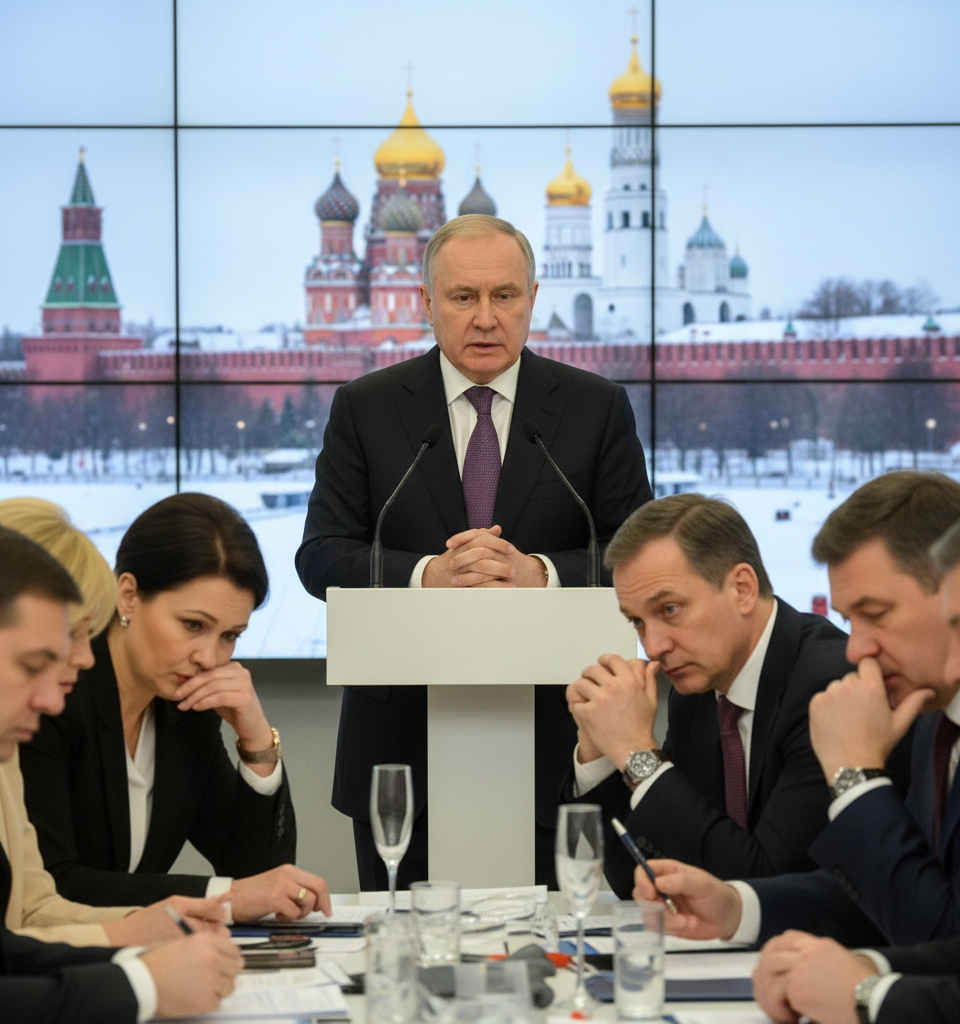
A former high-ranking Russian official has made an unprecedented public statement, suggesting that significant portions of the country, including elements of its elite, are beginning to conceptualize a future without President Vladimir Putin at the helm. This candid observation comes amidst a period of heightened internal scrutiny and assertive state actions, notably the seizure of assets belonging to perceived disloyal or dissenting figures within Russia's upper echelons.
Shifting Sands Under the Kremlin
The revelation underscores a growing unease within the traditionally compliant Russian power structure. For decades, Putin has cultivated an image of indispensable leadership, with loyalty to the state often conflated with loyalty to his person. The notion that such a fundamental tenet is being questioned, even by former insiders, marks a potentially significant inflection point. Historical parallels might be drawn to periods preceding major political realignments in Russia, where fissures within the elite often precede broader societal changes. The current environment, characterized by geopolitical isolation and economic pressures, appears to be exacerbating these internal tensions.
Escalating Asset Seizures and Elite Discontent
Central to this burgeoning dissent is the Kremlin's increasingly aggressive policy of asset nationalization and seizure, often targeting oligarchs and wealthy individuals who may have fallen out of favor or are perceived as not adequately supporting the state's current trajectory. Reports indicate that billions of dollars in private assets, ranging from industrial holdings to luxury properties, have been brought under state control. This practice, while ostensibly aimed at combating corruption or asserting economic sovereignty, has sent a chilling message through the ranks of Russia's wealthy and powerful, fueling fears of arbitrary expropriation and eroding the very foundations of economic security that once bound many to the regime.
The former official's comments resonate with an implicit complaint: loyalty is demanded, but the future rewards for that loyalty are increasingly unclear and precarious.
Economic and Geopolitical Repercussions
The implications of such internal strife extend beyond mere political maneuvering; they could significantly impact Russia's economy and its standing on the global stage. A lack of trust and predictability within the domestic business environment tends to stifle investment, encourage capital flight, and impede long-term economic planning. This internal instability coincides with severe international sanctions and the ongoing reorientation of Russia's trade and financial partnerships, amplifying existing economic vulnerabilities. Internationally, a perception of internal divisions within Russia could be viewed as either a weakness to exploit or a source of unpredictable policy shifts, further complicating diplomatic relations and geopolitical stability.
Expert Analysis: A Cracking Facade?
Political analysts and Kremlin watchers are closely scrutinizing these developments. Dr. Anya Petrova, a leading expert on Russian politics at the Royal Institute for International Affairs, recently commented, "While public dissent is largely suppressed, expressions of discontent from within the former elite are highly significant. It suggests cracks in the facade of monolithic support for Putin. The asset seizures are not just about wealth; they're about control and loyalty, and they are inadvertently creating a class of alienated, powerful individuals who now have a vested interest in a different future for Russia." Other experts note that while open rebellion is unlikely in the short term, the erosion of elite consensus could lead to a more fragmented and less effective governance structure, particularly in economic policy.
The Unfolding Narrative: What Lies Ahead?
The immediate future remains uncertain, but several pathways are plausible. The Kremlin may intensify its crackdown, further solidifying its control through fear, or it might subtly attempt to assuage some elite concerns, perhaps through a re-evaluation of its asset seizure policies. However, the genie of imagining a post-Putin Russia may now be out of the bottle. Future developments will likely involve continued, albeit often covert, maneuvering within the elite, potential shifts in policy as the government grapples with economic challenges, and ongoing observation from international actors seeking to understand the trajectory of one of the world's most critical geopolitical players. The long-term implications for Russia's political landscape and its approach to global affairs could be profound, depending on how these internal pressures evolve and manifest.
Potential for Succession and Power Dynamics
Discussions about a future without Putin implicitly raise questions about succession and the power dynamics that would follow. While no clear successor has been publicly identified or groomed, the very act of contemplating such a scenario indicates a shift from the previous perception of indefinite rule. Different factions within the elite – from security services to economic liberals – likely hold varying visions for Russia’s post-Putin direction. The current climate of asset seizures might, in a paradoxical way, intensify jockeying for influence among these factions, each seeking to position itself favorably for a post-transition era, however distant that may seem. This internal competition, though largely unseen by the public, could shape Russia's domestic and foreign policy in subtle yet significant ways in the coming years.