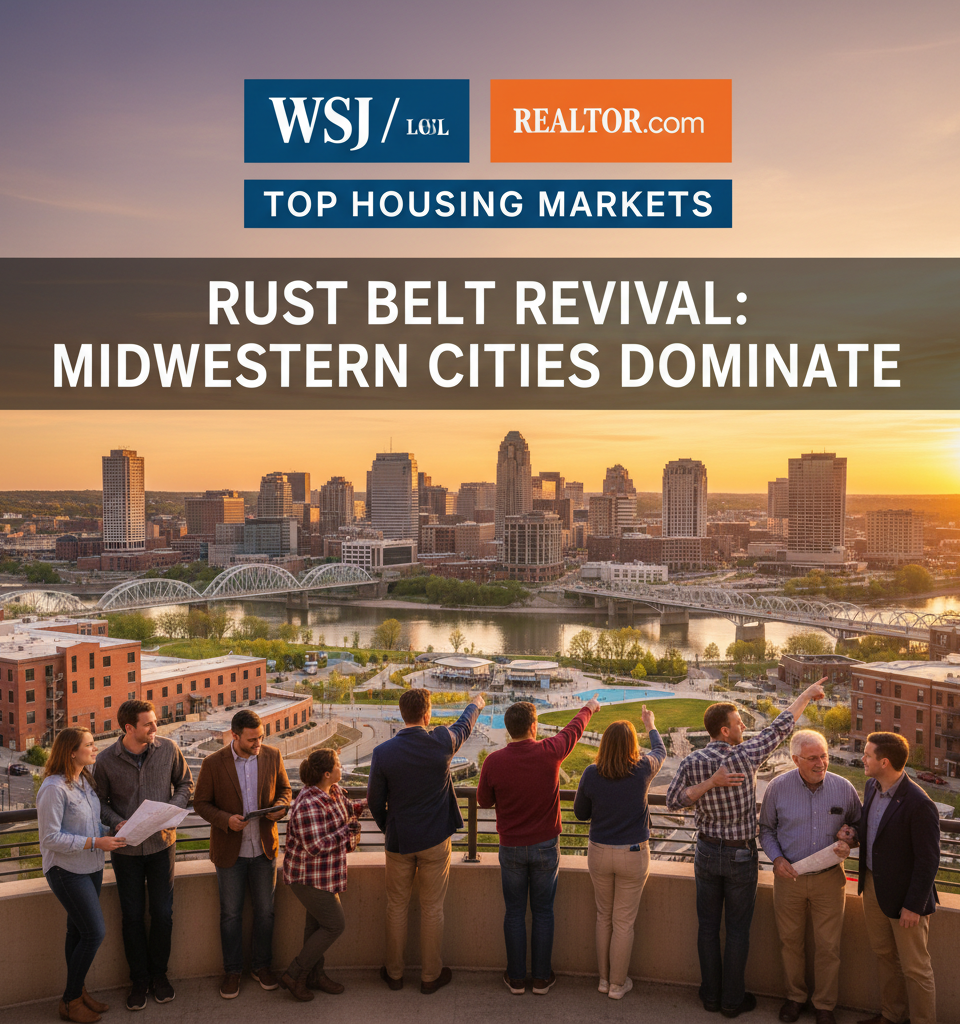
The Spring 2026 Wall Street Journal/Realtor.com Housing Market Ranking has unveiled a surprising new hierarchy in the American real estate landscape, with previously overlooked industrial cities in the Midwest now leading the charge. This quarterly report, a bellwether for residential trends, demonstrates a significant pivot towards affordability and strong growth potential in what were once considered the struggling heartlands of America's industrial might. The shift underscores a broader re-evaluation of housing values and lifestyle priorities in a post-pandemic economy.
Context and Background
For decades, coastal metropolitan areas and sunbelt cities have typically commanded premium positions in national housing market analyses, driven by robust job growth, cultural amenities, and perceived prestige. However, the economic aftermath of the COVID-19 pandemic, characterized by remote work trends and surging interest rates, has dramatically recalibrated buyer priorities. The allure of lower entry costs and a healthier work-life balance in the Rust Belt has become increasingly potent, attracting a new wave of residents seeking respite from historically inflated markets. This resurgence is not entirely new; nascent signs of revitalization have been observed in these regions for the past several years, but this ranking solidifies their status as primary drivers of housing market momentum.
Key Details and Findings
The Spring 2026 ranking emphatically highlights cities such as Toledo, Ohio; Akron, Ohio; and Rochester, New York, among the top contenders. These markets are characterized by a potent combination of robust housing demand, accelerating price appreciation, and, crucially, relative affordability. For instance, the median home price in Toledo, which secured the top spot, currently sits at approximately $185,000, a stark contrast to national averages hovering around $400,000.
Data from the report indicates that homes in these top Midwestern markets are selling an average of 20% faster than the national average, often within a week of listing. Furthermore, these cities are experiencing significant growth in their younger populations (25-34 age group), suggesting a demographic shift that bodes well for sustained housing demand. Local real estate agents in these areas report a marked increase in out-of-state buyers, many of whom are leveraging remote work opportunities to purchase larger, more affordable homes.
Industry and Market Impact
This dramatic shift has profound implications for the broader housing industry and ancillary sectors. Mortgage lenders are increasingly adjusting their focus and product offerings to cater to these emerging power markets. Developers, who historically concentrated on high-growth coastal regions, are now exploring investment opportunities in these Midwestern cities, potentially spurring new construction and economic development. The increased activity is also breathing new life into local economies, impacting sectors from retail to services, as new residents bring disposable income and demand for local amenities. This geographic recalibration of housing demand could also influence migration patterns and regional economic policies, prompting state and local governments to invest further in infrastructure and quality of life improvements to sustain this newfound momentum.
Expert Perspective
Analysts are cautiously optimistic about the long-term sustainability of this trend. Dr. Eleanor Vance, a senior economist at the National Housing Institute, stated, "This ranking is not merely a fleeting trend; it reflects a fundamental revaluation of housing rooted in affordability and lifestyle flexibility.
While perennial concerns about job diversity and wage growth in these regions persist, the embrace of remote work has undeniably leveled the playing field. " She further elaborated that these markets benefit from established infrastructure and a lower cost of living, making them attractive to first-time homebuyers and those seeking to escape the financial pressures of more expensive locales. However, she cautioned that continued investment in local economies and amenities would be crucial for sustaining this growth beyond the initial surge.
What's Next?
The trajectory for these revitalized Midwestern markets appears promising, provided economic conditions remain favorable. Industry observers anticipate continued robust demand as long as interest rates do not spike dramatically and remote work remains a prevalent option for many professionals. The spotlight on these cities will likely attract further investment, potentially leading to increased development and gentrification pressures in the coming years.
Policymakers in these regions face the critical challenge of managing growth sustainably, ensuring that affordability remains a key characteristic while simultaneously fostering job creation and enhancing community infrastructure. com ranking serves as a powerful reminder that the American dream of homeownership is increasingly finding a new, affordable address in the heartland.