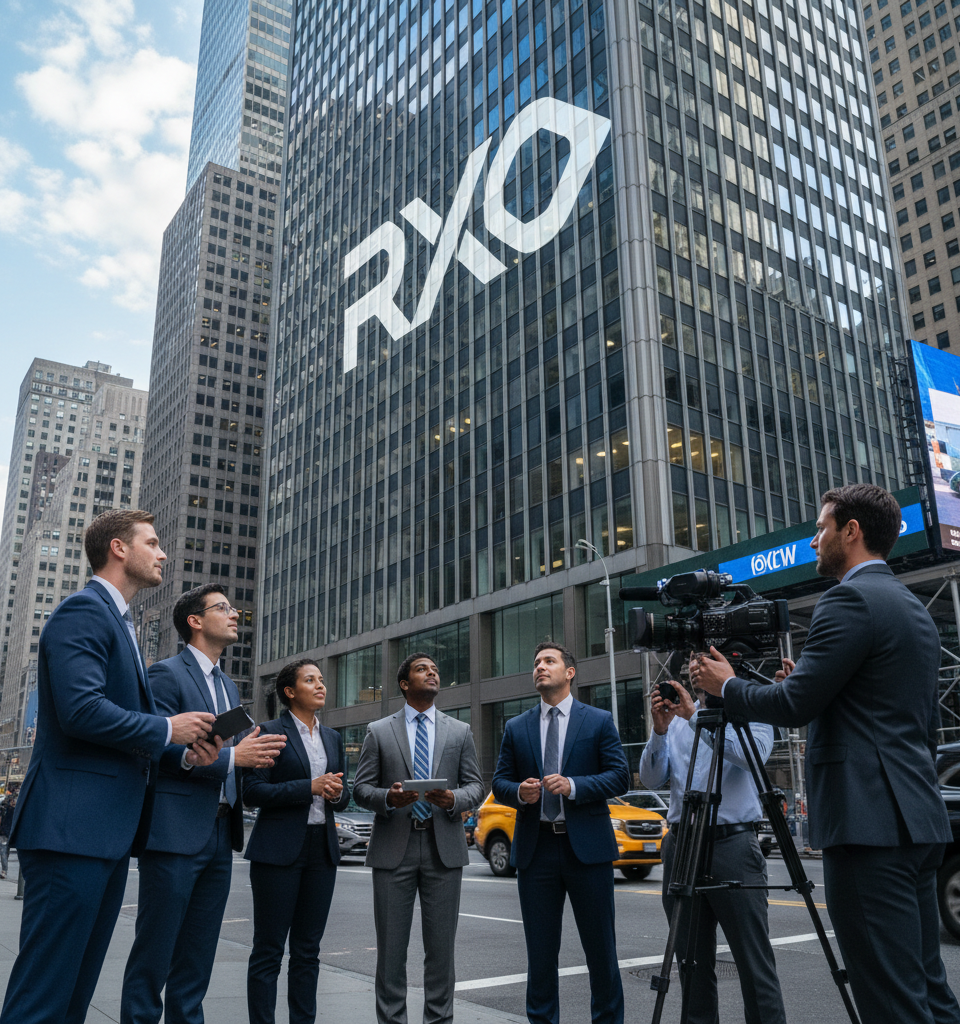
RXO's debt rating has been confirmed at its current level by S&P, a decision that comes despite a discernible strengthening within the freight market. Concurrently, the credit rating agency has sustained its negative outlook for the company, indicating that underlying concerns persist irrespective of improved industry conditions. This affirmation, announced on 2026-06-13, places a spotlight on S&P's ongoing assessment of RXO's financial health and operational stability.
Contextualizing S&P's Decision
S&P's maintenance of RXO's current debt rating suggests a nuanced perspective on the company's financial standing. Typically, an improving market environment might lead to an upgrade or a revision of a negative outlook. However, in RXO's case, the agency appears to be weighing other factors that prevent such positive adjustments. The "negative outlook" classification generally signals potential for a downgrade within the next 12 to 24 months if certain performance metrics or market conditions do not improve to S&P's satisfaction. This continued cautious stance from S&P could reflect lingering concerns about RXO's leverage, cash flow generation, competitive position, or other financial risk factors despite the broader industry tailwinds.
Implications for the Freight Sector
The freight market has recently demonstrated a notable recovery, with increased demand, tighter capacity, and rising rates contributing to a more favorable operating environment for many carriers and logistics providers. This strengthening trend would intuitively suggest improved prospects for companies operating within the sector, including RXO. However, S&P's decision indicates that not all entities may fully capitalize on these trends in a way that significantly alters their fundamental credit risk profile in the agency's eyes. The continued negative outlook for RXO, therefore, serves as a reminder that individual company-specific challenges can sometimes overshadow positive industry-wide momentum.
Expert Perspective and Underlying Concerns
While the original source does not provide explicit expert quotes, the preservation of a negative outlook by a major rating agency like S&P intrinsically suggests a critical expert assessment. It implies that S&P analysts perceive specific risks within RXO's financial structure or operational strategy that necessitate a cautious rating. These risks could include, but are not limited to, high debt levels incurred during past expansions, challenges in integrating acquisitions, competitive pressures that limit profitability, or exposure to volatile segments of the freight market. The decision to hold the rating steady, rather than upgrade, even amidst market strength, underscores S&P's belief that these internal or external challenges are not yet sufficiently mitigated.
Future Implications for RXO
For RXO, the sustained negative outlook means the company will likely remain under scrutiny from investors and lenders. A negative outlook often translates to higher borrowing costs or more stringent terms for future financing. The company will need to demonstrate tangible improvements in its financial performance and credit metrics to persuade S&P to revise its outlook to "stable" or even "positive." Key areas of focus for RXO will likely include debt reduction, enhancing profitability margins, generating consistent free cash flow, and proving its ability to navigate the cyclical nature of the freight industry more resiliently. Failure to address the underlying concerns could ultimately lead to a downgrade of its debt rating, which would further impact its financial flexibility and investor confidence.
Broader Market Reaction
The market's reaction to such rating affirmations, especially with a preserved negative outlook, can vary. Often, if a downgrade was anticipated but did not occur, the immediate reaction might be neutral or slightly positive. However, the continuous presence of a negative outlook ensures that the company's financial future remains a topic of concern for investors. Companies operating in the transportation and logistics sectors are particularly sensitive to credit ratings, as their access to capital and ability to manage operational disruptions can be significantly influenced by their perceived creditworthiness. Therefore, while no immediate downgrade occurred, the sustained negative outlook keeps RXO in a precarious position as it navigates both a strengthening market and its specific challenges.
The Path Forward
The coming months will be critical for RXO as it aims to demonstrate the financial stability and operational improvements necessary to alter S&P's assessment. The company will likely need to communicate clear strategies for deleveraging, improving cash flow, and enhancing its competitive positioning within the dynamic freight market. The current freight market strength provides a potent opportunity for the company to bolster its fundamentals, but the negative outlook signals that significant work remains to be done to convince S&P of a sustainable positive trajectory. All eyes will be on RXO's financial results and strategic initiatives in the near future to see if it can shed the cautious assessment of the rating agency.