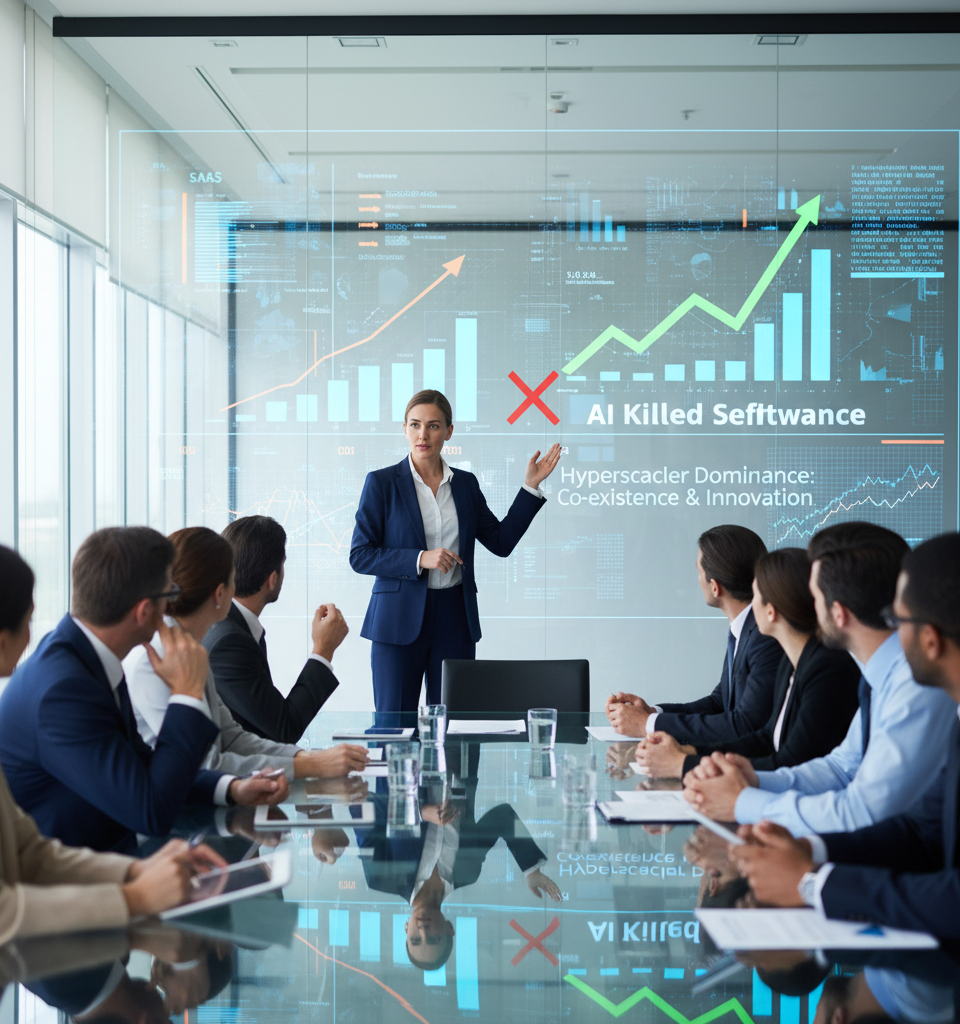
The Context: An AI-Driven Tech Landscape
The discussion surrounding AI's impact on software is not new, but its intensity has escalated dramatically over the past 18-24 months with breakthroughs in generative AI. This surge has led some to predict a future where AI models entirely subsume application functionality, rendering traditional SaaS products obsolete. This narrative, while compelling, often conflates the emergence of a powerful new technology with the outright eradication of established, value-generating business models. Historically, new technologies tend to augment and transform existing industries rather than obliterate them entirely, a pattern likely to hold true for SaaS.
Key Dynamics: Hyperscaler Influence and Strategic Independence
The core of the 'SaaS is not dead' argument lies in recognizing the strategic imperative for software companies to maintain independence from dominant hyperscalers like AWS, Google Cloud, and Microsoft Azure. While these platforms offer immense computing power and AI capabilities, an over-reliance can lead to vendor lock-in, escalating costs, and a loss of competitive differentiation. Companies like Basecamp and 37signals, for instance, have famously vocalized their concerns over cloud computing costs, illustrating a broader sentiment that unchecked dependency on these giants can erode profitability and innovation. The companies that are positioned for long-term success are those meticulously evaluating their infrastructure choices, opting for hybrid models, or even repatriating workloads to maintain control over their data, infrastructure, and ultimately, their destiny.
Market Impact: Diversification and Value Redefinition
The market impact of this re-evaluation is profound, fostering diversification in cloud strategies and a renewed focus on core product value. Instead of merely building atop hyperscaler APIs, successful SaaS firms are integrating AI as an enhancement, not a replacement, for their core offerings. This translates into more intelligent user interfaces, automated workflows, and predictive analytics that enrich existing functionalities. For example, a CRM SaaS might leverage AI for lead scoring and sentiment analysis, but the fundamental CRM functionality remains paramount, demonstrating AI's role as an enabler, not an annihilator, of the business logic.
Expert Perspectives: A Call for Nuance
Industry analysts largely concur that the 'AI kills SaaS' narrative is overly simplistic. "AI is a feature, not a product category unto itself," states Sarah Chen, a leading tech industry analyst at Gartner. "The real differentiator for SaaS providers will be how effectively they weave AI into their existing value propositions, rather than attempting to become an 'AI company' from scratch." Another perspective from Forrester Research highlights that while 70% of businesses are experimenting with generative AI, only 15% have integrated it into production-level SaaS applications, indicating a significant gap between hype and practical adoption that still requires foundational software.
The Path Forward: Strategic Integration and Value Creation
The future of SaaS is undeniably intertwined with AI, but in a symbiotic rather than destructive relationship. Companies must adopt a strategic approach to AI integration, focusing on how AI can solve specific customer problems better and more efficiently within their existing software frameworks. This includes careful consideration of data governance, ethical AI practices, and developing proprietary AI models or fine-tuning open-source alternatives to minimize reliance on generic hyperscaler offerings. The narrative isn't about AI replacing SaaS, but rather AI optimizing, enhancing, and elevating SaaS to new levels of capability and value.
What's Next: Hybrid Architectures and Differentiated Offerings
Looking ahead, expect to see a surge in hybrid cloud architectures where SaaS companies strategically deploy workloads across public clouds, private infrastructure, and edge devices to optimize for cost, performance, and data sovereignty. Differentiated AI offerings, moving beyond generic large language models to industry-specific, fine-tuned solutions, will also be a key trend. The market will demand more than just AI integration; it will demand intelligent, specialized AI that genuinely enhances user experience and business outcomes. The next five years will be defined by SaaS companies that demonstrate agility, strategic independence, and a commitment to solving real-world problems with thoughtfully integrated AI, proving beyond doubt that reports of SaaS's death were greatly exaggerated.