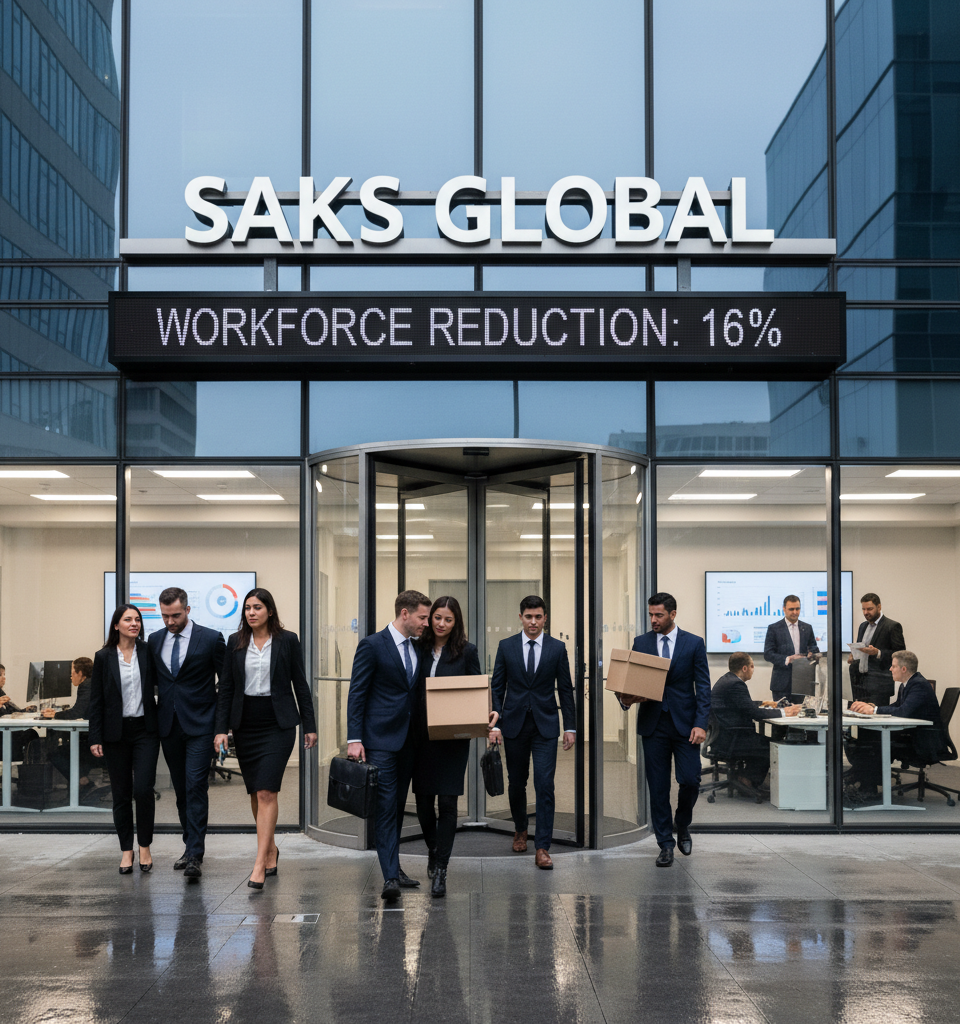
Saks Global, a prominent player in the luxury retail e-commerce space, announced a 16% reduction in its corporate workforce this week, impacting employees across various departments. The decision, confirmed by a company spokesperson, is directly linked to the company's ongoing bankruptcy and a broader strategic realignment to focus internal resources on "critical capabilities that will drive profitable, sustainable growth." This move underscores a challenging period for the online luxury segment, exacerbated by shifting consumer behaviors and a competitive landscape.
Context of Financial Distress and Market Pressures
This latest round of redundancies is not an isolated event but rather a consequence of a prolonged period of financial distress that led to Saks Global’s bankruptcy filing. The company, which spun off its e-commerce operations from Saks Fifth Avenue several years ago, has struggled to achieve consistent profitability despite its strong brand recognition. Analysts point to several factors, including aggressive expansion strategies that overextended resources, intense competition from established luxury houses with their own direct-to-consumer channels, and the broader economic headwinds impacting discretionary spending. The luxury market, while often resilient, has shown signs of softening in certain categories, forcing retailers to re-evaluate their operational efficiencies.
Specifics of the Downsizing and Strategic Shift
While the exact number of affected employees was not immediately disclosed, a 16% cut represents a substantial portion of Saks Global's corporate infrastructure. The spokesperson emphasized that the decision was made after a thorough review of the organizational structure, aimed at eliminating redundancies and prioritizing roles directly contributing to revenue generation and customer experience. Reports suggest that departments such as marketing, human resources, and back-office operations were among those most impacted. The company aims to consolidate roles and leverage technology more effectively, channeling investment into areas such as advanced analytics, supply chain optimization, and personalized customer engagement platforms, all crucial for its renewed focus on profitable growth.
Broader Industry Implications and Trends
Saks Global's workforce reduction is indicative of a wider trend observed across the retail sector, particularly within the e-commerce segment. Many online retailers that experienced exponential growth during the pandemic are now recalibrating their cost structures amid higher interest rates, inflationary pressures, and a more normalized consumer spending environment. This restructuring at Saks Global could signal to other luxury e-tailers the urgency of optimizing operations and achieving fiscal discipline. The market is increasingly rewarding lean, agile businesses capable of adapting quickly to changing consumer demands and economic conditions, rather than those solely focused on market share expansion at any cost.
Analyst Perspectives on Saks Global's Future
Industry analysts view this as a necessary, albeit painful, step towards potential long-term viability for Saks Global. "While employee reductions are always difficult, for a company in bankruptcy, shedding non-essential corporate overhead is often a critical component of a successful reorganization plan," commented Sarah Chen, a retail industry analyst at MarketWatch Solutions. She added, "The challenge for Saks Global will be to maintain operational excellence and brand integrity with a leaner team, especially in the highly customer-centric luxury sector. Their ability to deliver a seamless and premium experience will be paramount." Other experts echoed the sentiment that focusing on profitability over sheer volume is a more sustainable path in the current economic climate.
Path Forward for Saks Global
Looking ahead, Saks Global's immediate future hinges on the successful execution of its bankruptcy reorganization plan. The company will need to demonstrate to creditors and investors how these workforce reductions, combined with other strategic initiatives, will lead to a more financially sound and competitive business model. Key developments to watch include potential asset sales, new financing agreements, and the unveiling of a revised business strategy that clearly outlines its path to profitability. The company spokesperson reiterated Saks Global's commitment to supporting affected employees with severance packages and outplacement services. The coming months will be critical in determining whether these drastic measures pave the way for Saks Global's resurgence in the cutthroat luxury e-commerce landscape.